
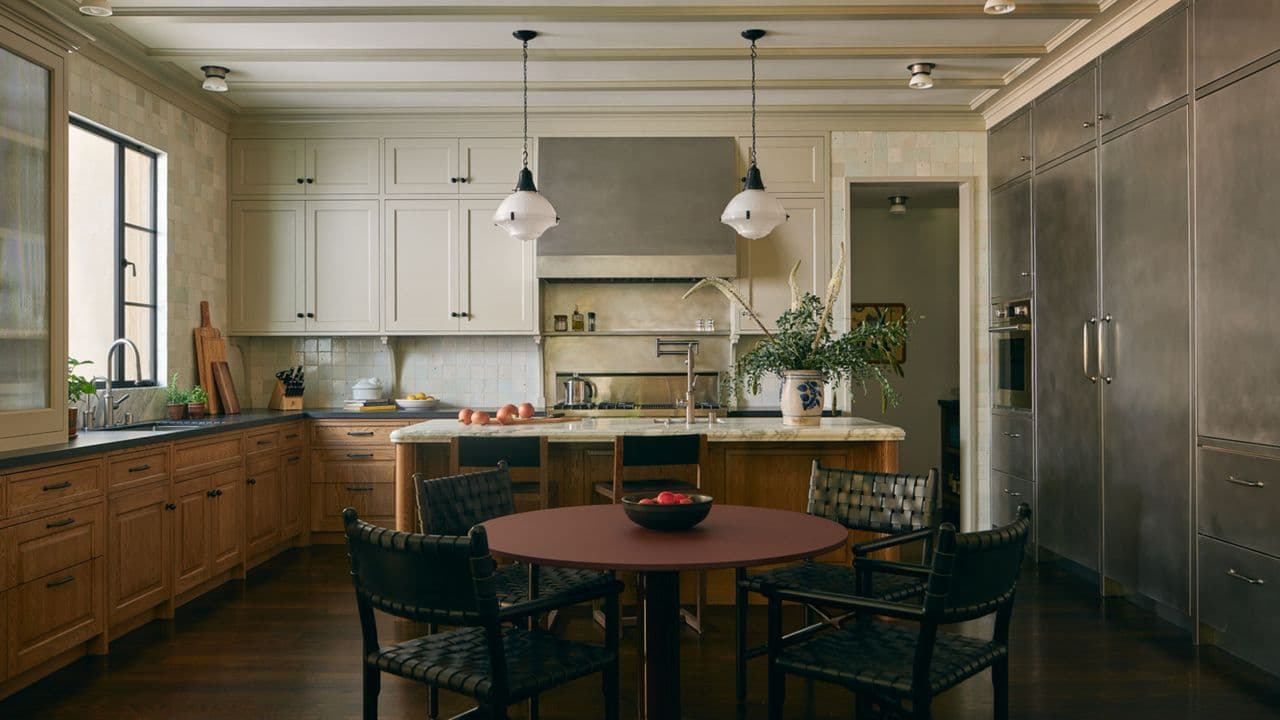
From Blank Slate to European Soul: A Pacific Palisades Transformation
When an architect turns their professional eye toward their own home, the result is rarely ordinary. That's precisely the case with this stunning renovation in Pacific Palisades, California, where a dated early-2000s "white box" — the kind of home that feels more like an empty vessel than a place with personality — was completely reimagined into a warm, layered residence with unmistakable European soul. The guiding philosophy? A concept the architect calls casual formality: a delicate balance between refined aesthetics and livable comfort that feels both elevated and deeply human.
Pacific Palisades has long been one of Los Angeles's most desirable neighborhoods, perched between the Santa Monica Mountains and the Pacific Ocean. Its tree-lined streets are dotted with an eclectic mix of architectural styles, from midcentury gems to sprawling new builds. But the early 2000s left their mark here too, producing a wave of homes that prioritized square footage and clean lines over warmth and character. This particular property was a textbook example: high ceilings, white walls, minimal molding, and a floor plan that felt more developer-grade than design-forward.
Why an Architect Chose a Fixer Over a Finished Home
For most buyers, a home lacking in character is a dealbreaker. For an architect, it's an invitation. Rather than purchasing a property that someone else had already defined, this architect saw the white box for what it truly was — a blank canvas with good bones, solid light, and exceptional potential. The location didn't hurt either. Pacific Palisades offers proximity to the beach, access to excellent schools, and a neighborhood atmosphere that feels worlds away from the density of central Los Angeles.
The decision to buy the dated property was also, in part, a professional challenge. Designing for clients is one thing; designing for yourself demands a different kind of honesty. There are no briefs to follow, no client preferences to accommodate, and no budget that doesn't come directly out of your own pocket. Every choice reflects your truest design convictions — and that pressure, for a thoughtful architect, becomes its own creative fuel.
What 'Casual Formality' Actually Means in Practice
The phrase "casual formality" might sound like a contradiction, but in interior design, it describes a very specific and increasingly sought-after sensibility. It refers to spaces that carry the proportions, materials, and restraint of formal European design — think antique stone floors, carved wooden mantels, linen drapery that pools softly on the floor — while remaining genuinely comfortable and unpretentious in feel. Nothing is too precious to touch. Nothing feels staged.
In practical terms, this approach shaped nearly every decision made during the renovation:
- Materials were chosen for age and patina over newness. Reclaimed oak flooring replaced the original tile and engineered hardwood, immediately grounding the home in something that felt earned rather than installed.
- Color was used sparingly but deliberately. Rather than painting every wall a trendy shade, the architect worked with a muted, historically informed palette — aged whites, warm linen tones, and deep, moody hues in more intimate spaces like the library and primary bedroom.
- Architectural details were added, not just swapped. Crown moldings, paneled wainscoting, and arched doorways were introduced to give the home the bones it originally lacked. These additions transformed the proportions of the rooms and gave each space a quiet authority.
- Furniture was a mix of old and new. Antiques sourced from European markets sat comfortably alongside contemporary pieces from artisan makers. The blend avoided the showroom feel that plagues so many renovated homes.
The European Influence: Where It Comes From and Why It Works in LA
European design — particularly that of France, Italy, and Belgium — has long been admired for its emphasis on craftsmanship, materiality, and a certain unself-conscious elegance. Rooms feel lived-in because they often are, passed down through generations and accruing layers of meaning along the way. That quality of accumulated history is precisely what's difficult to manufacture and exactly what so many Los Angeles homes lack.
The architect's solution was to bring authenticity through the objects and materials themselves. Antique French limestone on the kitchen floor. Belgian linen on the sofas. A centuries-old Italian mirror above the fireplace in the living room. None of these elements needed to announce themselves — they simply existed, lending the space a quiet credibility that new construction rarely achieves.
Surprisingly, this European sensibility translates beautifully to the California lifestyle. The abundance of natural light in Pacific Palisades softens formal elements, while the indoor-outdoor flow inherent to Southern California living ensures that even a beautifully appointed room never feels stuffy. The result is a home that could plausibly exist in the south of France just as easily as on the west side of Los Angeles.
Key Design Lessons from This Transformation
This renovation offers a masterclass in what thoughtful design can accomplish, even within an uninspiring starting point. Several principles stand out as universally applicable:
- Good bones matter more than surface finishes. A home with solid structure, generous light, and workable proportions can be transformed. A home without those qualities is far harder to save, regardless of budget.
- Restraint is a design choice. The most effective rooms in this home are defined as much by what was left out as by what was included. Resisting the urge to fill every surface is harder than it looks.
- Mixing periods creates depth. Spaces that combine antiques with contemporary pieces feel collected and personal, rather than curated from a single catalog. This eclecticism is central to the European aesthetic the architect was channeling.
- Architecture and interior design should speak the same language. The moldings, arches, and paneling introduced during the renovation didn't just add visual interest — they gave the interior designers' furniture and textile choices a context in which to make sense.
The Result: A Home That Feels Like It Has Always Been There
The highest compliment you can pay a renovation is that it doesn't look like one. Walking through this Pacific Palisades home today, it's difficult to imagine it as the blank, characterless box it once was. The rooms feel settled, as though the house has been quietly accumulating its personality for decades. The architecture and the furnishings, the light and the textures, the formal gestures and the comfortable informality — all of it coexists in the kind of easy harmony that takes real skill to achieve and even more skill to make look effortless.
For homeowners considering their own transformations, this project is a powerful reminder that the most meaningful renovations aren't about trends or square footage — they're about creating spaces that reflect a point of view, honor the craft of making things well, and ultimately feel like home in the truest sense of the word.