
The One Design Decision That Makes or Breaks Your Entire Kitchen
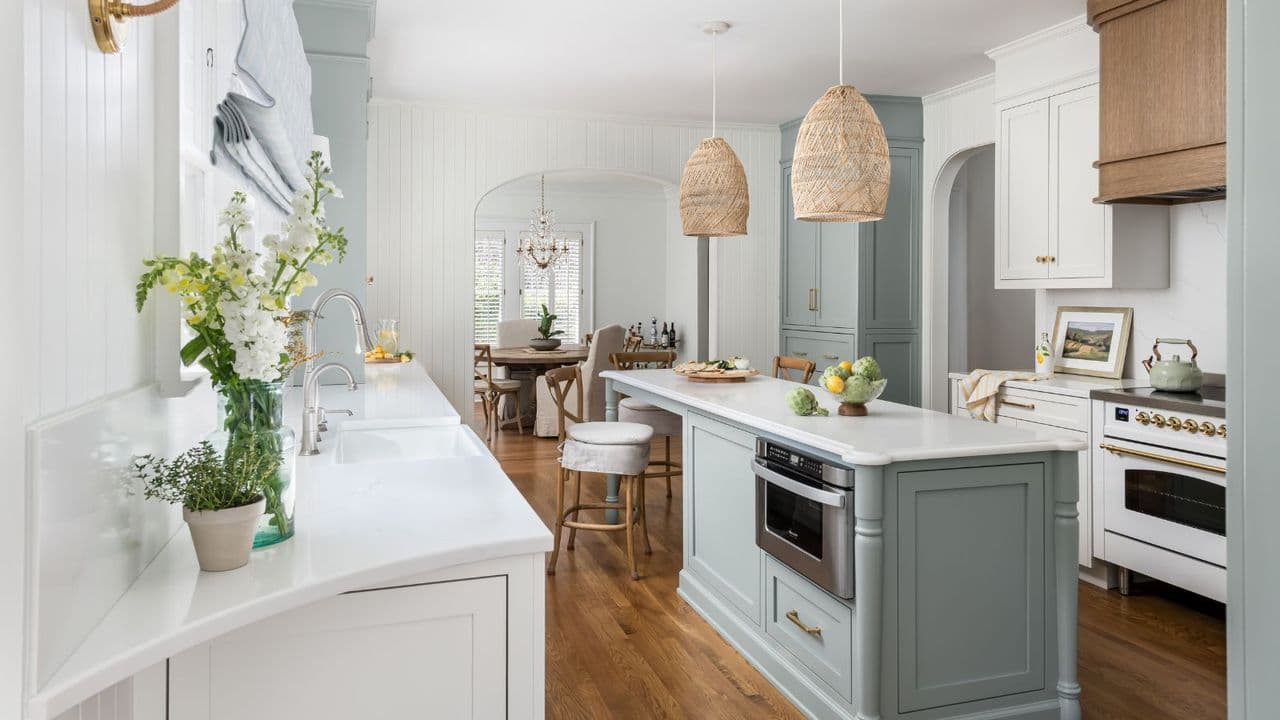
Your countertops are doing a lot of heavy lifting. They cover more visible surface area than almost any other element in your kitchen, and according to interior designers who have worked on hundreds of renovations, the material you choose sends an immediate signal — luxury or budget, timeless or dated, intentional or afterthought. The difference between a kitchen that photographs beautifully and one that buyers quietly discount during a home sale often comes down to a single slab of material sitting on your cabinets.
To help you make the right call, we spoke with seasoned kitchen designers about which countertop choices consistently impress and which ones — no matter how well-intentioned — tend to cheapen the overall look of a space. Here is what they had to say.
Countertop Choices That Instantly Elevate Your Kitchen
1. Marble: The Undisputed Symbol of Luxury
Few materials command a room the way natural marble does. Its veining is completely one-of-a-kind, its cool surface feels genuinely premium underhand, and its association with high-end design spans centuries. Designers consistently point to marble — particularly white Carrara or dramatic Calacatta — as the countertop material most likely to make a kitchen feel like it belongs in an architectural magazine spread. Yes, marble requires sealing and careful maintenance, and it will etch if you leave lemon juice on it. But for clients who want a truly elevated kitchen and are willing to care for it properly, nothing compares.
2. Quartzite: Natural Stone Without the Drama
Often confused with quartz (which is engineered), quartzite is a natural metamorphic stone that offers the visual appeal of marble with significantly greater durability. It resists heat, scratching, and etching better than marble while still delivering those gorgeous natural patterns and depth that only real stone can provide. Designers frequently recommend quartzite to clients who love the look of marble but live active kitchen lives. It photographs beautifully, ages gracefully, and tends to hold its perceived value extremely well at resale.
3. Honed or Leathered Granite: Granite's Sophisticated Cousin
Standard polished granite has fallen out of favor in design circles — but granite itself has not. When finished with a honed (matte) or leathered (textured) surface, granite takes on an entirely different character. It looks more artisanal, more intentional, and far more contemporary than the glossy, speckled slabs that defined kitchen renovations in the early 2000s. The finish also hides smudges and fingerprints remarkably well, making it as practical as it is beautiful. Designers say this is one of the most underrated upgrades a homeowner can make.
4. Thick Waterfall Edge Quartz or Stone
When a countertop extends vertically down the side of an island in a continuous unbroken slab — what designers call a waterfall edge — it transforms an ordinary countertop into a genuine architectural statement. Pair this with a thick profile (think 3 cm or more) and a material with strong veining, and you have something that looks genuinely custom and expensive. Designers note that the waterfall detail alone can shift the entire perceived price point of a kitchen upward, even when used selectively on a single island.
Countertop Choices That Can Cheapen Your Kitchen
5. Low-Grade Laminate: The Most Obvious Offender
Laminate countertops have improved dramatically in recent years, and budget-conscious designers will point out that premium laminate can actually be a smart, stylish choice. But older laminate styles — particularly those with printed faux-stone patterns, rounded bullnose edges, and visible seams — remain the number one countertop material that designers say cheapens a kitchen instantly. The issue is not the material itself but rather the way outdated laminate signals that no upgrade has been made in decades. If you are working with laminate, investing in a modern edge profile and a solid color or matte finish goes a long way.
6. Heavily Patterned Ceramic Tile: Dated and Visually Busy
Ceramic tile countertops are extremely durable and easy to clean in theory, but in practice they present two problems that designers find very difficult to overlook. The grout lines collect stains over time and are notoriously difficult to keep looking clean, and the busy visual pattern created by dozens of individual tiles breaks up the visual flow of the surface. A seamless countertop always reads as more refined and more expensive. If you currently have tile countertops, designers suggest that replacing them is one of the highest-ROI updates you can make before listing a home.
7. Cultured Marble in the Wrong Context
Cultured marble — a blend of marble dust and resin cast into a mold — is not inherently bad. It is widely used in bathrooms and performs reasonably well. But in a kitchen, particularly one with quality cabinetry and hardwood floors, cultured marble reads as a mismatch. Its slightly plastic appearance and uniform patterning lack the depth and variation of natural or high-quality engineered stone. Designers consistently flag it as a material that undercuts the investment made elsewhere in the space.
The Bottom Line: Think Long-Term, Not Just Right Now
Countertop trends do shift over time, but the materials that consistently earn praise from designers share a few key qualities: visual depth, surface texture that rewards close inspection, and a sense that real craft or natural process was involved in their creation. Whether you are renovating to sell or renovating to stay, choosing a countertop that falls into the elevating category rather than the cheapening one is one of the clearest paths to a kitchen you will genuinely love for years to come. When in doubt, go natural, go matte, and go as thick as your budget allows.