
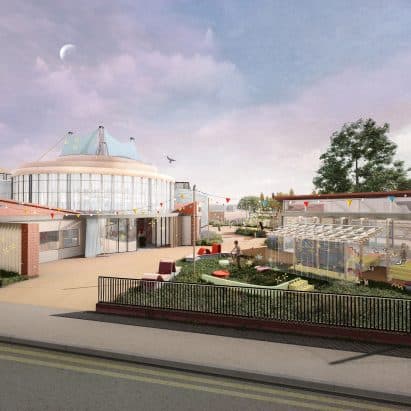
Birmingham City University Students Reimagine Urban Spaces Through Bold Design
Architecture and design students at Birmingham City University (BCU) are making headlines with a remarkable collection of graduate projects that challenge conventional thinking about how urban spaces can be used. Among the most striking proposals is PlayPark — a community makers hub conceived inside a neglected, unused car park. Showcased as part of the Dezeen School Shows series, these student-led visions offer a compelling glimpse into the future of adaptive reuse, community-centred design, and the creative reinvention of overlooked urban infrastructure.
The annual Dezeen School Shows platform highlights exceptional student work from architecture, interior design, and product design schools around the world. BCU's 2026 cohort stands out for its focus on social impact, sustainability, and the bold repurposing of existing structures — themes that resonate deeply in a post-pandemic world where cities are actively searching for smarter, more human-centred uses of their built environments.
PlayPark: A Makers Hub for Play and Community Creativity
Designed by BCU student Rejaul Karim, PlayPark is the project attracting the most attention from the architecture and design community. The concept proposes transforming an underutilised urban car park into a vibrant, accessible makers hub dedicated to play, craft, and creative collaboration. Rather than demolishing the existing structure, Karim's design works with the car park's raw concrete bones, breathing new life into the space with minimal intervention but maximum community impact.
The project taps into a growing global conversation about adaptive reuse — the practice of giving old or redundant buildings a new purpose rather than tearing them down. Car parks, in particular, have become symbols of outdated urban planning. As car ownership patterns shift and city centres rethink their relationship with vehicles, multi-storey car parks across the UK and beyond are sitting empty, representing vast reservoirs of untapped spatial potential.
PlayPark addresses this directly. By inserting a makers hub into the existing structure, the design creates affordable workshop and studio spaces, areas for play-based learning, and community gathering zones that would otherwise be inaccessible in expensive city centre locations. The proposal demonstrates how thoughtful architectural intervention can activate dormant urban assets without the environmental cost of new construction.
Why Adaptive Reuse Is Dominating Graduate Architecture Today
BCU's showcased projects reflect a broader shift happening across architecture schools internationally. The next generation of designers is far less interested in starting from scratch and far more focused on working with what already exists. This approach aligns with urgent sustainability goals — the construction industry is responsible for a significant share of global carbon emissions, and reusing existing structures dramatically reduces embodied carbon compared to new builds.
Adaptive reuse also tends to preserve the character and history of urban neighbourhoods. Rather than replacing familiar landmarks with generic new developments, projects like PlayPark retain the industrial texture and memory of a place while updating its function for contemporary needs. This creates spaces that feel rooted in their context rather than imposed upon it.
For communities, the benefits are equally tangible. Repurposed structures often become catalysts for local economic regeneration, drawing in small businesses, creative practitioners, and community organisations that might otherwise be priced out of more conventional commercial spaces. A makers hub inside a car park is not just an architectural statement — it is a practical social infrastructure project with the potential to transform lives at street level.
BCU's Wider Graduate Portfolio: Design That Serves Society
PlayPark is far from the only impressive project emerging from BCU's 2026 graduate cohort. Across disciplines, students have been exploring themes including:
- Mental health and wellbeing through spatial design, creating environments that actively support psychological recovery and calm.
- Climate resilience and flood-responsive architecture, with projects responding to the very real threat of extreme weather events in urban areas.
- Inclusive design for underserved communities, ensuring that architecture serves people of all abilities, ages, and economic backgrounds.
- The integration of nature and biophilic principles into everyday built environments, blurring the boundary between interior space and the natural world.
Together, these projects paint a picture of a design school deeply committed to producing graduates who see their discipline as a tool for positive social and environmental change. BCU's approach to architectural education clearly encourages students to ask not just "what looks good?" but "what does this city need, and how can design provide it?"
The Role of School Shows in Elevating Emerging Design Talent
Being featured in Dezeen School Shows is a significant moment for any emerging designer. Dezeen is one of the world's most influential architecture and design publications, and its School Shows platform gives student work global visibility at a critical early stage in a designer's career. For BCU students, inclusion in this showcase signals that their work is not only academically strong but genuinely relevant to real-world conversations happening across the international design community.
Platforms like Dezeen School Shows also play an important role in shaping the direction of the profession more broadly. When projects like PlayPark receive widespread attention, they send a message to clients, developers, and city planners that there is a generation of designers ready and willing to tackle the complex, messy, urgent challenges of urban life with creativity and rigour.
What BCU's Projects Tell Us About the Future of Urban Design
The projects coming out of Birmingham City University's 2026 cohort are more than impressive student work — they are a manifesto for a different kind of city. One where car parks become creative hubs, where unused space is an opportunity rather than a problem, and where architecture serves the many rather than the few.
As cities across the UK and the world grapple with housing shortages, climate pressures, and the need to rebuild community life after years of social fragmentation, the ideas being generated in design schools like BCU carry real weight. PlayPark and its companion projects remind us that some of the most exciting thinking about the future of our cities is already happening — in university studios, on drawing boards, and in the imaginations of the next generation of architects and designers.
Whether these visions ultimately get built at scale remains to be seen. But as starting points for a richer, more human, more sustainable urban future, they could hardly be more timely.