
Former DC Housing Authority Employee Pleads Guilty to $15 Million Mortgage Fraud Scheme
A former Washington, D.C. housing official has pleaded guilty to orchestrating a sophisticated mortgage fraud scheme that exploited the names and sacrifices of American veterans. Richard Cunningham, 55, admitted in federal court to fabricating a fake federal housing assistance program for veterans in order to defraud mortgage lenders out of more than $15 million. The case has drawn sharp condemnation from federal prosecutors and serves as a stark reminder of the serious legal consequences awaiting those who abuse positions of public trust for personal financial gain.
Who Is Richard Cunningham?
Richard Cunningham formerly served as an employee of the District of Columbia Housing Authority before leaving the position in 1999 to pursue a career in private real estate development. He later founded Cunningham Real Estate Management LLC, a company through which he managed and controlled multiple properties across Washington, D.C. It was through this company and his insider knowledge of housing programs that Cunningham allegedly devised and executed his multimillion-dollar fraud scheme over a period of years.
Despite his background in public housing administration — a field dedicated to helping vulnerable residents secure safe and affordable homes — Cunningham is accused of weaponizing that expertise not to assist others, but to deceive financial institutions and enrich himself at the expense of lenders and the broader integrity of federally backed housing programs.
The Phony "Veterans Assistance Payments" Program
At the core of the fraud was a completely fabricated government initiative that Cunningham invented and presented to mortgage lenders as legitimate. He invented a program he called the "Veterans Assistance Payments" program, a fictitious federal voucher scheme purportedly designed to provide housing support to military veterans. In reality, no such program existed.
Cunningham created fraudulent federal voucher documents to support his claims, forged signatures on official-looking paperwork, and presented the phony program to lenders as a reliable source of income for tenants residing in properties he controlled. By convincing lenders that his properties were generating income through this fake government initiative, he was able to secure mortgage financing he would not otherwise have qualified for — all based entirely on fabricated documentation.
According to court documents, Cunningham's company positioned itself as a manager of properties housing veterans who were supposedly receiving federal rental assistance. Lenders, relying on the fraudulent vouchers and falsified records Cunningham provided, extended millions of dollars in mortgage financing for these DC properties. The scheme allowed him to repeatedly defraud lending institutions across multiple transactions over the course of the fraud.
The Guilty Plea and Potential Sentencing
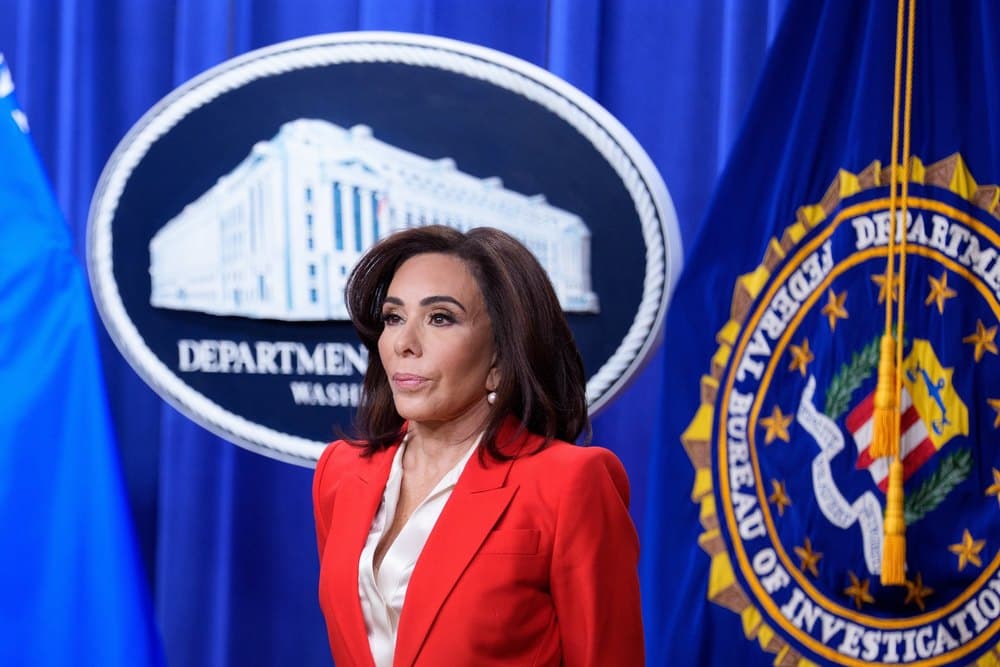
Cunningham pleaded guilty to making false statements to a mortgage lending business. The charge carries a maximum penalty of up to 20 years in federal prison and a fine of up to $1 million. His sentencing has been scheduled for December 4, according to information released by DC District Attorney Jeanine Pirro's office.
The plea agreement revealed a particularly troubling detail: the proceeds Cunningham obtained through the scheme "have been dissipated by him and cannot be located," meaning victims and the court may face significant challenges in recovering the $15 million fraudulently obtained. Cunningham's attorney did not respond to requests for comment following the guilty plea.
Prosecutors Condemn the Exploitation of Veterans
DC District Attorney Jeanine Pirro issued a forceful statement condemning not only the financial crimes involved but the specific method Cunningham chose to carry out his fraud — namely, the cynical exploitation of America's veterans and the programs designed to serve them.
"Richard Cunningham didn't just defraud lenders, he fabricated federal voucher documents, forged signatures, and invented a veterans housing program that never existed, all to line his own pockets," Pirro said. "Exploiting the name and sacrifice of American veterans to commit fraud is particularly offensive, and my office will pursue those abuses with the full weight of federal law."
Prosecutors emphasized that using the credibility associated with veterans' programs to deceive lenders represented a deliberate and calculated choice — one that added a layer of moral reprehensibility to what was already a serious federal financial crime.
Broader Implications for Mortgage Fraud Enforcement
The Cunningham case highlights several important trends in federal fraud enforcement that both industry professionals and the public should understand. Mortgage fraud schemes that involve fake government programs, forged documents, and fabricated income sources remain a persistent threat to lenders, housing markets, and the integrity of federally affiliated programs.
- Federal prosecutors are increasingly focused on schemes that exploit government program names or veteran-affiliated branding to lend false credibility to fraudulent financial documents.
- Former public officials and housing authority employees who leverage insider knowledge to commit financial crimes face enhanced scrutiny and aggressive prosecution.
- The inability to recover dissipated proceeds underscores why early detection of mortgage fraud is critical for financial institutions.
- Forgery of federal voucher documents and false statements to lending businesses are taken extremely seriously under federal law, with penalties reaching up to two decades in prison.
A Betrayal of Public Trust
Beyond the financial damages, the Cunningham case represents a profound betrayal of public trust. Employees of housing authorities are charged with ensuring that assistance reaches those most in need — low-income residents, the elderly, and veterans. When individuals with access to that system turn it into a vehicle for personal enrichment, the damage extends far beyond the dollars lost by lenders.
Trust in government-sponsored housing programs is foundational to their effectiveness. Every fraudulent scheme that exploits the credibility of programs like housing vouchers or veterans' assistance makes it harder for legitimate participants — honest landlords, genuine beneficiaries, and good-faith lenders — to operate within those systems. The reputational harm to veteran-focused housing initiatives, even those that never existed, can sow doubt where public confidence is most needed.
What Happens Next
With his December 4 sentencing date approaching, Richard Cunningham faces the real possibility of a lengthy federal prison sentence. The case will likely be cited by federal prosecutors as a benchmark for how aggressively the government pursues mortgage fraud schemes that involve the fabrication of federal housing programs, particularly those that invoke the service and sacrifice of military veterans.
For mortgage lenders, housing regulators, and real estate professionals, the case serves as a clear warning: due diligence when verifying government-backed income sources and voucher documentation is not optional. It is an essential safeguard against fraud that can cost institutions millions of dollars and, in cases like this one, leave victims with little to no chance of recovering their losses.