
Erwan Bouroullec's Crumpled Tyvek Sofa Takes Center Stage at Værktøj 3
Copenhagen's design calendar reached a new peak of creative energy this year as the Værktøj 3 exhibition opened its doors during the internationally celebrated 3 Days of Design festival. Among the most talked-about works on display was a striking sofa by French designer Erwan Bouroullec, crafted from crumpled Tyvek — a material more commonly associated with packaging, protective suits, and construction wrap than with high-concept furniture. The piece is a testament to Bouroullec's relentless curiosity and his willingness to push the boundaries of what domestic objects can look and feel like.
What Is the Værktøj Exhibition?
For those unfamiliar with the concept, Værktøj — which translates from Danish as "tool" — is an exhibition series that functions as a creative laboratory rather than a conventional design showcase. Now in its third iteration, Værktøj 3 invites a carefully curated group of designers and makers to respond to a shared theme or material challenge, producing works that are experimental in spirit and executed with genuine craft integrity. The show sits firmly at the intersection of art and design, resisting easy categorization and encouraging visitors to engage with objects on a deeper level than pure aesthetics or function.
Held in Copenhagen during 3 Days of Design — one of Northern Europe's most significant annual design events — Værktøj 3 drew considerable attention from international press, collectors, and design enthusiasts. The Danish capital has long positioned itself as a global hub for progressive furniture and interior design, and exhibitions like Værktøj reinforce that reputation by championing genuine experimentation over commercial trends.
Erwan Bouroullec and the Tyvek Sofa: An Unlikely Material Meeting
Erwan Bouroullec, who frequently collaborates with his brother Ronan under the studio name Bouroullec, is no stranger to material innovation. The Paris-based designer has spent decades exploring the expressive potential of everyday and industrial materials, finding poetry in the overlooked and the utilitarian. His Tyvek sofa for Værktøj 3 continues this tradition in a particularly vivid way.
Tyvek is a synthetic material produced by DuPont, made from high-density polyethylene fibers that are spun and bonded together without weaving. It is extraordinarily durable, water-resistant, and lightweight, but it is also distinctly crinkly — it has a paper-like quality that creases, crumples, and holds its deformation in ways that most upholstery fabrics do not. This last characteristic is precisely what Bouroullec appears to have harnessed in the design. The sofa's surface is intentionally crumpled, giving the piece an organic, almost geological quality — as though it has been shaped not by a designer's hand but by natural forces like erosion or compression.
The result is a sofa that challenges fundamental assumptions about comfort and luxury. Where conventional upholstered seating prioritizes smoothness, softness, and a kind of visual calm, Bouroullec's Tyvek piece is deliberately restless. Its surface is active, textured, and unapologetically wrinkled. It asks the viewer — and potential sitter — to reconsider what they expect from a piece of furniture designed to be sat upon and lived with.
The Broader Significance of Material Experimentation in Contemporary Design
Bouroullec's Tyvek sofa does not exist in isolation. It is part of a broader conversation happening across the design world about the role of industrial and unconventional materials in furniture-making. Designers from Konstantin Grcic to the Campana Brothers have long interrogated the boundary between the industrial and the domestic, using materials sourced from factories, construction sites, and laboratories to create objects with genuine conceptual depth.
What makes Bouroullec's approach particularly compelling is the scale of the ambition matched with the restraint of the execution. A crumpled Tyvek sofa could easily become a gimmick — a one-note conceptual joke. Instead, the piece reportedly achieves something more nuanced: it retains a functional coherence while presenting an entirely unfamiliar surface language. The material's characteristic crinkle is not merely decorative; it becomes structural, defining the form of the cushions and the overall silhouette of the piece.
Other Notable Works at Værktøj 3
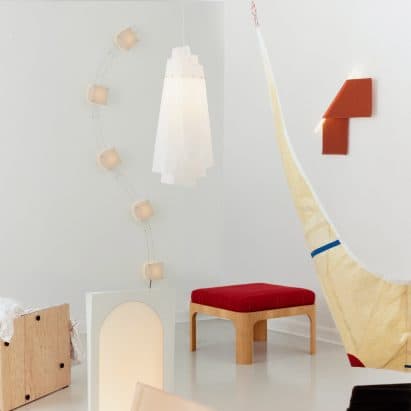
While Bouroullec's sofa may have attracted the most immediate attention, Værktøj 3 featured a range of works by other designers and makers, each responding to the exhibition's ethos in their own way. The show as a whole demonstrated a commitment to process-driven design, with many pieces foregrounding the evidence of making — the marks of the hand, the logic of the material, the decisions made and revised along the way.
- Several works explored the tension between industrial production and handcraft, using manufacturing processes in ways they were never originally intended.
- Pieces made from reclaimed and repurposed materials reflected a growing awareness in the design community of sustainability and material responsibility.
- Lighting and object designs sat alongside furniture, reinforcing the exhibition's commitment to a broad definition of what constitutes a "tool" in the designer's vocabulary.
- The overall curation encouraged dialogue between works, so that individual pieces gained meaning from their proximity to one another.
Why Exhibitions Like Værktøj Matter for the Future of Design
In an era dominated by mass production, fast interiors, and algorithmically curated home furnishings, exhibitions like Værktøj 3 serve a vital function. They create protected space for risk-taking — space where designers are free to fail interestingly, to pursue ideas that have no guaranteed commercial endpoint, and to engage with materials and processes in ways that expand the collective imagination of what design can be.
For visitors and professionals attending 3 Days of Design in Copenhagen, Værktøj 3 offered exactly this kind of encounter. Erwan Bouroullec's crumpled Tyvek sofa, in particular, served as a reminder that the most enduring design objects are often those that provoke discomfort before they inspire admiration — pieces that refuse to be immediately understood, and reward sustained attention with genuine revelation.
As the design world continues to grapple with questions of sustainability, authenticity, and the meaning of craft in a technological age, the work shown at Værktøj 3 feels timely and necessary. It points toward a design practice rooted in curiosity, material honesty, and an uncompromising willingness to ask: what else could this be?