
Could Innovative Construction Methods Finally Make Homes Affordable Again?
For millions of Americans, the dream of homeownership has never felt more out of reach. Surging home prices, elevated mortgage rates, and a persistent shortage of housing supply have created one of the most challenging real estate environments in modern history. But a new analysis from the JPMorganChase PolicyCenter suggests that a solution may already exist — and it might be hiding in the way we build homes in the first place.
According to the report, innovative construction methods such as modular construction and panelized building could reduce the cost of building a new home by as much as 20% to 30%. Even more striking, these same techniques could cut construction timelines by 30% to 50%, potentially shaving two full months off the time it takes to complete a new home. For a housing market starved of inventory and burdened by high prices, that is a significant development.
What Are Modular and Panelized Construction Methods?
To understand why this matters, it helps to know what these building techniques actually involve. Traditional site-built construction means that virtually every component of a home — framing, roofing, walls, insulation — is assembled on the property itself, piece by piece, often subject to weather delays, labor shortages, and supply chain disruptions.
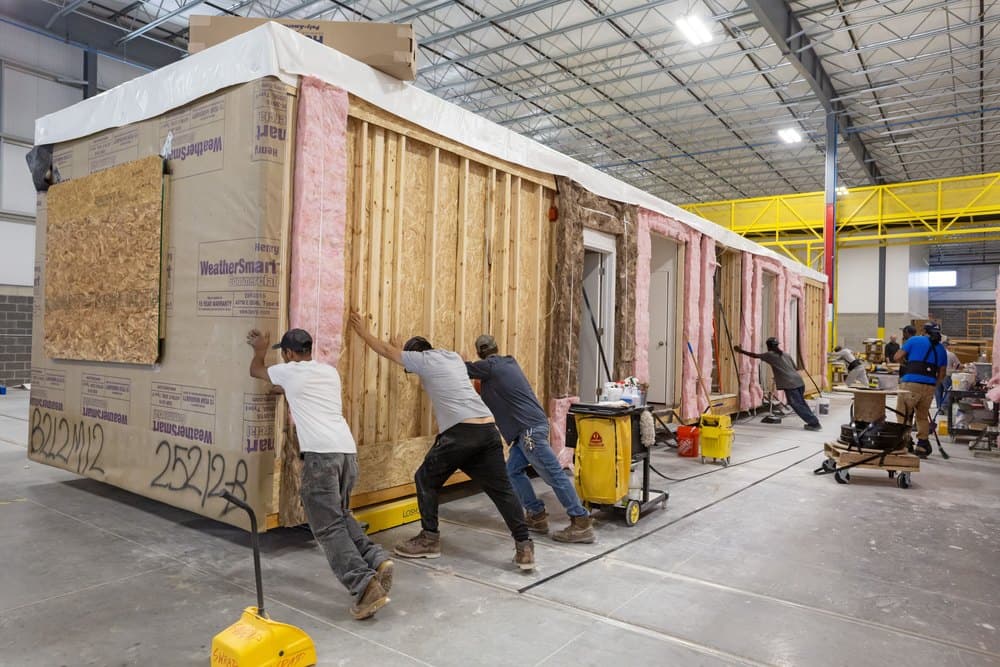
Modular construction takes a fundamentally different approach. Entire sections, or modules, of a home are built in a controlled factory environment and then transported to the site for assembly. Because factory conditions are predictable and efficient, waste is minimized, labor is used more effectively, and quality control is easier to manage.
Panelized building works on a similar principle. Pre-built wall panels, floor systems, and roof sections are manufactured off-site and then erected on location like pieces of a large puzzle. The result is a dramatically faster and more cost-effective build process.
These approaches fall under the broader umbrella of manufactured housing techniques, a category that has historically carried a stigma but is rapidly being rebranded as a smart, scalable, and high-quality alternative to conventional construction.
Why Construction Costs Are the Core Problem
One of the most revealing statistics in the JPMorganChase analysis is that construction costs account for nearly two-thirds of the total price of a new home. That means that even modest reductions in building expenses can translate into meaningful savings for the end buyer.
When labor, materials, and time all drive costs upward simultaneously — as has been the case throughout much of the post-pandemic economy — the financial pressure on homebuilders and buyers alike becomes enormous. Builders pass those costs on through higher listing prices, which in turn pushes more potential buyers out of the market entirely.
By attacking the construction cost problem directly through innovative methods, it becomes possible to chip away at home prices from the ground up, rather than relying solely on interest rate changes or demand-side subsidies to improve affordability.
JPMorganChase's Broader Commitment to Housing Affordability
The analysis is not merely an academic exercise. JPMorganChase has a significant financial stake in the future of affordable housing. The financial institution has funded approximately $52 billion in debt and equity to finance affordable housing projects, alongside $498 million in philanthropic capital dedicated to affordable housing strategies. Collectively, those investments have helped preserve 435,000 affordable housing units across the country.
Olivia Barrow Strauss, Vice President of Housing Policy at JPMorganChase, explained the intent behind the research in comments to Realtor.com. "We're really trying to look at what levers, and particularly state and local levers, that can reduce the cost drivers of what it takes to build housing," she said.
That focus on state and local policy is telling. While federal housing policy often grabs the headlines, many of the most impactful decisions about zoning, permitting, building codes, and land use happen at the local level. The JPMorganChase report appears to be making a targeted case to those decision-makers: the tools to lower housing costs exist, but regulatory environments need to evolve to allow them to scale.
The Broader Impact on the Housing Market
The implications of widespread adoption of these construction methods extend well beyond individual homebuyers. A 20% to 30% reduction in building costs could unlock the development of housing in markets where projects have previously been financially unviable. Builders who cannot make the numbers work on a traditionally built affordable home might find that modular or panelized construction changes the equation entirely.
Faster build times also address a critical bottleneck in the housing supply chain. When homes can be completed months sooner, developers can cycle through more projects in a given year, gradually increasing the housing supply that has been chronically insufficient in many metropolitan areas. Greater supply, as fundamental economics teaches, puts downward pressure on prices over time.
Additionally, the factory-based nature of modular construction may help ease the skilled labor shortage that has plagued the construction industry. Factory work can be performed by a broader range of workers and can be standardized in ways that reduce dependence on specialized tradespeople who are increasingly difficult to find and retain.
A Promising Path Forward — But Not Without Challenges
Despite the promise these methods hold, meaningful barriers remain. Building codes in many jurisdictions were written with traditional site construction in mind and do not always accommodate or encourage factory-built components. Zoning restrictions in high-demand areas can limit where modular homes can be placed. Consumer perception, while improving, still presents a hurdle in some markets.
For these innovations to reach their full potential, collaboration between private developers, financial institutions, and state and local governments will be essential. The JPMorganChase analysis is a meaningful step toward building that case — and building the homes that millions of Americans are still waiting for.
The Bottom Line
The JPMorganChase PolicyCenter's findings offer a rare piece of constructive news for a housing market that has frustrated buyers, renters, and policymakers for years. Modular construction, panelized building, and related manufactured housing techniques are not futuristic concepts — they are available, proven, and ready to scale. With the right policy support and continued investment, they could help bring home construction costs down by as much as 30%, making the dream of homeownership a realistic goal for far more Americans than the current market allows.