
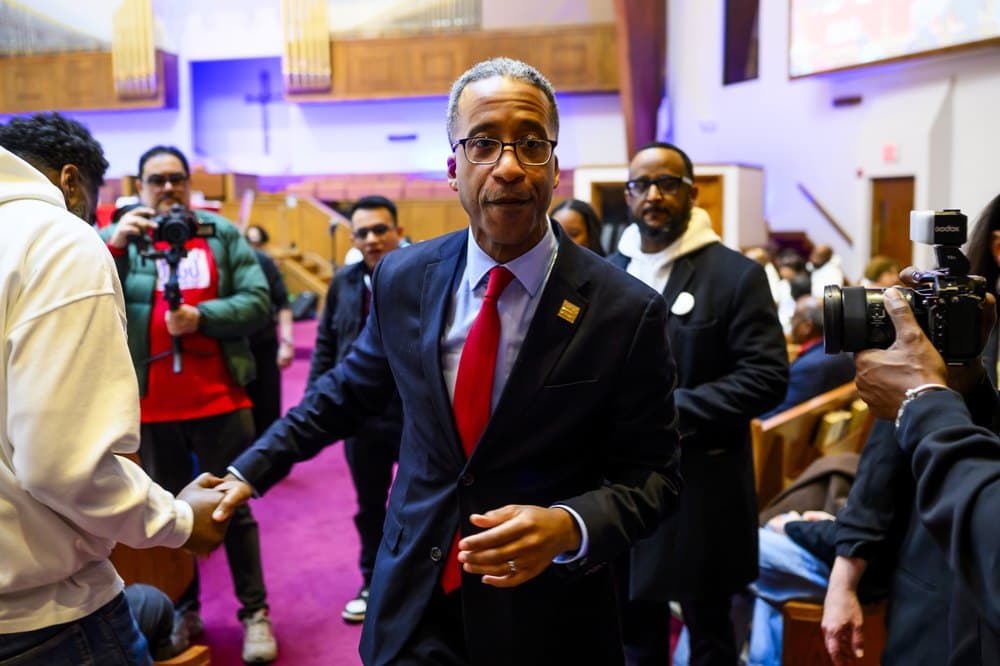
Janeese Lewis George Takes the Lead in Washington, DC's 2026 Mayoral Primary
Washington, DC, may be on the verge of a significant political shift. Democratic socialist and DC Council member Janeese Lewis George has pulled ahead in the city's Democratic mayoral primary, running on an ambitious "Homes for All" platform that has resonated deeply with voters frustrated by the district's persistent housing affordability crisis. Her lead raises important questions not only about the future of housing policy in the nation's capital but also about potential friction with the federal government under President Donald Trump.
As of Wednesday following Tuesday's primary election, Lewis George held a commanding 53% of the vote compared to 37% for her closest competitor, fellow DC Council member Kenyan McDuffie. The margin between them stood at approximately 15,000 votes, according to the DC Board of Elections. While the final tally is expected to take several more days to complete, Lewis George's campaign was already in a celebratory mood as results rolled in on election night.
"If there was ever any doubt, let it be laid to rest," Lewis George told supporters at a rally Tuesday night. "It is the people of DC who elect the mayor."
Why Housing Is the Central Issue in Washington, DC
To understand why Lewis George's platform has struck such a powerful chord, it's essential to look at where Washington, DC, currently stands on housing. The district ranks a dismal 41st out of 51 in the latest Realtor.com state-by-state report card, which evaluates homebuilding activity and overall housing affordability across the country. That ranking earned DC a grade of D+, reflecting deep structural failures in the local housing market.
The numbers behind that grade are telling. The median listing price in Washington, DC, currently sits at $589,721, while the median household income is $106,049. Even for a city known for relatively high wages driven by government and professional services employment, the gap between what homes cost and what most residents earn remains substantial. Homeownership is increasingly out of reach for working- and middle-class Washingtonians, and renters face mounting pressure as savings rates shrink and competition for affordable units intensifies.
This environment has made housing the defining issue of the 2026 DC mayoral race, and Lewis George has positioned herself squarely at the center of that conversation.
What Is the 'Homes for All' Platform?
Lewis George, a self-described democratic socialist, has built her mayoral campaign around the belief that stable, affordable housing is not a luxury but a fundamental right for every Washington, DC, resident. Her "Homes for All" platform is designed to aggressively address the supply shortages, affordability gaps, and systemic inequities that have made DC one of the most challenging housing markets in the United States.
While the full details of her policy agenda continue to be outlined as the campaign progresses, the platform signals a clear departure from the more incremental housing approaches taken by DC's current and recent administrations. Lewis George has advocated for dramatically increasing the production of affordable and mixed-income housing units, expanding tenant protections, and ensuring that development in the district serves existing residents rather than displacing them.
Her approach reflects a broader national movement among progressive urban politicians who argue that cities must take bolder, more interventionist steps to solve a housing crisis that market forces alone have proven unable to fix.
A Potential Collision Course With the Trump Administration
If Lewis George goes on to win the general election and becomes Washington, DC's next mayor, analysts and political observers anticipate that her progressive housing agenda could put her on a direct collision course with President Donald Trump and his administration. DC occupies a unique and constitutionally complicated position as a federal district, meaning its local governance is subject to a level of federal oversight and interference that no U.S. state faces.
A Lewis George administration pushing aggressive public housing investment, expanded tenant protections, or policies that challenge federal land use priorities could face significant resistance from a White House and Congress that hold considerable sway over DC's budget and legislative autonomy. The tension between a democratic socialist mayor and a Trump-led federal government would likely play out in real time as one of the more politically charged local-federal dynamics in the country.
What This Means for DC Voters and the Road Ahead
For Washington, DC, residents, Tuesday's primary results represent more than a political horse race. They signal a clear appetite for change among voters who have grown weary of watching housing costs climb out of reach while the district's housing report card continues to earn failing grades.
Lewis George's strong showing against McDuffie — an experienced council member with his own strong political base — suggests that her message is connecting across a broad coalition of DC voters. Whether that coalition holds through the general election remains to be seen, but her current momentum is undeniable.
- Lewis George currently leads with 53% of the vote in the Democratic primary.
- Washington, DC, ranks 41st out of 51 in Realtor.com's housing affordability report card, earning a D+.
- The median home listing price in DC is $589,721, far outpacing the median household income of $106,049.
- Her "Homes for All" platform centers on affordable housing production, tenant protections, and equitable development.
- A potential conflict with the Trump administration over DC's housing and budget autonomy looms on the horizon.
The Bigger Picture for Urban Housing Policy
The rise of Janeese Lewis George in Washington, DC, reflects a broader national conversation about how cities should respond to a housing affordability crisis that has reached critical levels in urban centers across the country. From Los Angeles to New York to Chicago, progressive candidates are increasingly winning on platforms that prioritize housing as a human right and call for structural reform rather than market-based solutions alone.
DC's unique status as the nation's capital means that whatever happens in this mayoral race will be watched closely by housing advocates, urban policymakers, real estate professionals, and federal officials alike. A Lewis George victory would send a powerful signal that even in one of America's most politically complex cities, voters are ready to demand bold action on housing — and are willing to elect leaders who promise to deliver it.
As vote counting continues and the final results take shape over the coming days, all eyes remain on Washington, DC, where the future of the city's housing landscape — and its next mayor — is still being written.