
Japanese Design Takes Copenhagen by Storm at 3 Days of Design 2026
Copenhagen's annual design celebration, 3 Days of Design, has long been a magnet for the world's most forward-thinking creative studios and cultural institutions. But the 2026 edition had a distinctive character that set it apart from previous years: a powerful Japanese influence that threaded its way through galleries, showrooms, and pop-up spaces across the Danish capital. From iconic fashion-turned-lighting installations to meditative explorations of material and form, seven exhibitions stood out as defining moments in what became an unofficial celebration of Japanese design philosophy on Scandinavian soil.
The convergence of Japanese and Danish aesthetics is perhaps less surprising than it might first appear. Both cultures share a deep reverence for craftsmanship, an appreciation for restraint, and a belief that objects should serve both function and spirit. Copenhagen, a city already steeped in design culture, proved to be an ideal host for this cross-cultural dialogue.
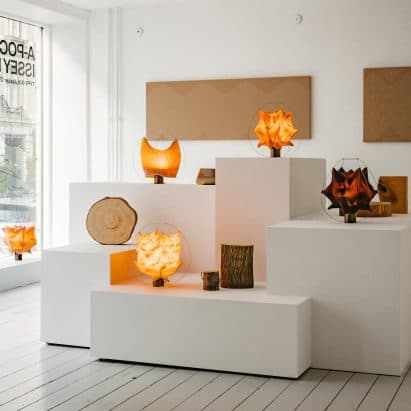
1. A-POC Able Issey Miyake: Light as a Material
Among the most visually arresting displays of the entire festival was the presentation by A-POC Able Issey Miyake, the innovative offshoot of the legendary Japanese fashion house. Known for its technological approach to textile construction, the brand brought a series of sculptural lamps to Copenhagen that embodied the same philosophy behind its wearable designs: the idea that a single piece of material, uncut and unstitched, can define an entire form.
The lamps glowed with a soft warmth that felt almost organic, their pleated and folded surfaces catching and diffusing light in ways that recalled traditional Japanese paper lanterns while speaking an entirely contemporary design language. For many visitors, this exhibition was the emotional centrepiece of the festival's Japanese programming — a reminder that the boundary between fashion, sculpture, and functional design is one the Japanese creative tradition has always been comfortable dissolving.
2. The Quiet Power of Japanese Ceramics
Another exhibition drew attention to the enduring relevance of Japanese ceramic traditions in a world increasingly dominated by digital fabrication. A curated selection of works by both established and emerging Japanese ceramicists invited viewers to slow down and engage with objects on an intimate, almost tactile level — even from behind glass. The irregular edges, ash glazes, and deliberate imperfections on display were a direct expression of the wabi-sabi aesthetic, a concept that finds beauty in transience and incompleteness.
For a Copenhagen audience already attuned to the values of slow design and thoughtful making, the exhibition resonated deeply. It also sparked conversations about how Japanese craft traditions are influencing a new generation of European designers who are increasingly looking eastward for philosophical grounding.
3. Timber and Joinery: Japanese Woodworking Meets Nordic Tradition
A joint exhibition exploring the parallels between Japanese and Scandinavian woodworking traditions offered one of the festival's most intellectually rich experiences. The show placed Japanese joinery techniques — intricate, nail-free connections that have been refined over centuries — in direct dialogue with Nordic furniture making, highlighting both the similarities and the divergences between the two schools.
Visitors could examine detailed models of traditional Japanese joints alongside contemporary furniture pieces that incorporated these techniques into designs with a distinctly modern sensibility. The exhibition made a compelling case that traditional craft knowledge is not a relic but a living resource, one that continues to shape the way designers think about structure, material, and longevity.
4. Digital Craft: Technology and Tradition in Japanese Design
Not all of the Japanese design on show in Copenhagen looked to the past. One exhibition explored the cutting edge of Japanese design technology, presenting works that used computational tools, robotic fabrication, and advanced material science to create objects of extraordinary precision and beauty. The works on display challenged any notion that Japanese design is purely rooted in handcraft, revealing instead a culture that has always been equally at home with technological innovation.
This duality — the simultaneous embrace of the ancient and the futuristic — is one of the most distinctive and admired qualities of Japanese design culture, and it was on full display here.
5. Textile Innovation Beyond Fashion
A dedicated textiles showcase explored how Japanese innovation in fabric and fibre extends far beyond the world of clothing. Architectural textiles, acoustic panels, and experimental surface treatments demonstrated the extraordinary range of applications that Japanese textile research has produced in recent decades. Several of the materials on show had been developed in response to specific environmental or functional challenges, reflecting a deeply practical streak that runs alongside the more philosophical dimensions of Japanese design.
6. Packaging as Design: The Japanese Art of Wrapping
An exhibition dedicated to Japanese packaging design offered a thought-provoking counterpoint to the festival's more object-focused displays. Exploring the cultural significance of how things are wrapped, contained, and presented in Japanese society, the show revealed packaging not as an afterthought but as a considered act of care and respect.
- Traditional furoshiki wrapping cloths alongside contemporary sustainable packaging solutions
- Archival examples of Japanese gift wrapping from the twentieth century
- Experimental packaging concepts developed by contemporary Tokyo-based studios
The exhibition prompted many visitors to reconsider their assumptions about packaging design and its potential to carry meaning, reduce waste, and elevate the experience of giving and receiving.
7. Japanese Garden Aesthetics in Urban Design
The final exhibition in this remarkable strand explored how the principles of Japanese garden design — asymmetry, borrowed scenery, the careful placement of negative space — are influencing urban landscape architects and public space designers around the world. Presented through drawings, models, and immersive photography, the show offered a meditative close to the Japanese design programming at 3 Days of Design 2026.
Why This Moment Matters for Global Design Culture
The prominence of Japanese design at Copenhagen's 3 Days of Design 2026 reflects a broader moment in global design culture, one in which the values long championed by Japanese makers — restraint, longevity, material honesty, and the integration of beauty and function — feel more urgent and relevant than ever. As the design world grapples with questions of sustainability, meaning, and the role of objects in a complicated world, Japanese design offers not just aesthetic inspiration but a genuine philosophical framework.
Copenhagen, with its own deep design heritage and its openness to international dialogue, proved to be the perfect stage for this conversation. If the 2026 edition is any indication, the relationship between Japanese and Scandinavian design culture is one that will continue to yield surprising, beautiful, and thought-provoking results for years to come.