
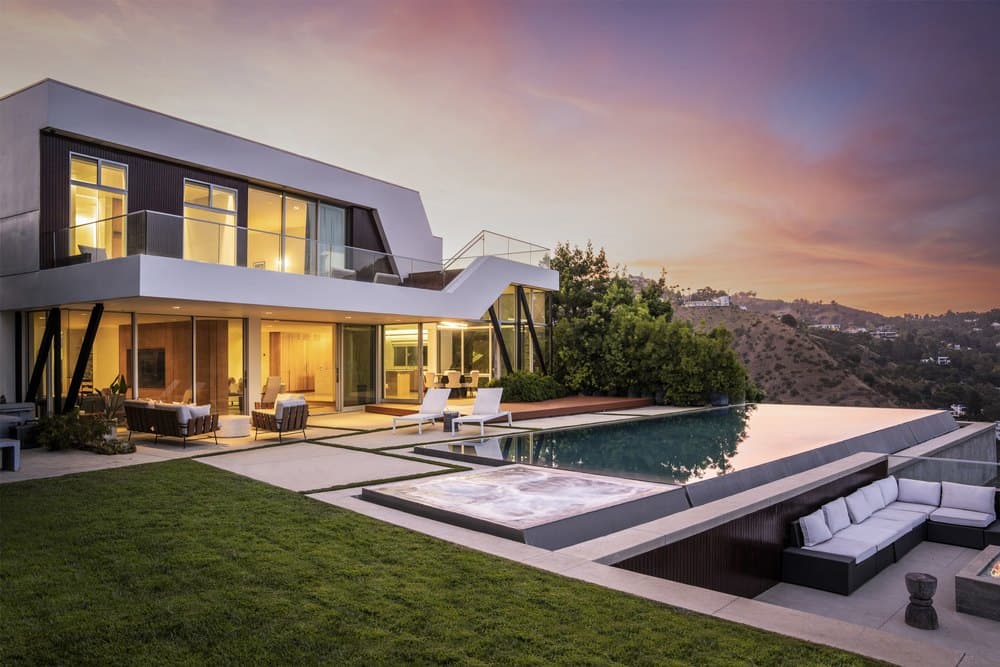
Jeremy Piven Parts Ways With His Stunning Mount Olympus Mansion After a Rocky Year on the Market
After more than a year of price reductions, relisting, and market uncertainty, Entourage star Jeremy Piven has finally closed the chapter on his Los Angeles real estate saga. The 60-year-old actor has officially sold his sprawling modern mansion in the prestigious Mount Olympus neighborhood for $6.85 million—a far cry from the ambitious $9.49 million asking price he set when the property first hit the market in January 2025. While the sale marks the end of a long journey, it's one that came with significant financial compromises and an unexpected tax bill that will further eat into his returns.
A Decade of Ownership in One of LA's Most Coveted Hilltop Communities
Piven originally purchased the gated estate back in 2017, paying $6.8 million for the property. Nestled in Mount Olympus—a hillside community perched between the Hollywood Hills and Laurel Canyon—the home offered the kind of sweeping views, privacy, and modern luxury that attract high-profile buyers to the area. For nearly a decade, the actor called the estate home, and on paper the investment appeared sound: Los Angeles luxury real estate had appreciated substantially over that period, and many celebrity homeowners in similar neighborhoods had cashed in handsomely.
With 6,200 square feet of living space spread across four bedrooms and five bathrooms, the property was no modest bungalow. Its gated entrance, contemporary architectural lines, and premium finishes positioned it firmly in the upper tier of the LA luxury market. It was the kind of home that, in a different market climate, could have easily fetched the price Piven initially had in mind.
From Rental Listing to For-Sale Sign: How the Journey Began
Before formally putting the property up for sale, Piven first tested the waters as a rental listing—placing the home on the market for $35,000 per month in late 2024. That strategy suggested he may have been weighing his options before committing to a full sale. When January 2025 arrived, he made the move official and listed the mansion at $9.49 million, signaling hopes of a nearly $2.64 million profit over his original purchase price.
Those hopes, however, would prove difficult to sustain in a shifting market. High interest rates, a cooling luxury segment, and increased inventory across Los Angeles all contributed to a more competitive and cautious buying environment. What Piven and his team likely anticipated would be a quick, high-dollar deal turned into a prolonged negotiation with the market itself.
A Year of Price Cuts and Market Volatility
Over the course of 2025, the property bounced on and off the Multiple Listing Service with a series of price reductions that told a telling story about demand. By November 2025, the asking price had dropped to $7.49 million—still about $640,000 above where the deal would ultimately land. Each reduction drew renewed attention to the listing but also signaled to savvy buyers that negotiating room existed.
This type of prolonged market exposure can be a double-edged sword for high-profile sellers. On one hand, continued visibility keeps the property in front of potential buyers. On the other, repeated price cuts can create a perception of desperation or underlying issues with the property, even when none exist. For a celebrity like Piven, whose name and the home's listing were regularly covered by real estate and entertainment media, the extended saga played out very publicly.
The Final Sale: A Half-Million Gain Reduced by LA's Mansion Tax
When the dust settled, Piven walked away with a sale price of $6.85 million—representing a nominal gain of roughly $50,000 over his 2017 purchase price before costs. But the headline figure masks a more complex financial reality, particularly when factoring in Los Angeles' controversial mansion tax.
Under current city regulations, any residential property sold for more than $5.3 million is subject to a 4% transfer tax levy. Applied to Piven's $6.85 million sale, that amounts to approximately $274,000 owed to the city. When combined with agent commissions, carrying costs over nearly a decade of ownership, and other transaction expenses, the net financial picture becomes considerably thinner than the raw sale price implies.
The actor was represented throughout the transaction by a powerhouse team at The Beverly Hills Estates, including agents Branden Williams, Rayni Williams, Michelle Saniei, and Trevor Wright. Notably, the same brokerage also represented the buyer—a dual representation arrangement that is legal in California under specific disclosure requirements.
What This Sale Tells Us About the LA Luxury Market
Piven's real estate journey is more than just a celebrity footnote—it offers a revealing snapshot of where the Los Angeles luxury market stands today. The city's upper-tier segment, once defined by rapid appreciation and frenzied bidding wars, has become notably more deliberate. Sellers who entered the market expecting pre-pandemic-era enthusiasm have frequently had to recalibrate expectations.
- Extended days on market are increasingly common for properties priced above $7 million, particularly those without recent renovations or unique architectural cachet.
- The mansion tax, introduced via Measure ULA in 2023, continues to influence seller and buyer behavior at the top of the market, with many transactions being structured creatively to minimize liability.
- Dual agency arrangements, while sometimes controversial, have become more common as boutique luxury brokerages leverage their buyer networks to close deals efficiently.
- Rental-to-sale pivots reflect broader uncertainty, with sellers using rental income to offset carrying costs while they wait for the right buyer.
Mount Olympus: A Neighborhood Worth Watching
Despite the challenges Piven faced, Mount Olympus remains one of the most architecturally interesting and visually dramatic neighborhoods in all of Los Angeles. Developed primarily in the 1960s and 1970s with an emphasis on modernist and Mediterranean Revival architecture, the community has seen a steady influx of contemporary new builds and gut renovations over the past two decades. Its hilltop position offers panoramic views of the city, canyon privacy, and proximity to both the Sunset Strip and the quieter residential streets of Laurel Canyon.
For buyers who can navigate the mansion tax implications and who are seeking something distinct from the flat-lot estates of Beverly Hills or the gated compounds of Bel Air, Mount Olympus represents a compelling proposition. It's the kind of neighborhood where a well-positioned, modern home will always find an audience—even if it takes longer than the seller originally hoped.
Final Thoughts
Jeremy Piven's Mount Olympus mansion sale is a reminder that even in prestige markets, real estate is rarely a guaranteed windfall. A combination of market timing, tax policy, and shifting buyer sentiment turned what could have been a multi-million-dollar profit into a modest return—and a cautionary tale about the realities of luxury homeownership in modern Los Angeles. For fans of Entourage, perhaps the most fitting analogy is this: sometimes, even Ari Gold can't close the deal on the first pitch.