
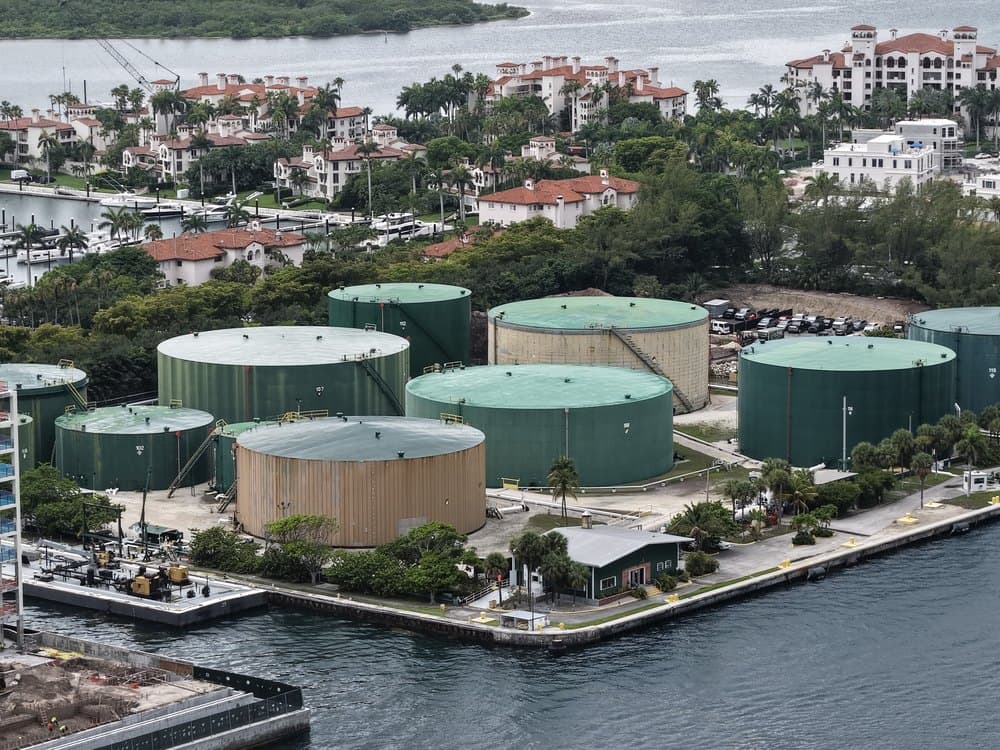
Miami-Dade Invokes Eminent Domain to Seize Land on Ultraexclusive Fisher Island
In a bold and unprecedented move, Miami-Dade County has officially invoked eminent domain to seize control of a critical ship fueling terminal located on Fisher Island — one of the most exclusive and expensive communities in the entire United States. The decision escalates what has already become a highly contentious, multimillion-dollar real estate dispute between county officials and luxury condominium developers, and it raises major questions about the future of PortMiami, one of the world's busiest cruise hubs.
What Is Happening on Fisher Island?
At the heart of this dispute is a nearly 10-acre parcel of prime waterfront land that currently houses a tank farm. This tank farm provides fuel that is essential to the daily operations of PortMiami, supplying cruise ships and cargo vessels that pass through the port on a continuous basis. Without this fueling infrastructure, the operational efficiency of one of America's most economically significant ports would be seriously jeopardized.
Fisher Island itself is a 216-acre private community located just off the southern tip of Miami Beach. It is accessible only by ferry, private yacht, or helicopter, making it one of the most secluded and sought-after addresses in the country. The island has consistently ranked among the most expensive zip codes in the United States, with properties routinely selling for tens of millions of dollars. The fuel terminal in question sits at the northern end of the island, and luxury condominium developers have had their eyes on the valuable waterfront land for some time.
Why Is Miami-Dade Invoking Eminent Domain?
Miami-Dade County Mayor Daniella Levine Cava announced in an official statement that the county would begin formal eminent domain proceedings after negotiations with the property's stakeholders concluded without reaching an acceptable agreement. Eminent domain is a legal power that allows government entities to take private property for public use, provided that fair compensation is offered to the owner. It is a tool typically reserved for situations where the public interest is deemed to outweigh private property rights.
In this case, the county argues that maintaining the fueling terminal is critical infrastructure for PortMiami. Losing the terminal to private luxury development would not only disrupt port operations but could also have far-reaching economic consequences for the broader Miami-Dade region. PortMiami generates billions of dollars in economic activity annually and supports tens of thousands of jobs, making its uninterrupted operation a matter of significant public concern.
The Role of Luxury Real Estate Development in the Dispute
The conflict did not emerge in a vacuum. Developers with ambitions to build high-end condominiums on Fisher Island have long viewed the tank farm property as an ideal development site. Given the island's ultra-premium real estate values and its reputation as a playground for billionaires and celebrities, the nearly 10-acre waterfront parcel is extraordinarily valuable from a private development standpoint.
This tension between public infrastructure needs and private development ambitions is not unique to Fisher Island, but it is particularly dramatic here given the enormous sums of money involved and the high-profile nature of the location. The invocation of eminent domain signals that the county has determined that the public good — in this case, the continued operation of PortMiami's fueling infrastructure — must take precedence over private commercial interests.
What Is Eminent Domain and How Does It Work?
Eminent domain is a constitutional power that allows federal, state, and local governments in the United States to acquire private property for public use. The Fifth Amendment of the U.S. Constitution requires that the government pay "just compensation" to property owners when exercising this power. While the concept sounds straightforward, eminent domain proceedings are frequently complex, drawn out, and legally contested — particularly when the property in question is worth tens of millions of dollars.
- The government must demonstrate that the seizure serves a legitimate public purpose.
- The property owner must be offered fair market value as compensation.
- Property owners have the right to challenge both the taking and the compensation offered in court.
- Legal disputes can extend the process for months or even years.
In high-stakes cases like the Fisher Island fuel terminal, it is virtually certain that the property owners will contest the proceedings, potentially leading to a prolonged legal battle that could play out in Florida courts for years to come.
Implications for PortMiami and the Local Economy
PortMiami is no ordinary port. Known as the "Cruise Capital of the World," it handles more cruise passengers than any other port globally and is also a major cargo hub serving South Florida and beyond. The fuel terminal on Fisher Island plays a behind-the-scenes but absolutely vital role in keeping this maritime engine running smoothly.
If the county succeeds in its eminent domain claim, it would secure long-term control over the infrastructure needed to sustain port operations well into the future. Failure to do so could open the door to private redevelopment that would eliminate the fueling terminal entirely, forcing PortMiami to seek alternative — and potentially far more costly — fueling solutions.
What Happens Next?
The eminent domain proceedings are now formally underway, but the road ahead is likely to be complex. Legal challenges from developers and property stakeholders are widely expected, and determining "just compensation" for nearly 10 acres of Fisher Island waterfront real estate will itself be a deeply contested process. Real estate attorneys, appraisers, and government officials will all play key roles in what promises to be one of the most high-profile land use disputes in South Florida's recent history.
For residents, investors, and real estate watchers, the Fisher Island eminent domain case is a compelling reminder that even the most exclusive addresses are not entirely immune to the reach of government authority when critical public infrastructure hangs in the balance. As the legal proceedings unfold, the outcome will have lasting implications not only for Fisher Island and PortMiami, but for how Miami-Dade County navigates the ongoing tension between luxury development and public infrastructure needs in one of America's fastest-growing and most dynamic urban regions.