
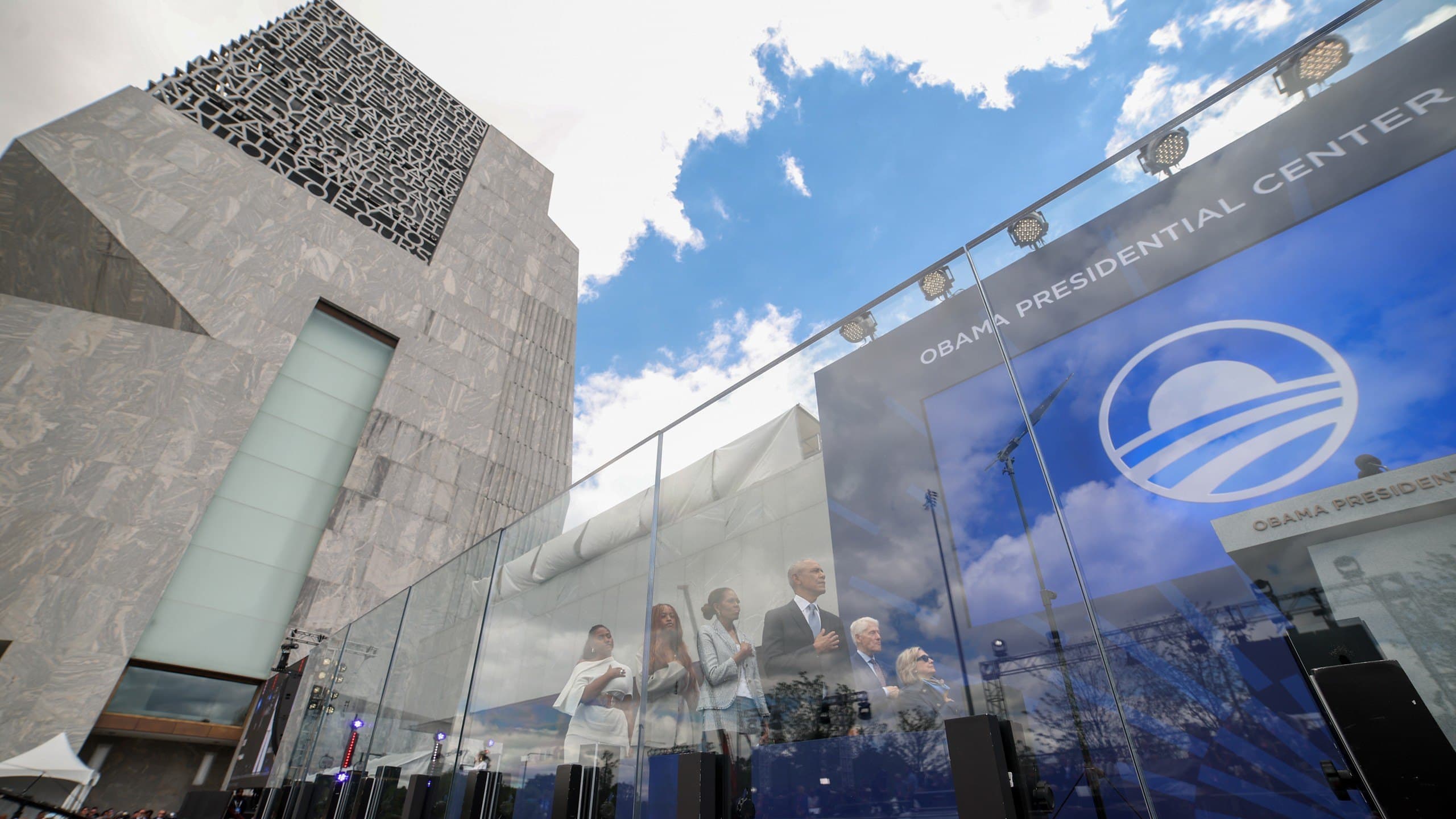
Obama Presidential Center Grand Opening: A Historic Moment on Chicago's South Side
After years of planning, construction, and no shortage of public debate, the Obama Presidential Center has officially opened its doors to the public. The landmark complex welcomed its first visitors on Juneteenth — a fitting symbolic choice — marking a new chapter for Chicago's South Side and for the legacy of the 44th President of the United States, Barack Obama. With an estimated price tag of $850 million, the center is one of the most ambitious presidential library projects ever undertaken, and it has already made its presence felt far beyond the boundaries of Jackson Park.
Where Is the Obama Presidential Center Located?
The Obama Presidential Center sits within Jackson Park, a historic green space on Chicago's South Side. The neighborhood has deep cultural and historical roots, and the choice of location was itself a point of extensive community conversation over the years leading up to construction. For many South Side residents, the center represents a long-overdue investment in a part of the city that has historically received less attention and fewer resources than Chicago's downtown core. For others, questions about displacement, green space preservation, and community benefit agreements kept the conversation lively well into the building phase.
Regardless of where one stands on those debates, the center is now a physical reality — a striking campus that is impossible to ignore and hard to forget once you've seen it.
What's Inside the Obama Presidential Center?
The complex is made up of four distinct buildings, each serving a different purpose and audience. Together, they create a campus designed not just for passive tourism but for active community engagement.
- The Museum: The centerpiece of the campus is an eight-story museum that houses four levels of exhibits. These tell the story of Barack and Michelle Obama's journey to and through the White House, highlight impactful social movements that shaped or were shaped by the Obama era, and display memorabilia from the family's time as the nation's First Family. Interactive activities are woven throughout, making the museum accessible and engaging for visitors of all ages.
- The Library: This building includes an interactive media area designed to go beyond traditional archival functions, inviting visitors to explore historical documents, speeches, and digital resources in an immersive setting.
- The Community Forum: Perhaps the most locally oriented building on the campus, the community forum includes a full auditorium suitable for performances, public lectures, and cultural events. This space is intended to serve South Side residents as a genuine civic gathering place, not just a backdrop for presidential tourism.
- The Sports Facility: Rounding out the campus is a sports center that features an NBA regulation-size basketball court — a nod to President Obama's well-known love of the game — along with additional athletic amenities intended for community use.
The Museum's Crown Jewel: An Observation Tower With Sweeping Views
Rising above the rest of the museum is an observation tower that offers panoramic views of Chicago's South Side. For visitors who make the climb, the reward is a perspective on the city that few residents and even fewer tourists ever get to experience. The South Side's neighborhoods, parks, and skyline stretch out in every direction, providing a powerful sense of place and context for everything the museum holds within its walls.
That tower, however, is also the source of the most heated design criticism the project has faced.
The Brutalist Design Controversy: A Klingon Prison or Architectural Boldness?
Architecture is rarely neutral, and the Obama Presidential Center has proven that point emphatically. The museum tower in particular has drawn strong reactions from critics, design observers, and the general public alike. Its brutalist aesthetic — characterized by a monolithic, nearly windowless granite form — has been described as everything from "audacious" and "bold" to comparisons that are considerably less flattering. Some critics have likened the tower's appearance to a fortress, while others have reached for more colorful pop culture references, with at least one prominent publication drawing a comparison to a structure from the Star Trek universe.
Brutalism as an architectural style has a complicated reputation. Born in the mid-20th century and beloved by some for its raw honesty and structural clarity, it has also long been associated with a cold, imposing aesthetic that can feel alienating rather than welcoming. Applying that language to a presidential center meant to celebrate community, progress, and democratic ideals has struck some observers as a curious choice.
Supporters of the design argue that the boldness is intentional — that a building honoring a groundbreaking presidency should itself refuse to blend into the background. The architects have defended the form as a deliberate statement, one designed to endure both physically and visually for generations to come.
What the Obama Presidential Center Means for Chicago's South Side
Beyond the architectural debate, the opening of the Obama Presidential Center carries real economic and cultural weight for the surrounding community. The center is expected to draw significant tourist traffic to a part of the city that has not historically been a primary destination for visitors. Local businesses, restaurants, and cultural organizations stand to benefit from that foot traffic, and the community-facing elements of the campus — the forum, the sports facility, the library — offer tangible resources for residents regardless of their interest in presidential history.
The Juneteenth opening date was widely noted as a meaningful choice, linking the center's public debut to a holiday that celebrates the end of slavery in the United States and has taken on renewed cultural significance in recent years.
Planning a Visit to the Obama Presidential Center
For anyone considering a trip to Chicago, the Obama Presidential Center is now a compelling addition to any itinerary, particularly for visitors interested in American history, architecture, or the cultural life of the South Side. Jackson Park itself is a beautiful setting, and the center's campus is designed to encourage exploration beyond a single building or exhibit.
Whether you arrive as an admirer of Barack Obama's presidency, a critic of the building's design, a Chicago resident reclaiming a neighborhood landmark, or simply a curious traveler, the Obama Presidential Center offers something worth seeing — and plenty worth thinking about long after you leave.