
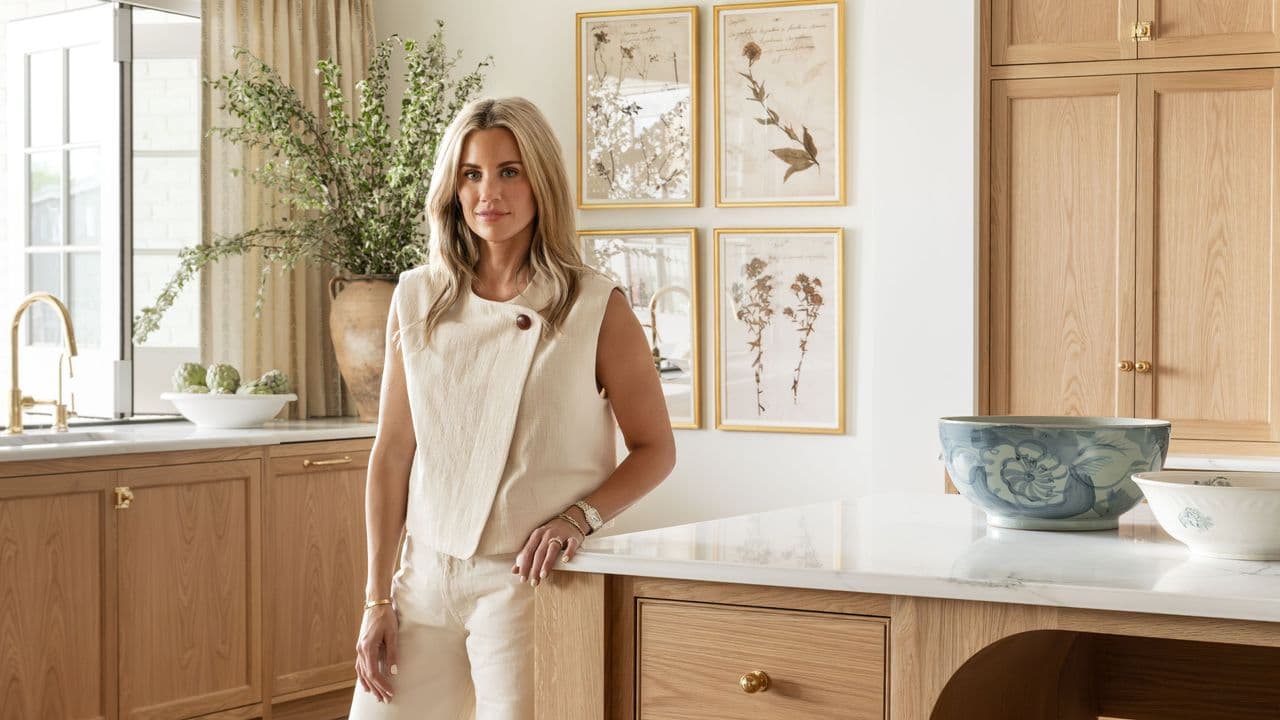
How Shea McGee Designed an Arizona Home Built to Get Better With Age
Most new construction homes face a common challenge: they look too new. Clean lines, pristine surfaces, and untouched finishes can feel sterile rather than welcoming — like a house that hasn't yet become a home. That's exactly the problem Shea McGee, co-founder of Studio McGee and star of Netflix's Dream Home Makeover, set out to solve when she took on a brand-new build in Arizona. Her approach? To intentionally "write the history" of a home that hadn't yet lived any.
The result is a residence that feels layered, grounded, and deeply personal — even though it was built from scratch. More impressively, McGee designed it with the future in mind, making deliberate choices she believes will make the home look even more beautiful 20 years from now than it does today. Here's how she did it.
The Philosophy Behind "Writing the History" of a New Build
Shea McGee's concept of writing a home's history centers on a simple but powerful idea: character doesn't have to be earned over decades — it can be designed in from the very beginning. In new construction, every surface starts fresh and every material is pristine, which can make spaces feel cold or uninspired. McGee's solution is to source materials, furniture, and finishes that already carry a sense of age, story, and patina.
This means hunting for antiques, choosing natural materials that evolve gracefully over time, and resisting the urge to make everything match too perfectly. Instead of decorating a room so it looks finished today, she designs it so it looks collected — like a space where meaningful objects have been gathered over years of living and traveling.
For the Arizona project, this philosophy was applied from the architecture inward. Rather than defaulting to the sleek, modern aesthetic that often dominates new Southwest builds, McGee leaned into warmth, texture, and a sense of rootedness that suggests the home has always belonged to its landscape.
Materials That Age Gracefully: The Foundation of Timeless Design
One of the most important tools in McGee's timeless design arsenal is her thoughtful selection of materials. She gravitates toward natural, organic options that improve — rather than degrade — as they age. In the Arizona home, this approach was evident throughout.
- Reclaimed and distressed wood was used in beams, flooring, and cabinetry details, lending the space an authenticity that brand-new lumber simply can't replicate on day one.
- Aged or honed stone surfaces in kitchens and bathrooms bring a geological permanence that feels timeless and grounded in the desert environment.
- Plaster and limewash walls create depth and variation that smooth painted drywall lacks — and these finishes only grow more beautiful as they develop subtle wear patterns over the years.
- Unlacquered brass and hand-forged iron hardware were chosen over polished chrome or brushed nickel, because these metals patina naturally, giving fixtures a lived-in warmth that feels authentic rather than manufactured.
Each of these choices reflects the same underlying logic: choose materials that the passage of time will improve, not deteriorate. It's a long-term investment in a home's visual and emotional richness.
Antiques and Vintage Pieces: Instant Character in a New Space
Perhaps no single strategy does more to "write the history" of a new build than introducing antique and vintage pieces. Shea McGee is known for her love of sourcing one-of-a-kind finds — a practice that pays enormous dividends in a new construction home where everything else is factory-fresh.
In the Arizona home, antique furniture, vintage rugs, and collected objects were woven throughout the interiors. An old wooden console in the entryway, for example, immediately signals that this is a home where things are chosen with care — not simply ordered from a catalog. A worn Persian rug beneath a dining table tells a story the floor beneath it cannot. These pieces act as anchors, giving the entire room a sense of time and place that no amount of new furniture can achieve.
McGee's advice to homeowners is to invest in at least one or two truly antique pieces per room. They don't need to be expensive — they just need to be genuinely old. That authenticity radiates through an entire space.
Architectural Details That Honor the Desert Landscape
The Arizona setting gave McGee an opportunity to ground the home in its regional identity — something she embraced fully. Rather than imposing a style that could exist anywhere, she designed with the desert in mind: thick walls that echo adobe construction, arched doorways that reference the region's Spanish Colonial heritage, and a warm, earthy palette drawn directly from the surrounding landscape.
These architectural choices do more than look beautiful today. They ensure the home will feel authentic and contextually rooted for decades to come, because they're in dialogue with the environment rather than in contrast to it. Trends come and go, but a home that honestly reflects its place in the world will always feel right.
Designing for the Future: Restraint, Intentionality, and the Long View
One of the most counterintuitive aspects of McGee's approach is what she chooses not to do. She deliberately avoids over-decorating or filling every corner, knowing that a home needs room to breathe — and room to grow. Spaces that are too finished on day one have nowhere to go. By leaving room for future acquisitions, inherited pieces, and the inevitable evolution of a family's taste and life, she designs homes that can absorb change gracefully.
She also prioritizes quality over quantity at every turn. Fewer pieces of genuine quality will always outlast a room full of trendy items that will feel dated within a decade. This discipline is what separates a home designed to last from one that simply reflects the moment it was built.
What Every Homeowner Can Learn From Shea McGee's Arizona Project
You don't need a design celebrity or a multimillion-dollar budget to apply these principles to your own home. The core lessons from Shea McGee's Arizona project are surprisingly accessible.
- Prioritize natural materials — wood, stone, linen, leather — over synthetic alternatives whenever your budget allows.
- Introduce at least one genuine antique or vintage piece into every main room.
- Choose hardware and fixtures in metals that patina naturally over time.
- Resist the urge to over-decorate; leave space for your home to grow with you.
- Design in conversation with your home's location and regional architectural heritage.
Shea McGee's work on this Arizona home is a masterclass in thinking beyond the present moment. By asking not just "How does this look today?" but "How will this look in 20 years?", she created something far rarer than a beautiful new home — she created a home that already feels like it has a soul. And that, more than any single design choice, is the real secret to timeless interiors.