
The American South Is in a Population Boom — And It's Unlike Anything Happening Elsewhere
If you've noticed more moving trucks heading south over the past few years, you're not imagining things. According to the latest estimates from the U.S. Census Bureau, the South has firmly established itself as the most powerful engine of population growth in the entire country — and the numbers are striking enough to demand attention from homebuyers, investors, policymakers, and everyday Americans thinking about where to plant roots.
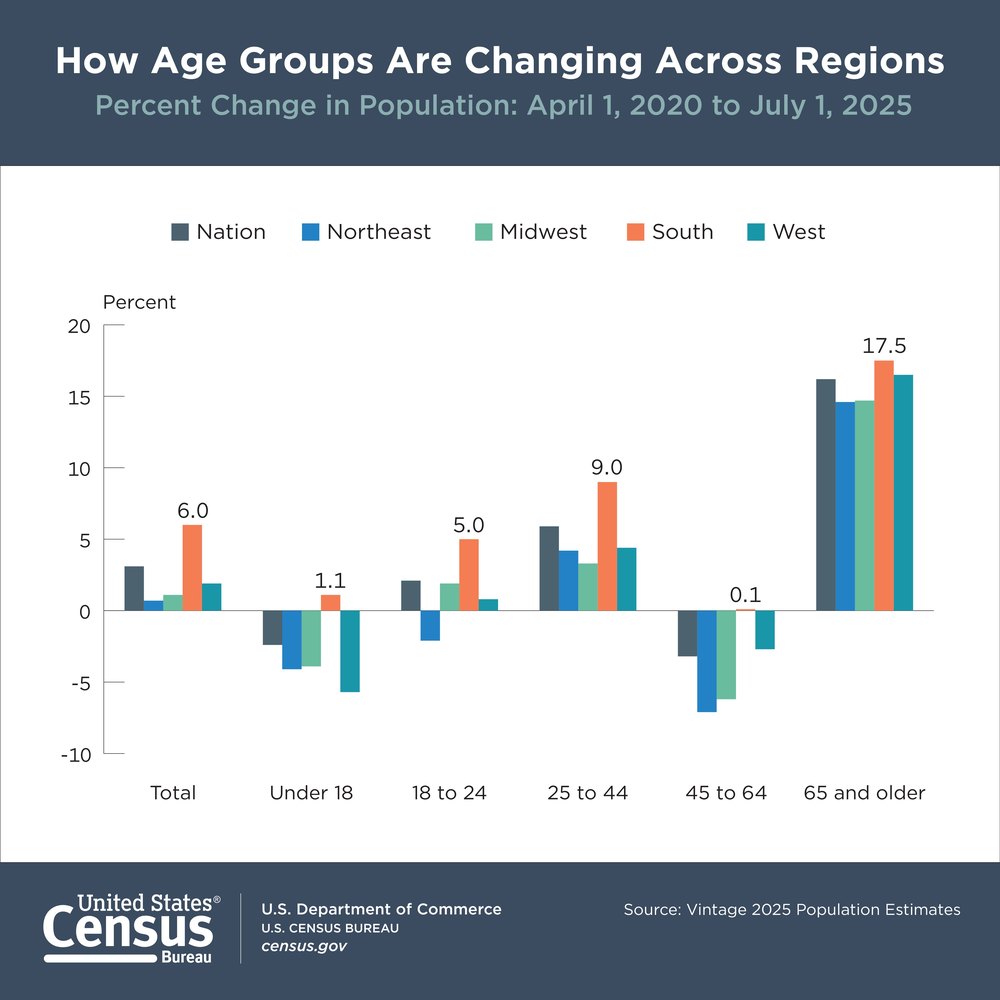
From April 2020 to July 2025, the South's population grew by 6.0%, nearly double the national growth rate of 3.1%. But the more remarkable finding isn't simply the speed of growth — it's the breadth of it. The South is the only U.S. region to experience population growth across all five major age groups during this period, making it a singular demographic force in modern American history.
What the Census Bureau Data Actually Shows
The U.S. Census Bureau's Vintage 2025 population estimates paint a vivid picture of a country sorting itself by region in ways not seen in recent decades. While the national population continues to inch upward, the growth is far from evenly distributed. The South is absorbing a disproportionate share of new residents — and those residents span every stage of life.
Lauren Bowers, chief of the Census Bureau's Population Estimates branch, explained the forces at play: "The continued transition of baby boomers into retirement age, compounded by local migration and fertility patterns, is shifting the demographic makeup of the country. The South stands out because it is seeing population gains in age groups that in other regions saw little change or are declining, reflecting its strong positive migration patterns this decade."
That last phrase — strong positive migration patterns — is the key to understanding why the South isn't just growing, but growing in a way that no other region can currently match.
Growth Across Every Generation: A Rare Achievement
Perhaps the most telling data point from the Census Bureau's findings is the South's performance among the youngest residents. From 2020 to 2025, the South was the only U.S. region to add residents under the age of 18. Its youth population grew by 1.1% — a seemingly modest number that becomes extraordinary when compared against every other region:
- The Northeast saw its under-18 population fall by 4.1%
- The Midwest experienced a decline of 3.9% in that same age group
- The West dropped by 5.7% among residents under 18
This matters enormously. A growing youth population signals that families are actively choosing the South for the long term. They aren't just passing through — they're buying homes, enrolling children in schools, and embedding themselves into communities. That kind of migration has compounding effects on local economies, housing demand, school funding, and civic infrastructure for decades to come.
At the other end of the age spectrum, the South is equally magnetic. As baby boomers continue their transition into retirement, a substantial portion are choosing southern states for their lower cost of living, warmer climates, and favorable tax environments. This influx of older residents contributes to growth in the 65-and-over age group — a trend that is reshaping real estate markets from Florida to Texas to the Carolinas.
Why Are People Choosing the South?
The demographic data raises an obvious question: what is pulling so many Americans southward? The answer is multifaceted, but several well-documented factors consistently emerge.
Affordability and Cost of Living
Many southern states offer a significantly lower cost of living compared to coastal metros in the Northeast and West. Housing costs, in particular, remain more accessible in cities like Charlotte, Nashville, San Antonio, and Raleigh — even after years of price appreciation driven by migration itself. For families being priced out of markets like San Francisco, New York, or Boston, the South presents a viable path to homeownership without sacrificing career opportunity.
Job Market and Economic Growth
The South has attracted substantial corporate investment over the past decade. Major employers in technology, manufacturing, finance, and healthcare have expanded or relocated operations to southern cities, creating well-paying jobs that draw working-age adults and young professionals. This economic momentum tends to be self-reinforcing — jobs attract workers, workers attract businesses, and the cycle continues.
Climate and Lifestyle
Warm weather and abundant outdoor amenities are powerful draws, particularly for retirees and remote workers who have the flexibility to prioritize lifestyle over proximity to a traditional office. The South's geography — from Gulf Coast beaches to Appalachian foothills — offers a range of environments that appeal to diverse preferences.
Tax Advantages
Several southern states have no state income tax or maintain comparatively low tax burdens, which is a significant consideration for both retirees managing fixed incomes and professionals maximizing take-home pay. This fiscal environment has contributed meaningfully to the South's migration appeal.
What This Means for Housing and Real Estate
Population growth doesn't happen in a vacuum — it flows directly into housing demand. The South's sustained influx of residents across all age groups means continued pressure on home inventory and upward momentum on home values in key metro areas. For buyers, this underscores the urgency of planning carefully. For sellers and investors, it signals that southern markets are likely to remain competitive for the foreseeable future.
The region's ability to attract young families, working-age professionals, and retirees simultaneously creates a balanced and resilient demand base — one less vulnerable to the swings that affect markets dependent on a single demographic cohort.
The Broader National Demographic Shift
The South's growth story is also a mirror for what is happening — or failing to happen — elsewhere. Declining youth populations in the Northeast, Midwest, and West signal potential long-term challenges for those regions: shrinking school enrollments, tighter labor pipelines, reduced consumer spending, and fiscal stress on local governments dependent on a growing tax base.
As Lauren Bowers of the Census Bureau noted, regional age patterns are shifting for structural reasons, not temporary ones. Baby boomer retirements, fertility trends, and migration decisions made freely by millions of Americans are quietly redrawing the country's demographic map. The South, for now, sits at the center of that transformation — growing faster, growing younger, and growing older, all at once.
For anyone navigating decisions about where to live, work, invest, or do business, the message from the Census Bureau's latest estimates is clear: the South isn't just a region on the rise. It's the region reshaping what American population growth looks like in the twenty-first century.