
VCU School of the Arts Puts Nature-Informed Design at the Center of Student Innovation
Virginia Commonwealth University's School of the Arts has long been recognized as one of the most progressive creative institutions in the United States. Each year, its students produce work that challenges conventional thinking and pushes the boundaries of what design, architecture, and spatial planning can achieve. Among the most recent wave of standout student projects is a nature-informed community space that has drawn significant attention for its thoughtful integration of the natural world into the built environment. This project, alongside a broader portfolio of ambitious proposals from the school, signals a clear shift in how the next generation of designers is approaching the relationship between people, place, and nature.
What Is Nature-Informed Design and Why Does It Matter?
Nature-informed design, sometimes used interchangeably with biophilic design, is an approach to architecture and spatial planning that draws direct inspiration from natural systems, materials, patterns, and processes. Rather than treating nature as a backdrop or decorative element, nature-informed design embeds ecological thinking into the very structure and function of a space. This can mean anything from using organic forms and natural materials to designing spaces that respond to seasonal light changes, support local biodiversity, or encourage occupants to engage meaningfully with the outdoors.
The relevance of this approach has never been greater. As urban populations continue to grow and cities become denser, access to restorative natural environments is increasingly unequal. Research consistently shows that exposure to nature — even in modest, designed forms — reduces stress, improves mental health, boosts cognitive performance, and strengthens community bonds. Architects and designers who understand how to integrate nature meaningfully into communal spaces are not just creating beautiful environments; they are addressing pressing public health and social equity challenges.
The Nature-Informed Community Space: A Closer Look
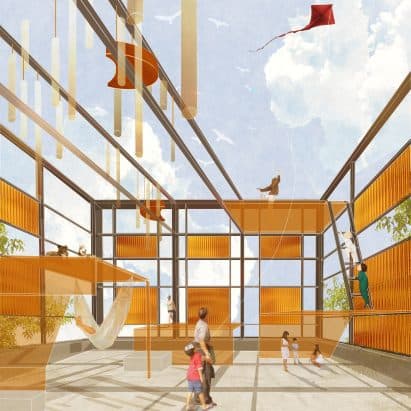
The nature-informed community space concept emerging from VCU's School of the Arts demonstrates a sophisticated understanding of these principles. At its core, the project envisions a shared public environment where natural elements are not incidental but structural — woven into the spatial logic of the design itself. The project's renders suggest a space that uses layered vegetation, natural light filtering, and materials with strong ecological character to create a place that feels genuinely restorative rather than merely green in a superficial sense.
What makes this project particularly compelling from a design standpoint is its community focus. Rather than creating a passive green space for solitary contemplation, the design imagines an active, inclusive environment where people can gather, collaborate, and connect — with each other and with the natural world simultaneously. This dual function, simultaneously social and ecological, reflects a growing consensus in urban design that the best public spaces serve multiple overlapping human needs at once.
The spatial arrangement appears to prioritize permeability and flexibility, allowing different user groups to occupy and adapt the space according to their needs. This kind of programmatic openness is a hallmark of thoughtful community-centered design, and it demonstrates that the students behind this project are thinking not just about aesthetics but about long-term usability and social impact.
VCU School of the Arts: A Breeding Ground for Forward-Thinking Design
The nature-informed community space is just one example of the innovative work coming out of VCU's School of the Arts. The school has consistently ranked among the top arts and design programs in the country, and its interdisciplinary approach means that students are regularly exposed to ideas from architecture, environmental studies, sociology, fine art, and technology. This cross-pollination of disciplines produces designers who are unusually well-equipped to tackle complex, real-world problems.
Student projects at VCU are not created in a vacuum. They are developed in response to genuine community needs, real urban contexts, and pressing social questions. Faculty mentorship at the school emphasizes critical thinking, research rigor, and a commitment to social responsibility — qualities that are clearly evident in the nature-informed community space project and others like it. The result is a portfolio of student work that feels less like academic exercise and more like a genuine contribution to the ongoing conversation about how cities and communities should evolve.
Key Design Principles on Display Across VCU's Student Projects
Looking across the range of projects emerging from VCU's School of the Arts, several shared design principles stand out:
- Community engagement as a design driver: Many projects begin with deep listening — understanding who a space is for, what those people need, and how design can serve those needs without imposing a predetermined vision. This human-centered starting point leads to solutions that feel genuinely relevant rather than generic.
- Ecological responsibility: Whether through material choices, passive environmental strategies, or the incorporation of living systems, VCU students consistently demonstrate an awareness that their designs exist within a broader ecological context and carry environmental responsibilities.
- Flexibility and adaptability: In an era of rapid social and environmental change, designing for adaptability is a form of resilience. Student projects from the school frequently incorporate flexible spatial arrangements that can accommodate shifting uses over time.
- Integration of technology and nature: Far from treating digital tools and natural systems as opposites, many VCU projects explore how technology can be used to enhance our connection to the natural world — through smart environmental controls, digital fabrication of nature-inspired forms, or data-driven ecological monitoring.
Why Nature-Informed Community Spaces Are the Future of Urban Design
The broader significance of projects like the one coming out of VCU cannot be overstated. As cities grapple with climate change, social fragmentation, and the mental health consequences of increasingly screen-dominated lives, the demand for well-designed, nature-integrated community spaces is growing rapidly. Designers who can create these environments effectively — spaces that are ecologically sound, socially inclusive, and genuinely beautiful — will be among the most sought-after professionals of the coming decades.
Nature-informed design also aligns powerfully with sustainability goals. Spaces that incorporate living vegetation, promote biodiversity, and work with rather than against natural systems tend to have lower environmental footprints and greater long-term resilience. As cities commit to net-zero targets and climate adaptation strategies, this kind of design thinking moves from nice-to-have to essential.
Looking Ahead: What VCU's Projects Tell Us About Design Education
Perhaps the most encouraging aspect of the work emerging from Virginia Commonwealth University's School of the Arts is what it reveals about the state of design education at its best. When students are given the freedom to engage with real problems, guided by faculty who understand both the technical and ethical dimensions of design, the results can be genuinely inspiring. The nature-informed community space project is a testament to the quality of that education and a preview of the kind of thoughtful, socially conscious design leadership that VCU graduates are prepared to offer the world.
For anyone interested in the future of community design, biophilic architecture, or urban sustainability, the work coming out of VCU's School of the Arts is well worth following closely. These student projects are not just promising — they are pointing in a direction that the entire field would do well to pursue.