
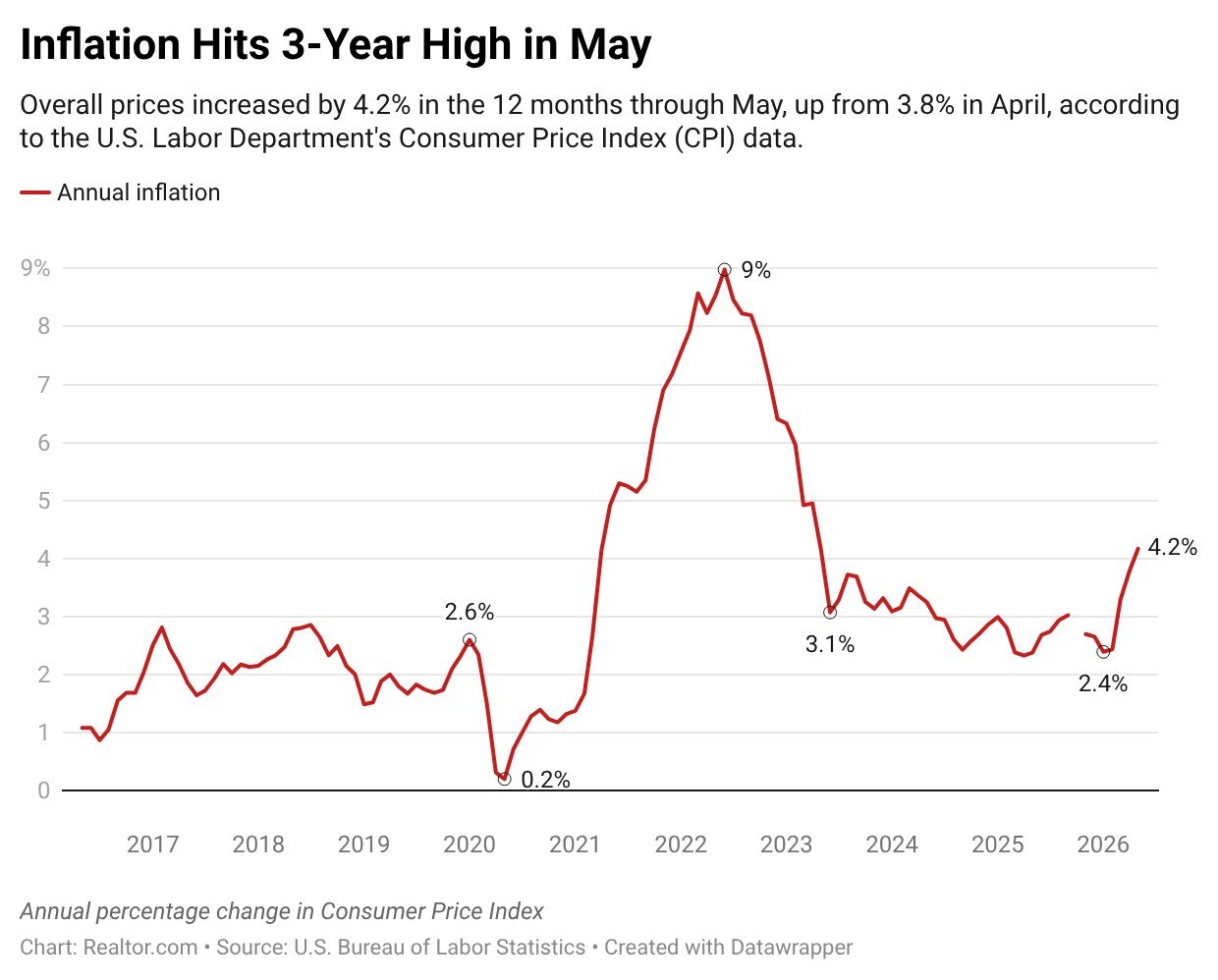
US Inflation Hits Three-Year High of 4.2% in May
American consumers are feeling the pinch at the gas pump, in the grocery store, and when paying rent — and now the data confirms what many households have suspected for months. Inflation in the United States surged to 4.2% in the 12 months through May, marking the highest level since April 2023 and placing the Federal Reserve in an increasingly difficult position ahead of its next policy meeting. The reading, which matched economist expectations, represents a sharp jump from the 3.8% recorded in April and signals that the battle against rising prices is far from over.
The data, released Wednesday by the U.S. Labor Department's Consumer Price Index (CPI) report, paints a picture of an economy where a single volatile sector — energy — is driving outsized pain for everyday Americans. Understanding what is behind this surge, and what policymakers might do about it, is essential for anyone trying to plan their finances in the months ahead.
Energy Prices: The Primary Culprit Behind the Inflation Spike
When analysts dug into the May CPI numbers, one factor stood above all others: energy costs. The energy index jumped 3.9% in May alone, following a 3.8% rise in April and a massive 10.9% increase back in March. Taken together, energy price increases accounted for more than 60% of the monthly inflation recorded in May — a staggering share that underscores just how much global oil market dynamics are shaping the cost of living for ordinary Americans.
Gasoline prices told an especially striking story. All types of gasoline surged 40.5% over the 12 months ending in May and rose 7% just from April to May alone. For drivers who fill up their tanks regularly, that increase is not an abstraction — it represents a real and significant drain on household budgets every single week. Fuel oil, used for heating homes in many parts of the country, climbed an extraordinary 58.9% on an annual basis, a figure that will weigh heavily on lower-income families who rely on oil heat.
Why Are Oil and Energy Prices Rising So Sharply?
The spike in oil prices is being driven by a combination of geopolitical tensions, supply constraints, and shifting global demand patterns. Concerns over potential conflict in the Middle East — particularly around Iran — have added a significant risk premium to crude oil prices in international markets. When global oil prices rise, the effects ripple through virtually every corner of the economy, from fuel costs to the price of goods that must be trucked to store shelves. Higher oil prices are, in many ways, an economy-wide tax that falls hardest on those who can least afford it.
Core Inflation Remains Sticky at 2.9%
While the energy-driven headline number grabbed the most attention, the underlying inflation picture also gave policymakers reason for concern. Core inflation — which strips out the volatile food and energy components to give a clearer view of underlying price pressures — rose 2.9% year-over-year in May, up from 2.8% in April. On a monthly basis, core inflation edged up 0.2% from April, a modest but persistent increase that suggests broad-based price pressures have not fully subsided despite months of elevated interest rates.
The Federal Reserve has historically placed significant weight on core inflation when setting monetary policy, because food and energy prices can swing sharply due to factors outside the central bank's control. A core reading approaching 3% tells the Fed that even beyond oil market volatility, prices throughout the economy are still rising at a pace above their 2% long-term target.
Groceries and Housing Costs Add to the Burden
Beyond energy, two other categories that weigh heavily on household budgets continued their upward trend in May. Grocery prices rose 2.7% compared to a year ago — a cost that ripples through families at every income level and every meal. Since food is transported to stores by truck, elevated diesel and fuel oil prices have a direct pass-through effect on grocery bills, meaning the energy price spike has a multiplier effect on food costs as well.
Housing costs, meanwhile, climbed 3.4% over the 12 months through May. For renters and homebuyers alike, shelter costs remain a persistent source of financial stress. With mortgage rates already elevated as a result of prior Fed rate hikes, the combination of high borrowing costs and rising home prices continues to squeeze affordability across the country.
The Fed's Difficult Balancing Act
The Federal Reserve now faces one of its most complex policy dilemmas in recent memory. On one hand, the acceleration in headline inflation — driven largely by energy — puts pressure on the central bank to maintain or even raise interest rates to demonstrate its commitment to price stability. On the other hand, much of the current inflation surge stems from oil prices that are rooted in geopolitical factors, not excessive domestic demand, which rate hikes alone cannot address.
Raising interest rates aggressively in response to an oil price shock risks slowing economic growth, dampening job creation, and placing further stress on the housing market without necessarily bringing energy prices under control. Yet allowing inflation to remain elevated risks unanchoring long-term inflation expectations — one of the Fed's deepest fears — and eroding the purchasing power of American workers at a time when wages are already under pressure.
What Experts Are Watching Ahead of the Fed Meeting
- The Fed's policy statement language: Markets will scrutinize every word for signals about whether the central bank leans toward holding rates steady, cutting, or considering further hikes in response to the 4.2% reading.
- Oil price trajectory: If geopolitical tensions ease and crude oil retreats, headline inflation could fall sharply in coming months without any Fed action — giving policymakers room to breathe.
- Core inflation trend: If core CPI continues its gradual creep upward beyond 3%, the Fed will face increasing difficulty justifying any rate cuts in the near term.
- Consumer spending data: Signs of weakening consumer demand could argue for a more cautious, hold-steady approach, while resilient spending would support a tighter monetary stance.
What This Means for Your Mortgage and Personal Finances
For consumers navigating this environment, the practical implications are significant. Mortgage rates are closely tied to expectations about Fed policy, and a Fed that feels compelled to hold rates higher for longer — or even raise them — would keep borrowing costs elevated for homebuyers and those looking to refinance. Prospective buyers who had been hoping for rate relief in the second half of 2025 may need to recalibrate their expectations in light of May's inflation data.
Drivers, homeowners who heat with oil, and anyone whose budget depends on predictable energy costs should prepare for continued volatility in that category. Building a financial cushion, reducing discretionary fuel consumption where possible, and locking in fixed-rate energy contracts where available are all practical steps households can take in a high-inflation environment.
The Road Ahead: Inflation's Uncertain Path
The May CPI report is a sobering reminder that inflation does not follow a straight line downward just because policymakers wish it to. A three-year high of 4.2% arrived not from policy failure alone, but from a combustible mix of geopolitical risk, energy market dynamics, and stubborn underlying price pressures. The Federal Reserve's challenge — and the challenge for every American household — is to navigate a path through rising prices without triggering a deeper economic slowdown. As the Fed meets next week, all eyes will be on how its leaders interpret these numbers and what signals they send about the months ahead.