
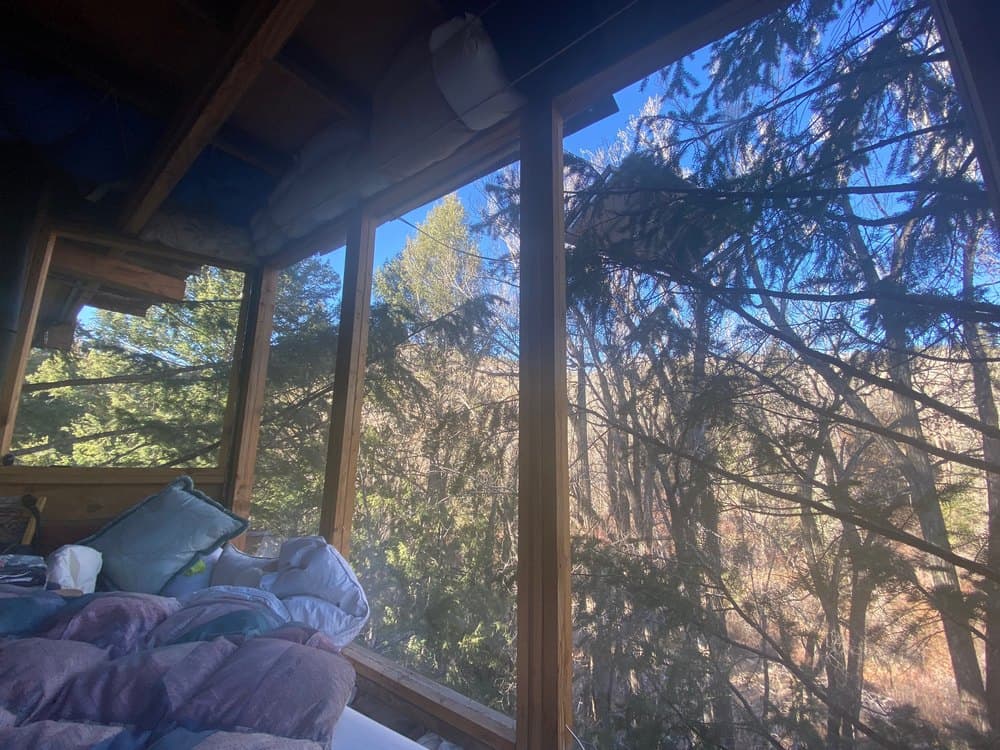
Aspen Treehouse Dweller Faces County Lawsuit Over His Nontraditional Home
In one of the most unusual housing stories to emerge from Colorado in recent years, a military veteran and arborist named Matthew Franzen has spent the past decade living 50 feet off the ground in a treehouse he built with his own hands in Aspen, CO. What began as a personal protest against one of the most expensive real estate markets in the United States has now evolved into a full-blown legal battle, as Pitkin County has filed a lawsuit against Franzen alleging serious land-use and building-code violations. The case has captured national attention, shining a spotlight on the tension between creative alternative housing solutions and the rigid regulatory frameworks that govern them.
Who Is Matthew Franzen?
Matthew Franzen is not your average housing protestor. As a military veteran and professional arborist, he has a deep, hands-on relationship with trees and the natural environment. His expertise in arboriculture likely gave him both the practical skills and the confidence to construct a livable structure 50 feet above the forest floor. Over the past decade, his treehouse has become more than just a novelty — it has been his primary residence, a symbol of his resistance to the skyrocketing cost of housing in Aspen, and ultimately the center of a significant legal dispute.
Franzen initially believed that the land on which he built his treehouse was public property. That assumption, while understandable given the heavily forested and seemingly undeveloped character of the area, would later become a key complication in his story. His intention was to use his unconventional dwelling as a form of protest, drawing attention to the housing affordability crisis that has long plagued Aspen and many other resort communities across the American West.
The Housing Affordability Crisis in Aspen
To understand why Franzen felt compelled to take such a dramatic stand, it helps to look at the numbers. Aspen, Colorado is one of the most expensive real estate markets in the entire country. The median listing price in Aspen currently sits at a staggering $1,295,000 — a figure that places homeownership firmly out of reach for the vast majority of working residents, including veterans, service workers, and tradespeople like Franzen himself.
This affordability gap has created a growing divide between the ultra-wealthy who own property in Aspen and the working class who keep the town's economy running but struggle to find stable, affordable housing nearby. Franzen's treehouse was, in many ways, a visceral and visible response to that inequality — a statement that when conventional housing becomes inaccessible, people will find unconventional ways to survive.
The Land Ownership Complication
In 2019, Franzen discovered that the land beneath his treehouse was not public at all. It was, in fact, privately owned by Pyramid Ranch LLC, an entity connected to the Crown family — the prominent ownership group behind Aspen Skiing Company. This revelation introduced a new and complex layer to Franzen's situation. Rather than being a quiet trespasser, he reportedly began communicating regularly with the Crown family's attorneys after learning of the land's ownership, suggesting that he was at least attempting to find some form of resolution or accommodation.
Pyramid Ranch LLC has since been named as a co-defendant in Pitkin County's lawsuit, as the property owner of record. This detail is significant because it suggests that the legal action targets not only Franzen's alleged violations but also the obligations of the landowner to address unauthorized structures on their property.
The Pitkin County Lawsuit
Filed on March 12, the lawsuit brought by Pitkin County lays out a series of serious allegations against Franzen. According to the complaint, Franzen constructed the treehouse without obtaining any of the required approvals or building permits that would normally be necessary for a structure of its kind. The county argues that the treehouse — perched 50 feet above the ground — is subject to the same building codes and zoning regulations that apply to any privately owned property in the region.
Perhaps most strikingly, the county's lawsuit claims that the treehouse development poses a danger of real, immediate, and irreparable injury to both the public and the county itself. This language suggests that officials view the structure not merely as a bureaucratic irregularity but as a potential safety hazard, raising concerns about structural integrity, emergency access, and liability.
What This Case Means for Alternative Housing
The Franzen case raises important and timely questions about alternative housing in America. As housing costs continue to climb in desirable communities across the country, more people are exploring unconventional living arrangements — from tiny homes and van dwelling to off-grid cabins and, yes, treehouses. Yet local governments have been slow to adapt their regulatory frameworks to accommodate these realities.
- Building codes and zoning laws were largely designed with traditional, ground-level residential construction in mind, leaving structures like treehouses in a legal gray zone.
- Veterans and working-class residents are disproportionately impacted by the housing affordability crisis in resort towns, often lacking access to the legal and financial resources needed to navigate complex permitting processes.
- The involvement of a high-profile landowner like Pyramid Ranch LLC and the Crown family adds a socioeconomic dimension to the case that resonates far beyond Aspen's city limits.
- Advocacy groups focused on housing rights and alternative living are watching the outcome of this case closely, as it could set a precedent for how municipalities treat nontraditional dwellings going forward.
Looking Ahead
As the legal process unfolds, Matthew Franzen's fate remains uncertain. He could be ordered to vacate and dismantle the treehouse he has called home for the past ten years, or the case could find some negotiated resolution that allows him to remain. Whatever the outcome, his story has already succeeded in doing what he originally set out to do: draw public attention to the housing affordability crisis in Aspen and spark a broader conversation about who gets to call one of America's most beautiful — and most expensive — communities home.
In a town where a median listing price of $1,295,000 is the norm, a man living in a treehouse 50 feet off the ground is far more than an eccentric outlier. He is a symbol of what happens when housing policy fails the people it is meant to serve. Whether Pitkin County's lawsuit ultimately succeeds or not, the questions Franzen's treehouse raises are ones that communities across America will need to grapple with for years to come.