
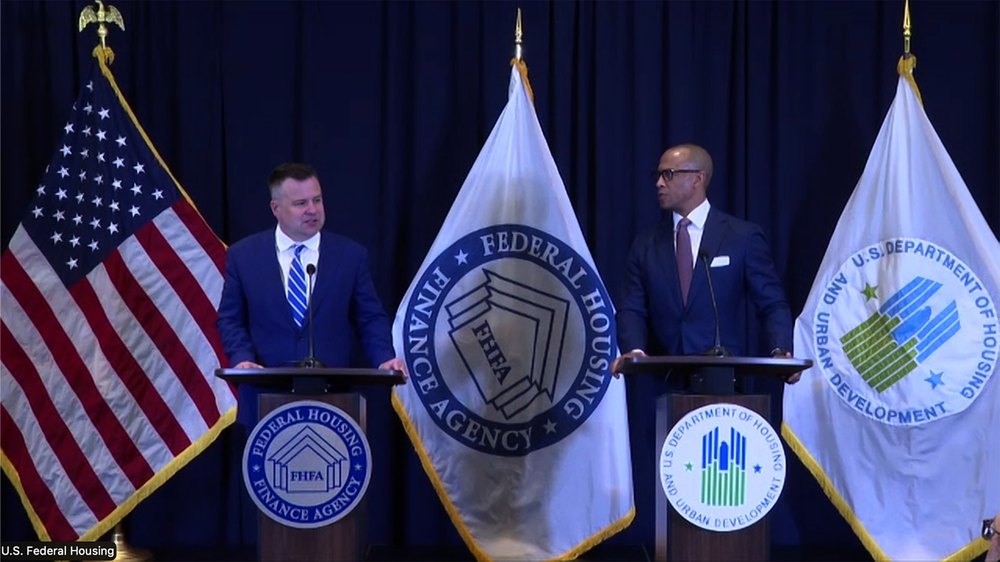
Trump Taps Bill Pulte as Acting Director of National Intelligence in Surprise Dual-Role Appointment
In a move that has stunned both the housing finance world and the national security community, President Donald Trump has announced that Bill Pulte, the current director of the Federal Housing Finance Agency (FHFA) and chairman of Fannie Mae and Freddie Mac, will simultaneously serve as the nation's acting Director of National Intelligence (DNI). The appointment makes Pulte one of the most uniquely positioned officials in the federal government, straddling two enormously consequential domains: mortgage markets and intelligence oversight.
Who Is Bill Pulte?
Bill Pulte is the grandson of William J. Pulte, the founder of PulteGroup, one of the largest homebuilding companies in the United States. Before entering public service, Pulte was widely known as a philanthropist and social media personality, frequently using platforms like Twitter to give away money to followers in need. His business background, however, runs deep—spanning real estate, finance, and corporate turnarounds.
Trump appointed Pulte to head the FHFA earlier in his second term, a role that placed him in charge of regulating Fannie Mae and Freddie Mac—the two government-sponsored enterprises (GSEs) that back the vast majority of mortgage loans in the United States. Under his watch, the combined portfolio of the two entities has grown to over $10 trillion, a figure Trump himself highlighted when announcing the new appointment.
"William has deep experience managing the most sensitive matters in America, the safety and soundness of the Markets, and over 10 Trillion Dollars at Fannie Mae/Freddie Mac, a substantial increase from where it was just 12 months ago," Trump posted on his Truth Social account.
What Is the Director of National Intelligence?
The Director of National Intelligence is a cabinet-level position created in the aftermath of the September 11 attacks to coordinate and oversee the United States Intelligence Community. The DNI serves as the principal intelligence adviser to the President and is responsible for managing and directing the National Intelligence Program, which includes major agencies such as:
- The Central Intelligence Agency (CIA)
- The National Security Agency (NSA)
- The Federal Bureau of Investigation (FBI)
- The Defense Intelligence Agency (DIA)
- And more than a dozen other intelligence bodies
The role demands extraordinary sensitivity, discretion, and a thorough understanding of national security threats ranging from foreign espionage to cyberwarfare and terrorism. It is, by any measure, one of the most demanding positions in the United States government.
Replacing Tulsi Gabbard
Pulte steps into the DNI role replacing Tulsi Gabbard, the former Democratic congresswoman from Hawaii who switched her party affiliation and became a close ally of Trump. Gabbard announced she would be stepping down from the position this month, prompting Trump to move quickly to fill the vacancy with a trusted loyalist. Gabbard's tenure was marked by controversy and scrutiny over her policy positions and past statements regarding U.S. adversaries, and her departure was seen by many observers as inevitable.
Trump's decision to replace her with Pulte—a figure whose expertise lies primarily in housing finance rather than intelligence or national security—has raised significant eyebrows across the political spectrum. Supporters argue that Pulte's demonstrated ability to manage large, complex institutions qualifies him for the role, while critics question whether a mortgage regulator is adequately prepared to navigate the world of espionage, counterterrorism, and geopolitical threats.
A Dual Role With Major Implications for Housing Markets
Perhaps even more surprising than the appointment itself is the confirmation that Pulte will retain his position as FHFA director and chairman of both Fannie Mae and Freddie Mac. This dual mandate is virtually unprecedented in modern government history, placing a single individual simultaneously in charge of the nation's largest housing finance regulator and its top intelligence coordinating body.
For homebuyers, homeowners, and mortgage professionals, this raises pressing questions about continuity and focus. The FHFA plays a central role in determining mortgage availability, loan limits, and the overall stability of the housing market. With Pulte's attention now divided across two enormously demanding roles, market participants are watching closely to see whether housing policy initiatives—including the much-discussed possibility of privatizing Fannie Mae and Freddie Mac—will stall or accelerate.
What This Means for Fannie Mae and Freddie Mac
Fannie Mae and Freddie Mac have been in government conservatorship since the 2008 financial crisis. Their eventual release from conservatorship—a goal that has been discussed but never executed across multiple administrations—remains a hot-button issue in housing policy circles. Some analysts believe Pulte's elevation to a higher-profile national role could either accelerate that process by lending the effort more political capital, or slow it down by diverting Pulte's bandwidth.
Industry observers also note that any perception of distraction at the top of FHFA could introduce uncertainty into mortgage markets that are already dealing with elevated interest rates and affordability challenges. Mortgage rates have remained stubbornly high, and millions of Americans are watching carefully for any policy signals that could influence their ability to buy or refinance a home.
Reactions From Housing and Security Communities
Initial reactions from both the housing finance industry and the national security establishment have been mixed. Some housing industry insiders expressed confidence in Pulte's ability to manage both roles, pointing to his track record at FHFA. Others were more cautious, noting that the intelligence community typically requires full-time engagement from its leadership, particularly given ongoing global threats and the rapid evolution of adversarial capabilities.
National security veterans were more skeptical, with several former intelligence officials noting publicly that the DNI position demands constant attention to classified briefings, interagency coordination, and crisis response—tasks that are difficult to balance alongside the oversight of a $10 trillion financial regulatory enterprise.
Looking Ahead
As Bill Pulte prepares to assume his expanded responsibilities, the coming weeks will be critical in determining how effectively he can manage this extraordinary dual mandate. Congress will likely scrutinize the appointment closely, and confirmation hearings—if required—could provide a platform for probing questions about his national security qualifications.
For everyday Americans, the stakes could not be higher. The person now charged with protecting the country's most sensitive intelligence secrets is the same person steering the policy levers that influence mortgage rates, housing affordability, and the stability of the financial system. Whether that consolidation of power proves to be a stroke of administrative efficiency or an overreach will likely become one of the defining governance stories of the Trump administration's second term.