
Could Innovative Construction Methods Finally Make Homeownership Affordable Again?
For millions of Americans, the dream of owning a home feels further away than ever. Soaring home prices, rising mortgage rates, and a persistent shortage of housing supply have combined to create one of the most difficult buying environments in recent memory. But a new analysis from the JPMorganChase PolicyCenter suggests that a powerful solution may already be within reach — and it starts on the factory floor, not the construction site.
According to the study, innovative building techniques such as modular construction and panelized building could reduce the cost of building a new home by as much as 20% to 30%. Even more striking, these methods could slash construction timelines by 30% to 50%, potentially shaving two full months or more off the time it takes to deliver a finished home. In a housing market where every dollar and every day counts, those are numbers worth paying close attention to.
What Are Modular and Panelized Construction Methods?
To understand why these findings matter, it helps to know what these construction methods actually involve and how they differ from traditional site-built homes.
Modular Construction
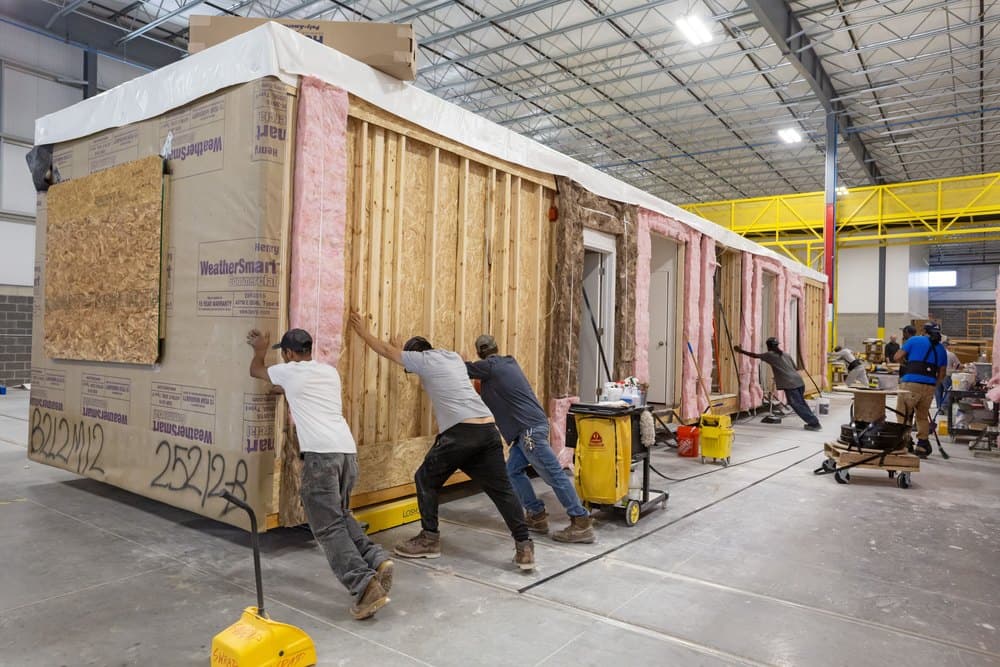
Modular construction involves building sections — or "modules" — of a home in a controlled factory environment. These prefabricated sections are then transported to the building site and assembled together. Because so much of the work happens indoors under consistent conditions, weather delays are minimized, quality control is easier to maintain, and labor can be deployed far more efficiently.
Panelized Building
Panelized construction takes a similar factory-first approach, but instead of fully enclosed modules, it produces flat wall, floor, and roof panels that are shipped to the site and assembled by a crew. This method offers flexibility in design while still capturing many of the cost and time advantages of off-site production.
Manufactured Housing
Manufactured housing — sometimes called mobile homes, though modern versions are far more sophisticated — represents another tier of industrialized construction. Entire homes are built in factories to federal HUD standards and delivered to permanent or semi-permanent sites. Historically underutilized as a serious housing solution, manufactured homes are increasingly being recognized as a high-quality, cost-effective option for first-time buyers and lower-income households.
Together, these approaches fall under the broader umbrella of "innovative construction methods" that JPMorganChase believes could meaningfully reshape the affordability landscape for American homebuyers.
Why Construction Costs Are at the Heart of the Housing Crisis
One of the most telling statistics in the JPMorganChase analysis is this: construction accounts for nearly two-thirds of the total cost of a new home. That means the labor, materials, and time involved in physically building a house represent the single largest driver of the price a buyer ultimately pays.
When lumber prices spike, when skilled labor is scarce, or when permitting delays stretch a project from six months to nine, those costs compound — and they are passed directly to the buyer. In recent years, all of these pressures have hit simultaneously, pushing the median price of a new home well out of reach for many working families.
"We're really trying to look at what levers, and particularly state and local levers, that can reduce the cost drivers of what it takes to build housing," said Olivia Barrow Strauss, Vice President of Housing Policy at JPMorganChase. Her framing is important: it signals that the solution isn't just about building smarter, but also about removing regulatory and policy barriers that prevent innovative methods from being deployed at scale.
The Financial Commitment Behind the Research
JPMorganChase's interest in housing affordability is not merely academic. The financial institution has funded approximately $52 billion in debt and equity to finance affordable housing projects across the country, alongside $498 million in philanthropic capital directed toward affordable housing strategies. Through these efforts, the firm has helped preserve 435,000 affordable housing units.
That kind of institutional investment gives the PolicyCenter's analysis additional credibility. These are not abstract projections from researchers with no skin in the game — they reflect the perspective of a major financial player that understands the real-world economics of housing development inside and out.
What a 30% Cost Reduction Could Actually Mean for Buyers
To put the potential impact in concrete terms, consider a new home currently priced at $400,000 to build. A 20% to 30% reduction in construction costs would represent savings of $80,000 to $120,000. Even if only a portion of those savings are passed through to the buyer, the effect on affordability could be transformative — particularly for first-time buyers, moderate-income households, and communities where the gap between wages and home prices has grown widest.
Faster build times compound this benefit. Shorter construction windows mean lower carrying costs for developers and builders, which can further reduce the final sale price. They also mean more homes can be delivered to the market more quickly, helping to close the chronic supply gap that has driven prices up across the country.
Barriers to Wider Adoption
Despite their promise, innovative construction methods have not yet been adopted at the scale needed to move the needle on the housing crisis. Several obstacles remain:
- Zoning and land use restrictions in many municipalities still restrict or complicate the placement of modular or manufactured homes, even in areas desperately in need of more housing supply.
- Building codes vary significantly from state to state and even county to county, creating regulatory fragmentation that makes it difficult for factory builders to achieve the economies of scale that would maximize cost savings.
- Financing challenges persist for manufactured homes in particular, as many mortgage products are either unavailable or less favorable for this type of housing compared to traditional site-built construction.
- Consumer perception remains a hurdle. Years of stigma around manufactured and modular homes — often unfairly associated with lower quality — can discourage buyers and limit market demand, even as the actual quality of these products has improved dramatically.
Addressing these barriers, the JPMorganChase report suggests, is fundamentally a policy challenge as much as a construction one. State and local governments have a significant role to play in streamlining approvals, updating building codes to accommodate modern off-site construction methods, and creating financing frameworks that treat innovative housing types on equal footing with conventional builds.
The Bigger Picture: A Path Forward for Housing Affordability
The housing affordability crisis in the United States is multifaceted, and no single solution will resolve it. But the JPMorganChase analysis makes a compelling case that innovative construction methods represent one of the most practical, scalable, and immediately actionable tools available to policymakers, developers, and lenders.
Unlike some housing reforms that require years of legislative negotiation or massive infrastructure investment, modular and panelized construction techniques exist today and are already being used by a growing number of builders. What is needed is the policy environment and the financing infrastructure to let them flourish.
For prospective homebuyers watching prices climb out of reach, the prospect of a 20% to 30% reduction in building costs is more than a statistic — it is a potential turning point. With the right combination of innovation, investment, and policy reform, the dream of affordable homeownership may not be as distant as it currently feels.
As more institutions like JPMorganChase direct both capital and research toward this problem, the momentum behind innovative construction methods is likely to grow. The question now is whether state and local governments will move fast enough to remove the barriers standing between promising technology and the millions of Americans who urgently need more affordable places to call home.