
How to Wash Laminate Floors: 5 Tips to Protect and Preserve Them
Laminate flooring has earned its place as one of the most popular flooring choices among homeowners. It's affordable, visually appealing, and remarkably easy to maintain compared to hardwood or tile. However, "easy to maintain" doesn't mean "maintenance-free." Knowing exactly how to wash laminate floors is crucial to preserving their beauty and extending their lifespan. Unlike hardwood, laminate cannot be sanded or refinished once damaged, making proper cleaning habits all the more important. Whether you're a first-time homeowner or simply looking to refresh your cleaning routine, these five tips will help you keep your laminate floors spotless without causing harm.
Why Proper Laminate Floor Cleaning Matters
Before diving into the tips themselves, it's worth understanding what makes laminate flooring uniquely vulnerable. Laminate is constructed from compressed wood fiber topped with a photographic layer and a clear protective wear layer. This wear layer shields the floor from everyday scuffs and stains, but it has one significant weakness: moisture. Excess water can seep into the seams between planks, causing the core to swell, warp, or bubble. Harsh chemical cleaners can strip the protective coating, leaving the surface dull and more susceptible to scratches. Understanding this helps explain why every tip below revolves around the twin principles of gentle cleaning and moisture control.
Tip 1: Sweep or Vacuum Before Every Wet Clean
The most overlooked step in any laminate floor cleaning routine is dry cleaning before introducing any liquid. Dust, grit, and debris act like sandpaper underfoot. Every time someone walks across an unswept laminate floor, those tiny particles grind against the wear layer and cause microscopic scratches that accumulate over time, dulling the finish. Before you reach for a mop or spray bottle, always sweep with a soft-bristle broom or use a vacuum cleaner on the hard floor setting. Make sure to disable any beater bar or rotating brush on your vacuum, as these can scratch the surface. A quick daily sweep takes less than five minutes and does more for your floor's longevity than any specialized cleaning product ever could.
Tip 2: Use a Damp Mop, Never a Wet One
This is perhaps the single most important rule when learning how to wash laminate floors: less water is always better. A soaking wet mop is one of the fastest ways to ruin laminate flooring. Water that pools on the surface or gets pushed into the joints between planks will eventually cause swelling, lifting, and permanent damage to the core material.
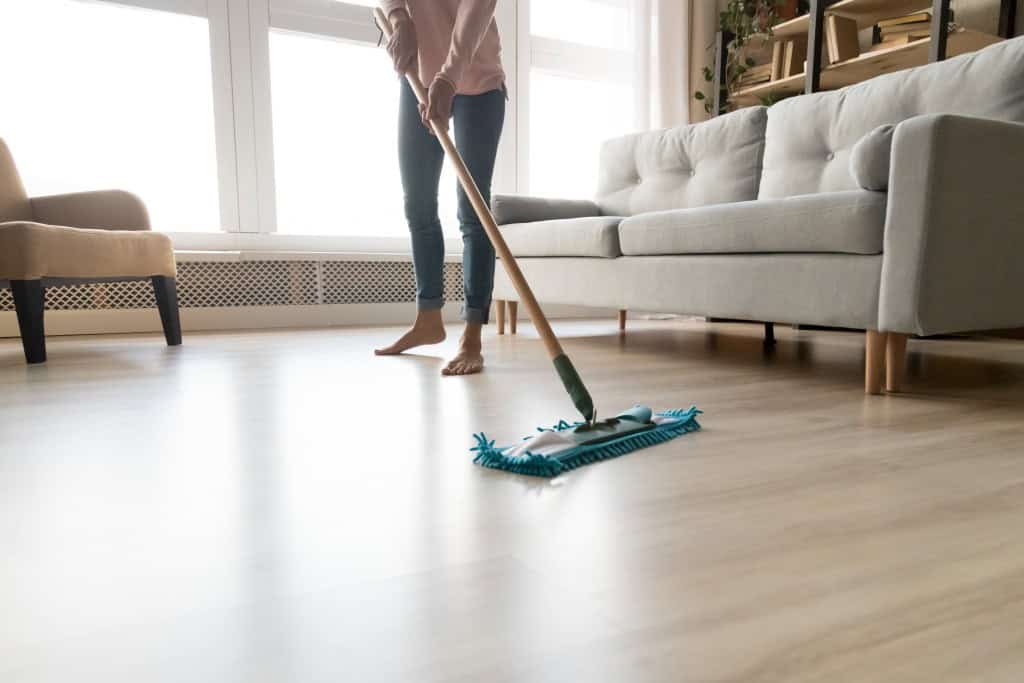
Instead, use a microfiber mop that has been thoroughly wrung out until it is just barely damp. Microfiber is ideal because it traps dirt effectively and releases very little moisture onto the floor. Work in small sections, moving in the direction of the planks, and dry each section quickly if you notice any standing moisture. Avoid steam mops entirely — despite their popularity, the heat and condensation they produce can warp laminate planks and void many manufacturers' warranties.
Tip 3: Choose the Right Cleaning Solution
Not all floor cleaners are created equal, and many popular household products are actually harmful to laminate surfaces. Here's what to avoid and what to use instead:
- Avoid: Bleach, ammonia-based cleaners, oil-based soaps, and wax polishes. These either strip the protective wear layer, leave a residue that attracts more dirt, or cause the surface to become slippery and dull.
- Avoid: Vinegar solutions, despite being commonly recommended. While vinegar is a natural cleaner, its acidity can gradually break down the finish on laminate floors over repeated use.
- Use: A laminate-specific floor cleaner from a reputable brand, or a small amount of dish soap diluted heavily in water. If you prefer a DIY approach, a very diluted solution of rubbing alcohol and water (one part alcohol to three parts water) can work well for light cleaning and quick drying.
Always spray the cleaning solution onto your mop, not directly onto the floor. Applying liquid directly to laminate increases the risk of moisture pooling in seams and joints.
Tip 4: Tackle Stains and Spills Immediately
Laminate's protective layer handles everyday foot traffic well, but it is not invincible against stubborn stains. The key to stain removal is speed. The longer a spill sits, the more likely it is to seep into the seams or bond with the surface layer. For liquid spills, blot (don't wipe or spread) the area immediately with a clean, dry cloth. For tougher stains like dried food, nail polish, or crayon marks, a small amount of acetone or nail polish remover applied to a cloth — not directly to the floor — can break down the residue without spreading it further. Always follow up any spot treatment by wiping the area with a barely damp cloth and then drying it completely.
Tip 5: Protect the Floor Between Washes
Long-term laminate floor care goes beyond routine washing. How you treat the floor between cleaning sessions has a significant impact on how often deep cleaning is needed and how long the flooring lasts.
- Use furniture pads: Place felt pads under the legs of all chairs, tables, and heavy furniture. Dragging furniture across laminate is one of the leading causes of deep scratches.
- Place doormats at entrances: Most of the dirt and grit that damages laminate floors is tracked in from outside. A good quality mat at every entrance traps debris before it reaches your floors.
- Keep pet nails trimmed: Pet nails can score the wear layer just as effectively as sand or grit. Regular nail trims for dogs and cats help protect high-traffic laminate areas.
- Control indoor humidity: Laminate expands and contracts with changes in humidity. Try to keep indoor humidity between 30% and 60% year-round to prevent gapping, buckling, or swelling at the seams.
How Often Should You Wash Laminate Floors?
For most households, a light sweep or vacuum every day or two combined with a damp mop once a week is sufficient to keep laminate floors in excellent condition. High-traffic areas, homes with pets, or households with young children may benefit from more frequent attention. Deep spot cleaning can be done as needed, and a thorough clean of the entire floor once every two to four weeks is typically enough for most living situations.
Final Thoughts on Washing Laminate Floors
Learning how to wash laminate floors properly is ultimately about respecting the material's limitations while taking advantage of its strengths. Laminate is tough, stylish, and cost-effective, but it rewards careful, consistent maintenance with years of beautiful performance. Keep moisture to a minimum, choose gentle cleaning products, act quickly on spills, and protect the surface between washes. Follow these five tips and your laminate floors will continue to look their best — whether you've had them for one year or ten.