
Why Container Plants Dry Out So Quickly in June
If you've ever stepped outside on a hot June morning only to find your potted plants wilting despite watering them the night before, you're not alone. Container plants are notoriously thirsty compared to their in-ground counterparts, and June is often the month when that reality hits hardest. As temperatures climb and days grow longer, the combination of heat, sunlight, and wind accelerates evaporation dramatically — sometimes draining a pot completely within 24 hours.
Unlike plants growing in garden beds, container plants are limited to whatever moisture is held within their pot. There's no surrounding soil to draw from, no deep water table, and no natural mulch layer provided by the earth itself. This makes smart watering strategy not just a convenience but an absolute necessity if you want your containers to thrive through the summer without turning watering into a twice-daily chore.
The good news is that with a few intentional changes — to your containers, your soil mix, your timing, and your technique — you can dramatically reduce how often you need to water while actually improving plant health.
Choose the Right Container from the Start
The container itself plays a much bigger role in moisture retention than most gardeners realize. Terracotta pots, while beautiful and breathable, are porous by nature and allow moisture to evaporate through their walls. In June heat, a terracotta pot can lose moisture twice as fast as a glazed ceramic or plastic equivalent.
If reducing watering frequency is a priority, consider switching to glazed ceramic, resin, or double-walled containers. These materials hold moisture significantly longer while still allowing healthy root development. Dark-colored pots can absorb more heat, which accelerates evaporation, so opting for lighter colors or white containers in full-sun spots is another simple upgrade that makes a real difference.
Self-watering containers are perhaps the single most effective tool for reducing daily watering obligations. These pots feature a built-in reservoir at the base that plants draw from through capillary action — meaning your plant waters itself as needed. A properly filled self-watering container can go anywhere from three days to a week or more without intervention, depending on plant size and weather conditions.
Upgrade Your Potting Mix for Better Moisture Retention
Standard potting mix is a reasonable starting point, but it isn't optimized for moisture retention in hot summer conditions. To extend the time between waterings, you can amend your potting mix with materials that absorb and hold water more effectively.
- Coconut coir is an excellent amendment that retains moisture while still promoting good aeration. Mixing it into your potting soil at a ratio of about 20–30% can noticeably improve how long the mix stays moist.
- Perlite and vermiculite are both commonly added to potting mixes, but they serve different purposes. Perlite improves drainage, while vermiculite holds moisture. For water retention goals, lean toward vermiculite.
- Water-retaining gel crystals or granules are polymer-based additives that absorb hundreds of times their weight in water and release it slowly into the root zone. A small amount mixed into potting soil can meaningfully extend the interval between waterings.
When repotting or refreshing containers for the summer season, this is the ideal time to work these amendments into your mix before planting.
Mulch the Top of Your Containers
Mulching isn't just for garden beds — it works just as effectively in containers. A 1- to 2-inch layer of organic mulch spread across the surface of your potting mix acts as an insulating barrier that slows surface evaporation significantly. In direct sunlight and June heat, this simple step can extend the time between waterings by a full day or more.
Good options for container mulch include shredded bark, cocoa hulls, wood chips, or even decorative stones and gravel for a cleaner aesthetic. Gravel and stone won't break down to enrich the soil, but they're effective at reducing moisture loss and add a polished, finished look to container arrangements on patios and decks.
Water Deeply and at the Right Time of Day
One of the most common watering mistakes is watering lightly and frequently rather than deeply and less often. Shallow watering encourages roots to stay near the surface where they're most vulnerable to heat and drying. When you water deeply — until water flows freely from the drainage holes at the bottom — you saturate the entire root zone and encourage roots to grow downward, where they're better insulated and can access moisture longer after the last watering.
Timing matters enormously in June. Watering in the early morning, ideally before 9 a.m., is widely considered the most efficient approach. The soil absorbs moisture before the heat of the day intensifies, and foliage has time to dry, reducing the risk of fungal disease. Evening watering is a second-best option but can leave foliage damp overnight.
Avoid watering in the middle of the day during peak heat. Not only does much of the water evaporate before it can reach the roots, but water droplets on leaves can act like magnifying glasses under intense sunlight, contributing to leaf scorch.
Group Containers Together to Reduce Moisture Loss
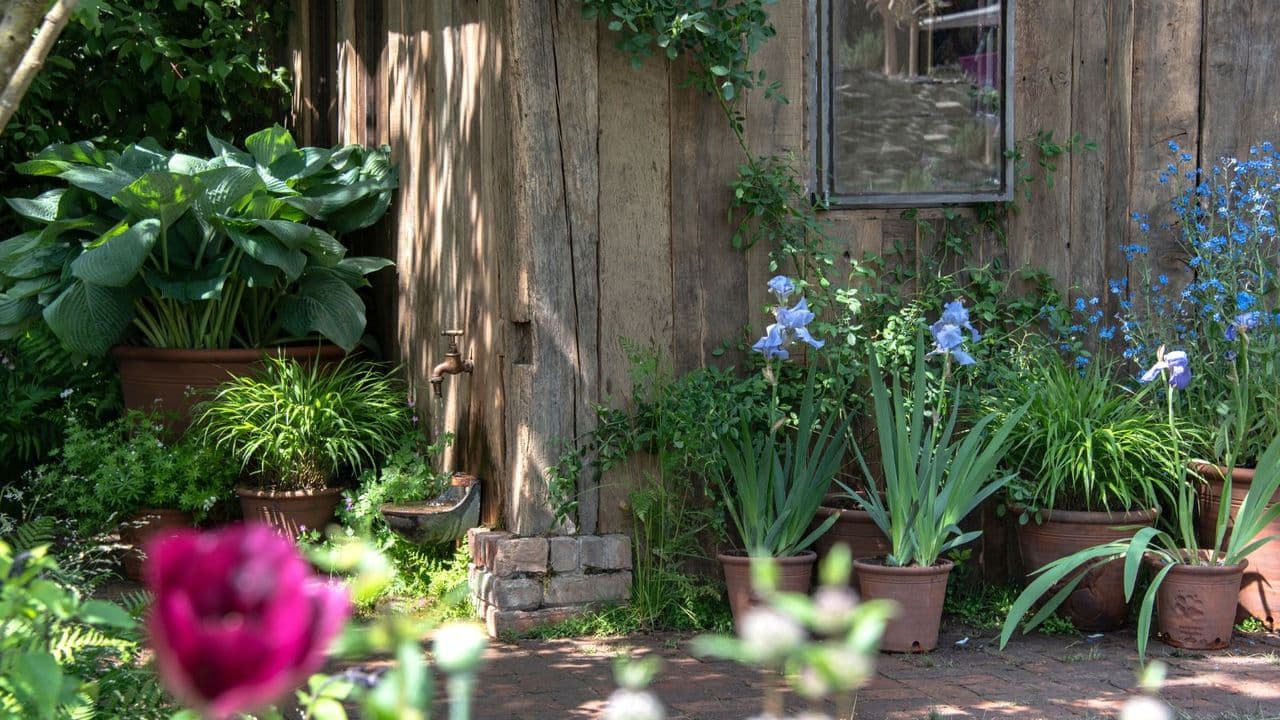
Grouping containers together is a lesser-known but highly effective technique. When pots are clustered, the plants create a shared microclimate — leaves shade neighboring pots, humidity increases slightly between the plants, and wind exposure is reduced. The result is a noticeably cooler, more humid environment at the soil level, which slows evaporation for every container in the group.
This strategy works especially well on exposed patios and balconies where wind and reflected heat from paved surfaces can be particularly drying. A grouping of five or six pots may need watering up to a day less frequently than the same pots scattered individually across a deck.
Use a Drip Irrigation System or Soaker Hose Setup
If you have multiple containers, investing in a simple drip irrigation setup can transform your summer gardening experience. Drip systems deliver water slowly and directly to the root zone, minimizing evaporation loss and ensuring that moisture penetrates deeply rather than running off the surface. Many systems can be paired with a timer, effectively automating the watering process entirely.
Even a basic gravity-fed drip kit available at most garden centers can cover a dozen or more containers and be set on a schedule that accounts for June's heat without requiring your daily presence. For anyone who travels during the summer months, this kind of low-cost automation is invaluable.
Know Your Plants' Actual Needs
Finally, not all container plants are equally thirsty, and matching plants to their natural moisture preferences is one of the most sustainable ways to reduce watering workload. Drought-tolerant plants like lavender, succulents, geraniums, portulaca, and herbs such as rosemary and thyme can go several days without water even in June heat once established.
Conversely, plants like impatiens, fuchsias, and hydrangeas demand consistent moisture and will require more attention during hot spells. Knowing what you've planted and grouping high-water-need plants together (and away from drought-tolerant neighbors) helps you water smarter rather than harder.
With the right containers, amended soil, mulch, smart timing, and perhaps a simple irrigation timer, June container gardening doesn't have to be a daily race against the heat. A few well-chosen investments in strategy now will pay dividends in beautiful, thriving plants all the way through summer — without chaining you to the watering can every single morning.