
How IKEA Has Challenged the Rest of the Design World
Few brands in history have reshaped an entire industry the way IKEA has reshaped furniture and interior design. With the gap between cheap and expensive furniture wider than ever before, IKEA occupies a unique and powerful position — one that forces the rest of the design world to take notice, adapt, and in many cases, reconsider its fundamental assumptions about who good design is for. Far from being just a retailer of flat-pack bookshelves and meatballs, IKEA has evolved into a genuine design force, pushing boundaries that once seemed reserved for elite studios and high-end showrooms.
The Democratization of Good Design
At the heart of IKEA's challenge to the design world is a deceptively simple idea: that well-designed, functional, and aesthetically considered objects should be available to everyone, regardless of income. This philosophy — rooted in the brand's Swedish heritage and the vision of founder Ingvar Kamprad — has not just informed IKEA's product range but has fundamentally altered what consumers expect from furniture at every price point.
For decades, the assumption in design circles was that quality and affordability were mutually exclusive. Luxury furniture houses set the trends; mass-market retailers followed at a safe distance, copying shapes without substance. IKEA disrupted this hierarchy by investing seriously in design talent, collaborating with globally recognised designers and architects, and building processes that could translate complex design thinking into products sold at mass scale.
The result is that everyday shoppers now walk into their homes with furniture that reflects genuine design intent — pieces that consider ergonomics, material honesty, sustainability, and visual proportion. That shift in consumer expectation has sent ripples across the entire industry.
The IKEA PS Collection: A Case Study in Design Ambition
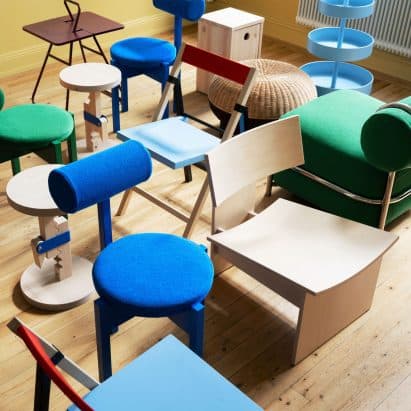
Perhaps no product line better illustrates IKEA's design ambitions than the IKEA PS collection. Launched as an experimental platform for bold, concept-driven furniture, the PS series has consistently dared to be different. It has featured work from emerging and established designers alike, resulting in pieces that challenge conventions around form, function, and production.
The PS collection is not designed merely to fill a room. It is designed to spark conversation, to push material boundaries, and to ask questions about what mass-produced furniture can actually be. Pieces from the collection have appeared in design museums and editorial spreads alongside objects costing many times their retail price — a testament to the genuine creative seriousness behind them.
By making such work available in its stores worldwide, IKEA argues something radical: that experimental design does not have to be the exclusive province of galleries and collectors. It can live in a student apartment. It can furnish a first home. That argument, made credibly and at scale, is a direct challenge to the luxury design establishment.
Forcing the Industry to Raise Its Standards
IKEA's influence has not gone unnoticed by competitors or by the broader design community. When a global retailer demonstrates that thoughtful design processes, sustainable sourcing commitments, and aesthetic sophistication are achievable at low price points, it raises a question that is uncomfortable for much of the furniture industry: what exactly is the excuse for poor design elsewhere?
Mid-market furniture brands have had to sharpen their own design credentials in response to an increasingly design-literate consumer base — one that IKEA itself helped to educate. High-end brands, meanwhile, have had to articulate their value proposition more clearly, since the visual gap between an IKEA piece and a boutique alternative is often far smaller than the price gap suggests.
In this way, IKEA acts as a kind of standard-setter by stealth. It does not need to position itself against luxury competitors; simply by doing what it does so well at the prices it charges, it quietly repositions everyone else.
Sustainability and the Future of Design
IKEA's challenge to the design world extends beyond aesthetics and affordability into the increasingly urgent arena of sustainability. The brand has made significant public commitments to circular design principles — creating products intended to be repaired, repurposed, and eventually returned and recycled rather than discarded. This positions IKEA at the leading edge of a conversation that the entire design industry must engage with as climate pressures mount.
Critics rightly point out that selling vast volumes of furniture, however well-designed, carries its own environmental cost. IKEA acknowledges this tension and continues to work toward a model where growth and sustainability coexist. Whether it succeeds will matter not just for the company but for the industry's relationship with the planet.
What the Design World Can Learn From IKEA
The lessons IKEA offers the broader design world are both practical and philosophical. On the practical side, the brand demonstrates that design excellence and manufacturing efficiency need not be enemies — that investing in the design process pays dividends at every scale. Philosophically, IKEA insists that the best design is inclusive design: work that serves real people living real lives, not just collectors and tastemakers.
- Good design can and should be accessible to all income levels, not just the wealthy.
- Collaboration between commercial brands and creative designers produces work of genuine cultural value.
- Sustainability must be built into the design process from the beginning, not added as an afterthought.
- Consumer expectations, once raised, do not fall — and raising them is a form of industry leadership.
IKEA has spent decades proving that the design world's gatekeeping instincts are not only elitist but unnecessary. In doing so, it has issued a challenge that remains as relevant and provocative today as ever: design everything better, for everyone. The rest of the industry is still catching up.