
A New Era at the Federal Reserve: Kevin Warsh Takes the Helm
A historic shift is underway at the most powerful financial institution in the United States. Federal Reserve policymakers convened their latest two-day meeting to set interest rate policy, and for the first time, that meeting was presided over by Kevin Warsh — the new Fed Chairman who has already made clear that business as usual is not on his agenda. While markets and homebuyers were hoping for signs of relief in the form of a rate cut, the early signals from this new era suggest patience will be required.
Warsh's ascent to the top of the Federal Reserve marks more than just a change in personnel. It represents what he himself has described as a "regime change" — a fundamental rethinking of how the central bank operates, communicates, and makes decisions. But even as the winds of change blow through the Fed's corridors, one critical number is expected to stay exactly where it is: the benchmark interest rate.
What Does "Regime Change" at the Fed Actually Mean?
When Kevin Warsh uses the phrase "regime change," he isn't simply talking about new leadership. He's signaling a broader philosophical overhaul of how the Federal Reserve does business. One of his very first moves as the new head of the central bank was symbolic but telling: he reverted his official title back to "Fed Chairman," stepping away from the gender-neutral "Fed Chair" designation that had been used by both his immediate predecessor Jerome Powell and the widely respected Janet Yellen before him.
While that title change may seem like a minor stylistic preference, it reflects something larger — Warsh's inclination to reestablish what he sees as traditional institutional norms. More substantively, Warsh has signaled that the Federal Reserve may be pulling back from its recent emphasis on detailed public forecasts and economic projections, which have become a cornerstone of Fed communication strategy in recent years.
Changes to Fed Communications on the Horizon
Under Powell and Yellen, the Fed placed significant importance on what economists call "forward guidance" — the practice of giving the public and financial markets a clear picture of where interest rates and monetary policy are headed. Press conferences, quarterly projections, and detailed dot plots became routine tools for managing market expectations and building public confidence in the institution.
Warsh has indicated he believes this approach gives the Fed too much exposure and, in some cases, locks policymakers into positions that may not reflect the most current economic realities. Under his leadership, expect the frequency and style of Fed communications to evolve. Whether that means fewer press conferences, less detailed forecasting, or a more deliberate air of mystery around policy decisions remains to be seen — but change is coming.
Why Interest Rates Are Staying Put — For Now
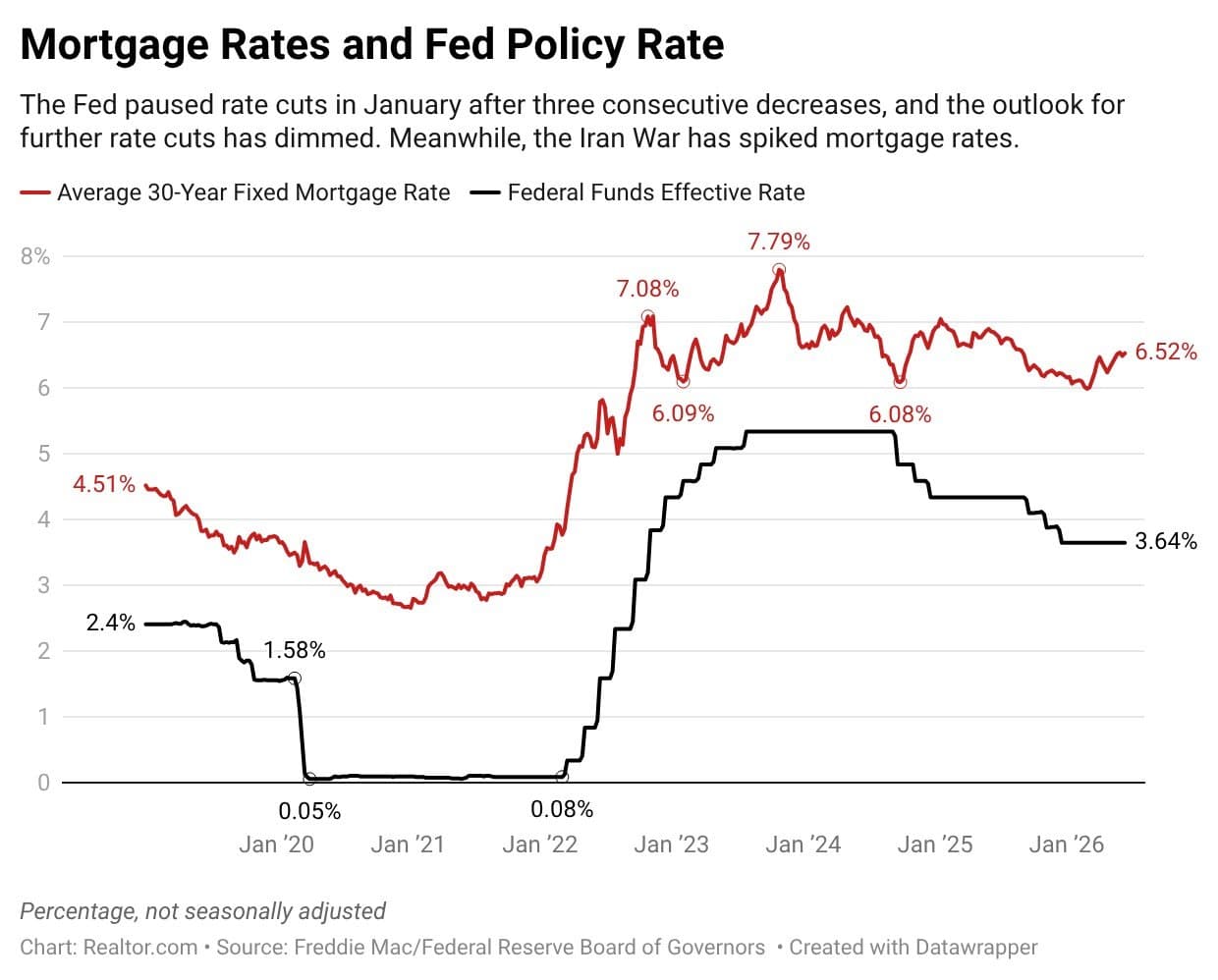
Despite all the institutional drama surrounding Warsh's arrival, the most immediately consequential question for everyday Americans — especially homebuyers and homeowners — is where interest rates are headed. And for the moment, the answer is: nowhere.
Hot inflation readings have effectively taken any possibility of a rate cut off the table for this meeting. The 12-member Federal Open Market Committee (FOMC), which is responsible for setting the federal funds rate, appears to be in broad agreement that this is not the time to ease monetary policy. A "wait and see" approach has emerged as the dominant position among committee members, reflecting the cautious mood that has gripped the Fed in the face of persistent price pressures.
What Stubborn Inflation Means for Mortgage Rates
For prospective homebuyers and those hoping to refinance, the news is disappointing but not entirely surprising. When the Fed holds its benchmark rate steady — particularly in a high-rate environment — mortgage rates tend to follow suit, remaining elevated and keeping affordability stretched for millions of Americans. The dream of significantly lower mortgage rates in the near term appears to be fading, at least for this meeting cycle.
- Mortgage rates remain elevated: With no Fed rate cut in sight, 30-year fixed mortgage rates are unlikely to see meaningful relief in the short term.
- Homebuyer affordability stays strained: High borrowing costs continue to price many would-be buyers out of the market, keeping inventory tight and purchase activity below pre-pandemic norms.
- Refinancing opportunities are limited: Homeowners who locked in low rates during the pandemic era have little incentive to refinance, while those with adjustable-rate mortgages continue to feel the squeeze.
- Housing market activity stays subdued: The combination of high rates and elevated home prices means the housing market is unlikely to see a dramatic surge in activity until the rate environment shifts materially.
What to Watch as the Warsh Era Unfolds
Kevin Warsh's debut as Fed Chairman is just the beginning of what promises to be a transformative period for the central bank. Investors, economists, and everyday Americans will be watching closely for concrete signs of how his "regime change" philosophy translates into policy action. Key questions include how aggressively he will reshape the Fed's communication strategy, whether his leadership will bring a more hawkish or dovish tilt to monetary policy, and — perhaps most importantly for homeowners and buyers — when the first rate cut of this new era might finally arrive.
For now, patience remains the order of the day. The Federal Reserve under Warsh appears committed to holding the line on inflation before making any moves to ease borrowing costs. While the leadership change is historic, the economic conditions driving monetary policy have not changed overnight. Inflation is still the dominant concern, and until that picture meaningfully improves, the Fed's benchmark rate — and the mortgage rates tied to it — are likely to stay higher for longer.
The Bottom Line for Homebuyers and Homeowners
The arrival of Kevin Warsh as Fed Chairman marks a genuinely new chapter for the Federal Reserve, with real implications for how the institution communicates and ultimately how it sets policy. However, the immediate impact on interest rates is minimal. Persistent inflation has forced even a reform-minded new chairman to maintain the status quo on rates, at least for this meeting.
If you are navigating the housing market right now, the advice remains consistent: plan for a higher-rate environment, work with a trusted mortgage advisor to understand your options, and stay informed as the Warsh-led Fed continues to define what its version of "regime change" will look like in practice. The winds of change are blowing — but they haven't yet lowered your mortgage rate.