
Japanese Design Takes Center Stage at Copenhagen's 3 Days of Design
Copenhagen has long established itself as one of the world's most influential design capitals, celebrated for its clean Scandinavian aesthetics and commitment to functional beauty. But during this year's 3 Days of Design festival, the Danish city opened its doors — and its showrooms — to a compelling wave of Japanese creative energy. From sculptural lighting to wearable technology and traditional craft reimagined for the modern world, Japanese designers and brands made their presence unmistakably felt across the city. Here are seven of the most noteworthy exhibitions that showcased the best of Japanese design in Copenhagen.
1. A-Poc Able Issey Miyake: Weaving Light and Form
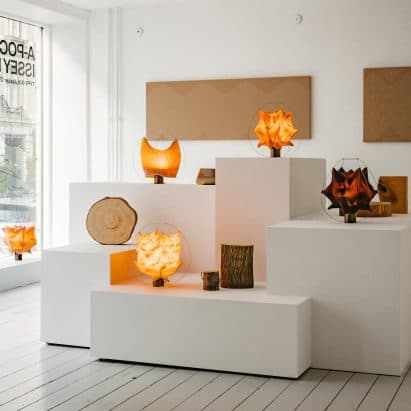
Perhaps no single display captured more attention than the luminous installation presented by A-Poc Able Issey Miyake. Known for its pioneering approach to textile technology, the brand translated its fabric-forward philosophy into a mesmerizing arrangement of lamps that blurred the boundary between fashion and furniture design. The pieces demonstrated how the brand's signature "A-Poc" (A Piece of Cloth) concept — which involves creating seamless garments from a single tube of thread — can extend meaningfully into the world of interior objects. Visitors were drawn into an immersive environment where texture, light, and form existed in quiet, precise harmony. The exhibition reinforced why Issey Miyake's legacy continues to push design thinking far beyond the runway.
2. The Art of Ma: Negative Space as Design Language
One of the more philosophically rich exhibitions explored the Japanese concept of ma — the idea that empty space is not an absence but a presence in itself. Curated to reflect traditional and contemporary Japanese interior sensibilities, the display challenged Copenhagen's design community to reconsider how negative space functions within product and spatial design. Objects were arranged with deliberate restraint, each piece breathing on its own, inviting contemplation rather than consumption. For a Scandinavian audience already attuned to minimalism, the exhibition offered a deeply resonant but distinctly different cultural perspective on simplicity.
3. Japanese Ceramics and the New Wabi-Sabi
Ceramics have always held a sacred place in Japanese culture, and this exhibition made clear that the tradition is alive and evolving. A curated selection of pieces from both established and emerging Japanese ceramic artists was presented in a Copenhagen gallery space, exploring the enduring appeal of wabi-sabi — the beauty found in imperfection, impermanence, and incompleteness. Crackled glazes, irregular forms, and earthy tones stood in quiet contrast to the polished perfection that often dominates contemporary design fairs. The works prompted genuine dialogue between Japanese artisan traditions and the growing Scandinavian appetite for handcrafted, intentional objects.
4. Nendo: Simplicity as a Design Manifesto
The influence of Nendo, the prolific Tokyo-based studio led by Oki Sato, was felt strongly throughout the festival. Known for transforming everyday objects into unexpected moments of delight, Nendo's work on display in Copenhagen ranged from furniture to small objects — each one marked by the studio's trademark wit and economy of means. The designs appeared effortless, which, of course, belies the extraordinary precision required to achieve them. For many festival-goers encountering Nendo's work for the first time, the exhibition was a revelation: proof that great design need not shout to be heard.
5. Traditional Japanese Joinery Meets Scandinavian Furniture
A particularly compelling cross-cultural dialogue emerged in an exhibition that brought Japanese wood joinery techniques — the kind refined over centuries in temple and shrine construction — into conversation with Scandinavian furniture-making traditions. Japanese craftspeople demonstrated the extraordinary structural and aesthetic possibilities of joinery achieved without nails or glue, a practice that aligns naturally with the Scandinavian reverence for honest materials and skilled craftsmanship. The result was a collection of furniture and structural objects that felt both ancient and urgently contemporary, pointing toward a future where sustainability and craft are inseparable.
6. Japanese Textile Innovation on the Design Floor
Textiles served as another major thread running through Japanese participation at this year's festival. Several brands and designers presented fabric innovations that are redefining what cloth can do — from temperature-regulating materials and ultra-lightweight technical weaves to hand-dyed fabrics produced using centuries-old natural dyeing techniques. The juxtaposition of high-tech and deeply traditional approaches underscored one of Japanese design's most distinctive qualities: the ability to hold the past and the future in the same hand. Designers from both countries found common ground in their shared respect for material integrity and longevity.
7. A Living Archive: Everyday Japanese Objects Reframed
The final exhibition on our list took a more curatorial approach, presenting a carefully assembled archive of everyday Japanese objects — kitchen tools, stationery, packaging, and household goods — elevated through thoughtful display and context. The exhibition argued, convincingly, that Japan's most profound design contribution may not be its iconic furniture or avant-garde fashion, but rather its obsessive attention to the quality of the ordinary. Items that might pass unnoticed in a Japanese convenience store became objects of quiet wonder when given space and light and intention.
Why Japanese Design Resonates in Copenhagen
The strong Japanese presence at this year's 3 Days of Design was not merely a programming decision — it reflected a genuine and growing affinity between two design cultures that share more than might initially be apparent. Both value restraint over excess, longevity over trends, and craft over spectacle. Both have developed design philosophies deeply rooted in nature, materiality, and respect for the user's experience. As global design conversations increasingly center on sustainability, intentionality, and cultural depth, the dialogue between Japan and Scandinavia feels less like a stylistic overlap and more like a shared vision for where design needs to go.
Whether you're a design professional, a curious traveler, or simply someone who appreciates beautiful, purposeful objects, the Japanese exhibitions at Copenhagen's 3 Days of Design offered something rare: a reminder that the best design is never just about how something looks, but about how it makes you feel, and why it was made at all.