
The Tech Layoff Wave of 2026: A New Kind of Workforce Disruption
The technology industry is undergoing one of its most significant transformations in decades. More than 142,000 tech workers have already lost their jobs in 2026, and the numbers continue to climb. Companies like Meta, Amazon, Oracle, and Dell have all announced sweeping layoffs, but unlike the cyclical downturns of the past, these cuts carry a different weight. They are not temporary corrections — they represent a fundamental and permanent restructuring of what major tech companies need from their workforce.
Meta alone is laying off 8,000 employees to offset the enormous cost of its artificial intelligence investments, while simultaneously redirecting approximately 7,000 additional workers toward AI-related roles. This dual move — cutting traditional positions while doubling down on AI — signals a tectonic shift in the labor market. The skills that powered Silicon Valley for the last two decades are rapidly being deprioritized in favor of machine learning, large language model development, and AI infrastructure engineering.
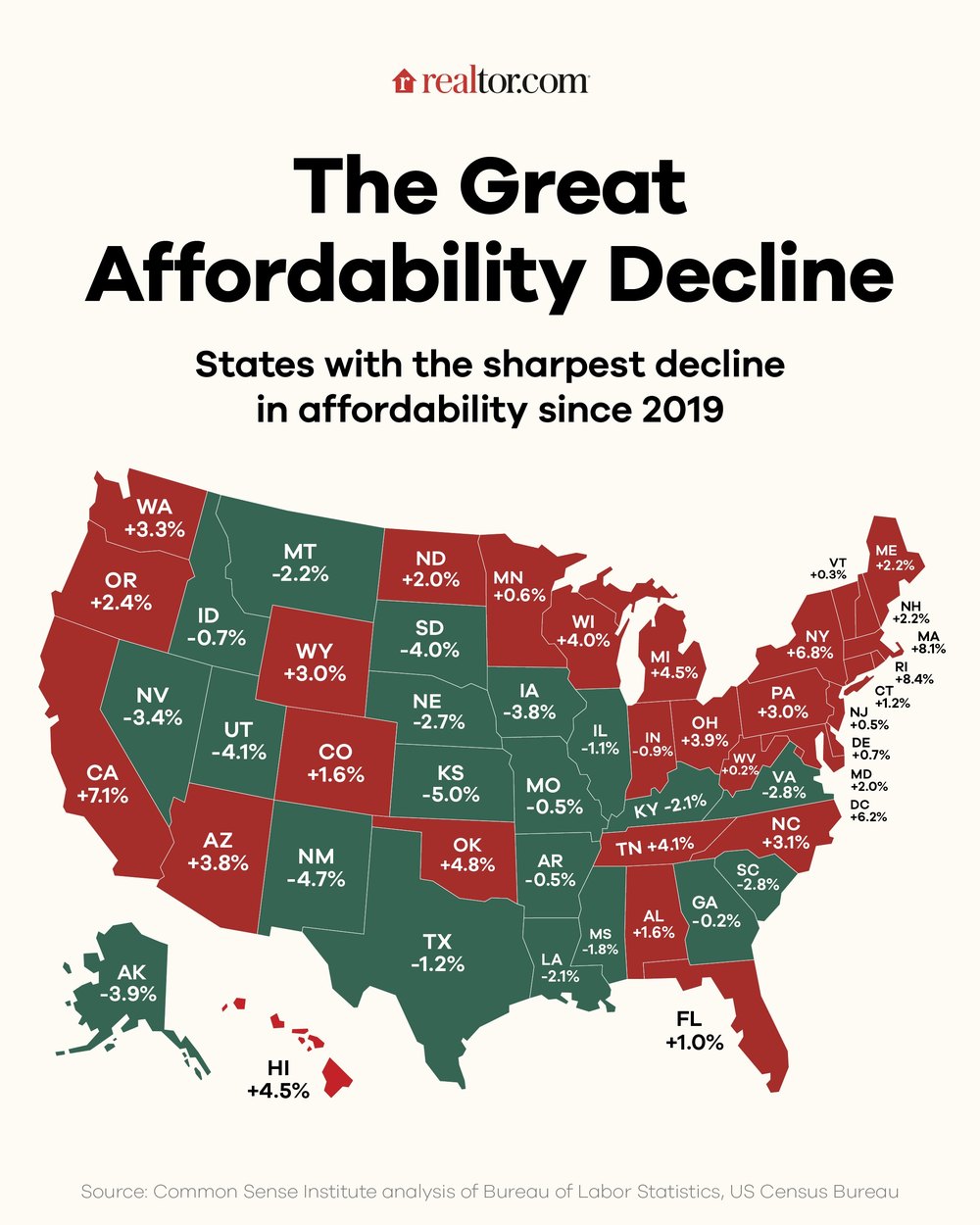
For the hundreds of thousands of workers caught in this transition, the immediate question is not just about their next job. It is also about where they will live, how they will afford housing in expensive tech hubs, and whether now is the moment to finally leave cities like San Francisco, Seattle, or New York City for somewhere more financially manageable.
Where Are the Layoffs Hitting Hardest?
The geographic concentration of these job losses is striking. Tech epicenters — particularly San Francisco, Seattle, and New York City — are absorbing the bulk of the cuts. These are cities where tech workers have historically commanded salaries high enough to sustain some of the most expensive real estate markets in the world. As those salaries disappear, real estate professionals and economists are closely watching for signs of disruption.
Data from Realtor.com suggests the picture is far more complicated than a simple mass exodus. Certain neighborhoods and submarkets near major layoff corridors are already showing signs of stress: slower sales, modest price reductions, and an uptick in inventory as workers list homes they can no longer confidently afford. Yet the overall market has not collapsed, and many displaced workers are staying put — at least for now — banking on severance packages, savings, and the hope of a quick re-employment.
Are Displaced Tech Workers Actually Leaving Major Cities?
The narrative of a dramatic flight from expensive coastal metros to affordable interior cities is appealing, but the data tells a more nuanced story. Yes, some workers are relocating — and certain secondary cities are quietly absorbing this talent — but the movement is gradual rather than sudden.
Several factors are keeping tech workers anchored in high-cost cities, even after losing their jobs:
- Professional networks: The density of tech industry connections in cities like San Francisco and Seattle remains a powerful reason to stay. Landing a new role is statistically easier when you are physically present in the ecosystem where hiring happens.
- Remote work flexibility: Many laid-off workers retain the expectation — and the demonstrated ability — to work remotely. This reduces the urgency of immediate relocation because their next position may not require them to be anywhere specific.
- Family and lifestyle ties: Partners, children in school, aging parents, and established social lives all create strong gravitational pulls that economic disruption alone cannot easily overcome.
- Severance and savings buffers: Senior tech workers often receive substantial severance packages, giving them months or even a full year of financial runway before relocation becomes a financial necessity.
Which Secondary Markets Are Quietly Gaining Tech Talent?
While the departure from primary tech hubs is gradual, a handful of secondary cities are emerging as quiet beneficiaries of the ongoing displacement. These markets combine relative housing affordability, growing tech ecosystems, and quality-of-life attributes that appeal to workers who have spent years in expensive, high-pressure urban environments.
Cities such as Austin, Denver, Raleigh-Durham, Nashville, and Phoenix have been building their tech credentials for years. They now find themselves positioned to attract workers who are reassessing their priorities in the wake of layoffs. Lower housing costs, no or low state income taxes in some cases, and expanding startup cultures make these cities increasingly competitive destinations.
Smaller metros are also entering the conversation. Cities like Boise, Idaho; Columbus, Ohio; and Huntsville, Alabama offer dramatically lower costs of living while maintaining sufficient connectivity and growing tech employer bases to make relocation a viable career strategy rather than a professional retreat.
What Does This Mean for Housing Markets?
The housing implications of large-scale tech layoffs are real, but they unfold slowly. In primary markets, the most immediate effect is softening demand at the higher end of the price spectrum — the segment where tech workers have historically been the most active buyers. Sellers who counted on a buyer pool of high-earning engineers and product managers are finding that pool shallower than it was just two years ago.
In secondary markets that are absorbing displaced talent, the effect runs in the opposite direction. Modestly increased demand from relocated tech workers — who still often arrive with significant savings and strong earning potential in their next roles — is applying upward pressure on prices in neighborhoods that previously felt insulated from the coastal housing frenzy.
The Bigger Picture: AI Is Reshaping Everything
What separates the 2026 tech layoff wave from previous downturns is the underlying cause. These are not recession-driven cuts made in anticipation of declining revenue. In many cases, the companies doing the most aggressive hiring of AI talent are simultaneously posting strong earnings. The layoffs are structural, driven by a bet that AI can replace entire categories of knowledge work — from software testing and customer support to content moderation and mid-level engineering.
This means the workers being displaced today may face a fundamentally different re-employment landscape than those who lost jobs in the dot-com bust or the 2008 financial crisis. The roles they held may not come back in the same form. Retraining, career pivots, and relocation decisions are therefore not just short-term inconveniences — they are long-term strategic choices that will shape both individual financial trajectories and the geographic distribution of economic activity across the United States for years to come.
For real estate markets, housing analysts, and city planners, the tech layoff wave of 2026 is both a warning signal and a moment of opportunity. The workers leaving high-cost tech corridors carry skills, savings, and ambitions that could seed the next generation of innovation ecosystems in cities hungry for exactly that kind of energy.