
Trump Administration Launches Major Overhaul of Federal Homeless Funding
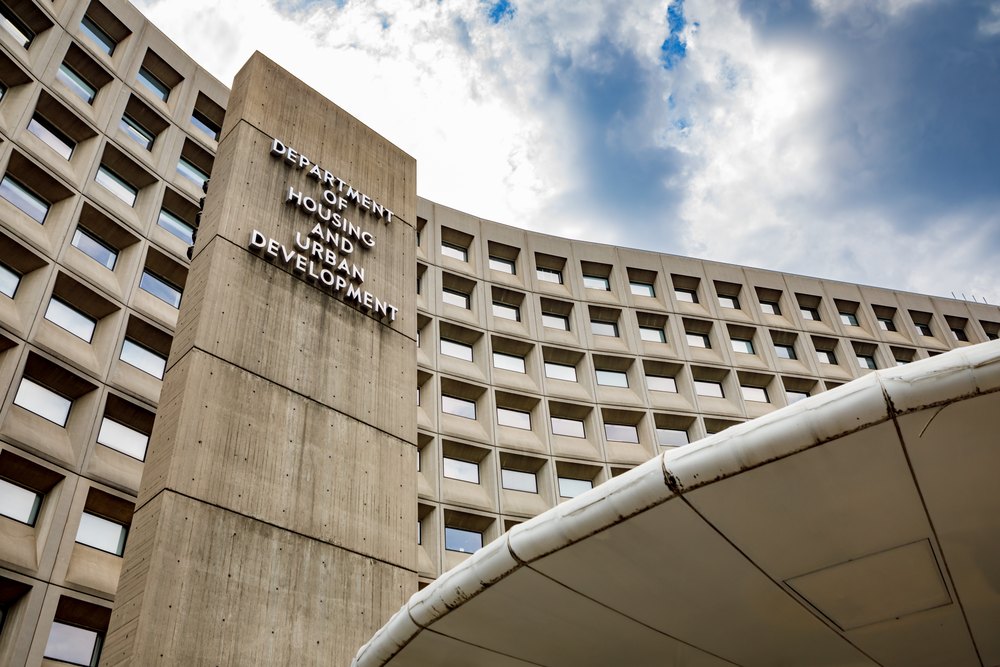
The U.S. Department of Housing and Urban Development (HUD) is pushing forward with sweeping changes to how the federal government funds homelessness assistance programs. In a move that has sparked both praise and fierce legal opposition, HUD released a new $4 billion Notice of Funding Opportunity (NOFO) that fundamentally reframes how the United States will approach its homelessness crisis. The announcement marks one of the most significant policy shifts in federal homelessness strategy in more than a decade and reflects the Trump administration's broader ideology that housing alone cannot solve what it characterizes as a crisis rooted in addiction and mental illness.
What Is the New $4 Billion HUD Funding Opportunity?
The newly released NOFO invites organizations across the country to apply for federal grant funding to support homelessness programs. However, unlike previous funding cycles, this round comes with a notably different philosophical framework. Rather than prioritizing rapid placement of individuals into housing without preconditions — a cornerstone of the so-called "housing first" model — the new funding guidelines emphasize a community-wide commitment to ending homelessness through a more comprehensive set of strategies. These strategies are designed to address the root causes of homelessness, particularly substance abuse and mental health conditions, in addition to providing shelter.
HUD Secretary Scott Turner has been an outspoken critic of the housing first model since taking office. Turner argues that simply providing housing without accompanying wraparound services is insufficient and, in many cases, counterproductive. The new funding opportunity reflects his vision for a more holistic intervention framework, one that pairs housing with behavioral health support, addiction treatment, and other social services.
The Debate Over "Housing First"
The "housing first" philosophy has been the dominant model in federal homelessness policy for roughly two decades. Its central premise is straightforward: stable housing is a prerequisite for addressing all other challenges a homeless individual faces. Under this model, people experiencing homelessness are placed into permanent housing as quickly as possible, without requiring sobriety, employment, or participation in treatment programs as a condition of entry.
Proponents of housing first point to a substantial body of research suggesting it reduces chronic homelessness, improves health outcomes, and is cost-effective compared to cycling individuals through emergency shelters and hospital systems. Advocacy groups like the National Alliance to End Homelessness have long championed the model as evidence-based best practice.
Critics, however, argue that housing first has failed to make a meaningful dent in overall homelessness rates, particularly as the crisis has grown to record proportions in cities like Los Angeles, San Francisco, and New York. Secretary Turner echoed this criticism directly in his statement accompanying the new NOFO. "This ideology promised to end homelessness," Turner said. "Instead, billions of taxpayer dollars were spent while homelessness increased to record levels. Housing alone will not solve a crisis driven by addiction and mental illness."
Legal Challenges and Prior Court Blocks
This is not the first time the Trump administration has attempted to pivot federal homelessness funding away from housing first principles. HUD signaled a similar departure in a NOFO released last year, which quickly became the subject of litigation. The National Homelessness Law Center filed suit, and a federal court ultimately blocked the earlier funding plan, ruling that the restrictions it imposed were unlawful.
The National Homelessness Law Center has already vowed to challenge the new $4 billion NOFO as well, setting the stage for another round of legal battles over the direction of federal homelessness policy. Legal experts suggest the outcome will hinge on whether HUD's new conditions cross the line from policy preference into unlawful restriction of grant eligibility.
The tension between the executive branch's policy priorities and the legal boundaries governing how federal grant money can be conditioned is a recurring theme in the current administration's domestic agenda. Courts have repeatedly been asked to weigh in on whether agencies can attach ideological or programmatic conditions to federal funding streams that Congress did not authorize.
What This Means for Homeless Service Providers
For the thousands of nonprofit organizations, local governments, and service providers that rely on HUD funding to operate homeless shelters, outreach programs, and permanent supportive housing, the new NOFO introduces significant uncertainty. Organizations that have built their service delivery models around housing first principles may find themselves at odds with the new funding criteria, potentially jeopardizing grant awards they depend on for operations.
- Programs that previously prioritized rapid rehousing without treatment requirements may need to restructure their service models to remain eligible for federal dollars.
- Providers offering substance abuse treatment or mental health services may find the new framework more favorable to their existing approaches.
- Local Continuums of Care — the regional planning bodies that coordinate homeless services — will need to assess whether their current strategies align with HUD's new priorities before submitting applications.
- Organizations in states or cities with laws that protect housing first models may face conflicting mandates between state and federal policy.
Broader Context: Record Homelessness and Political Stakes
The policy overhaul is unfolding against a backdrop of historically high homelessness numbers. According to HUD's own annual point-in-time count, the number of people experiencing homelessness in the United States reached a record high in recent years, driven by a combination of rising housing costs, insufficient affordable housing supply, and elevated rates of mental illness and substance use disorders in the homeless population.
The Trump administration has made addressing visible homelessness — particularly in urban centers — a prominent political priority. The White House has pointed to encampments in major cities as evidence that decades of progressive homelessness policy have failed, and has used this framing to justify a fundamental reorientation of the federal response. Whether that reorientation produces measurable results, or is simply blocked again in court, remains to be seen.
Looking Ahead
The rollout of the new $4 billion NOFO will be closely watched by homelessness advocates, service providers, local governments, and legal organizations in equal measure. With litigation already promised and billions of dollars at stake, the fight over how America addresses homelessness is entering a new and consequential chapter. The outcome will not only shape federal funding flows but will also define the ideological direction of homelessness policy for years to come — determining whether the country doubles down on housing-centered approaches or pivots toward a model that demands treatment and behavioral change alongside a roof over one's head.