
The Social Security Crisis Is No Longer a Distant Problem
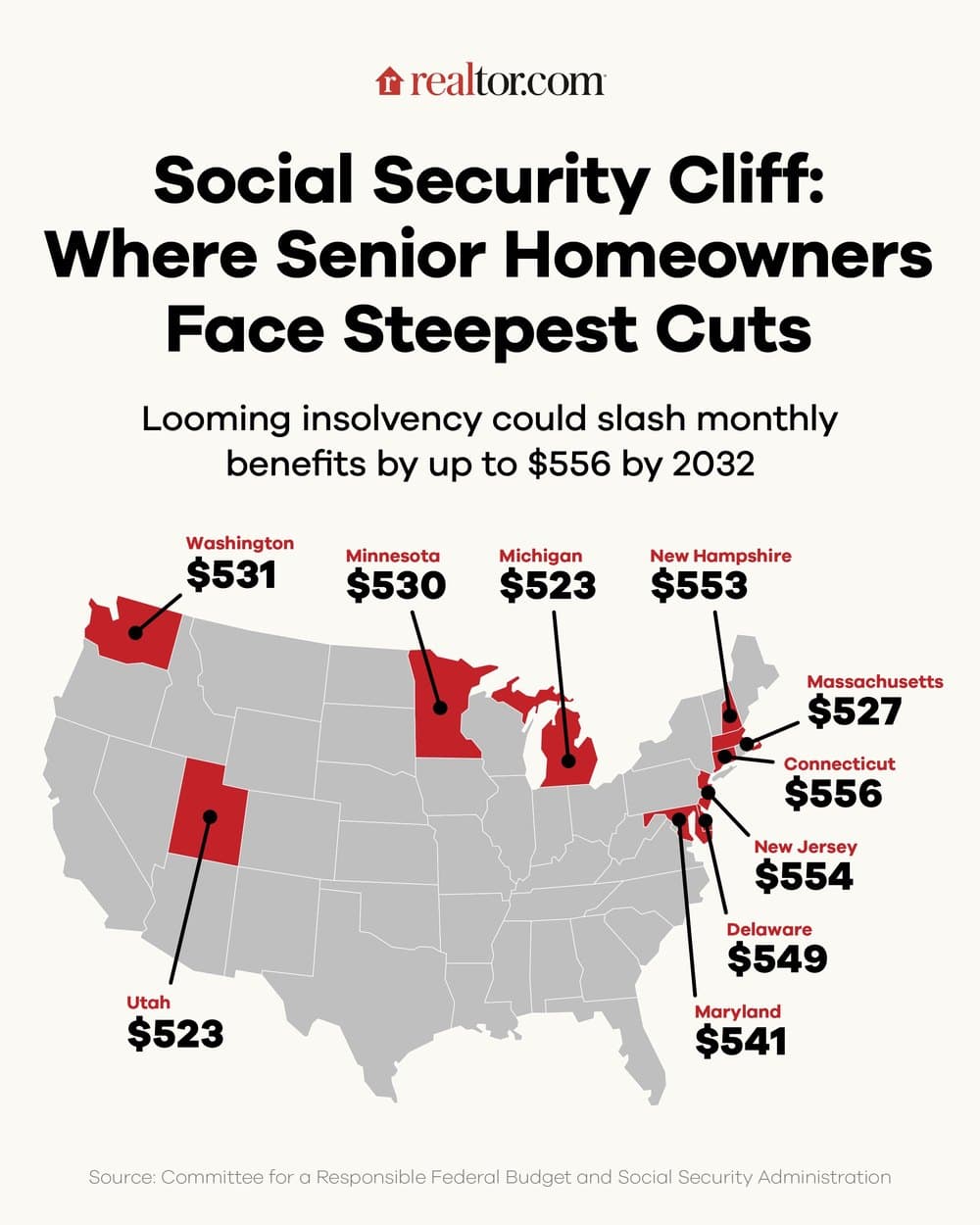
For years, warnings about Social Security's long-term financial health were easy to dismiss as background noise in Washington. Not anymore. According to the latest annual trustees report, Social Security's reserves for retirement benefits are just over six years away from depletion. That means by 2032, the trust fund that millions of Americans have paid into their entire working lives could run dry — leaving only 78% of promised benefits payable to retirees who have dutifully contributed to the program for decades.
The urgency is now undeniable, and the debate over how to fix it has exploded into one of the most politically charged conversations in the country. At the center of it all: whether the Trump administration is quietly considering raising the full retirement age as a path toward solvency. That rumor alone was enough to prompt Democratic Sen. Elizabeth Warren, along with fellow Senators Tammy Duckworth and Richard Blumenthal, to send a formal letter to President Donald Trump demanding clarity on the administration's intentions.
But while this debate plays out in the halls of Congress, millions of everyday Americans — particularly aspiring homebuyers — are left wondering what it all means for their financial future.
What Raising the Retirement Age Actually Means
On the surface, raising the retirement age sounds like a reasonable, if uncomfortable, compromise. People are living longer, the argument goes, so extending working years makes sense. But critics, including Sen. Warren, argue that raising the retirement age is not a neutral policy tweak — it is, in effect, a significant benefit cut dressed up in more palatable language.
"Republicans have a history of attempting to increase the retirement age, privatize Social Security, or otherwise cut Social Security benefits, and some congressional Republicans have called to raise the retirement age or means-test benefits as the 'solution' to this problem," Warren wrote in her letter to the Trump administration.
If the retirement age is raised — say, from 67 to 70 — workers would need to delay claiming their benefits by several years. For those who cannot physically continue working in demanding jobs, or those who experience health issues in their late 60s, this amounts to a direct financial penalty. It also creates a ripple effect that extends far beyond a single retirement check: it reshapes entire life plans, including when and whether people can afford to buy a home.
The Homebuying Connection You May Not Have Considered
At first glance, Social Security policy and the housing market might seem like separate conversations. In reality, they are deeply intertwined — especially for the millions of Americans who plan their major financial milestones around an expected retirement timeline.
Here is why this matters for homebuyers specifically:
- Retirement savings influence purchasing power. Many Americans rely on a combination of Social Security income and personal savings when planning home purchases later in life. If Social Security benefits are reduced or delayed, buyers must lean more heavily on personal retirement accounts — potentially depleting funds they might have used for a down payment or to pay down a mortgage.
- Extended working years shift housing demand. If people are required or financially pressured to work longer, the traditional pattern of downsizing or relocating at retirement gets delayed. This creates a ripple through the housing inventory, as older homeowners hold onto properties longer, keeping supply tight in already competitive markets.
- Younger buyers face a compounded squeeze. Millennials and Gen Z buyers are already navigating elevated home prices, high mortgage rates, and stagnant wage growth. Adding uncertainty around future Social Security income forces younger generations to save more aggressively on their own — leaving less room in monthly budgets for mortgage payments.
- Downsizing plans get disrupted. Many Americans factor in the equity from selling a family home as part of their retirement funding strategy, often using those proceeds alongside Social Security to fund smaller housing. Any cuts or delays to Social Security benefits could make that calculation far less stable.
What the Numbers Tell Us
The 2032 projection is not a worst-case hypothetical — it is the current trajectory based on existing funding structures and demographic trends. The Social Security Administration's trustees have been clear: without legislative action, benefits will automatically be reduced to approximately 78 cents on every dollar owed. For a retiree expecting $2,000 per month, that is a shortfall of $440 every single month — roughly $5,280 per year vanishing from a fixed income.
For homeowners on fixed incomes, particularly those carrying a mortgage into retirement or paying property taxes in high-cost states, a cut of that magnitude could mean the difference between staying in a home and being forced to sell it.
What Future Homebuyers Should Be Doing Right Now
Regardless of how Washington ultimately resolves the Social Security debate, the uncertainty itself is a call to action for anyone planning to purchase a home in the next decade or two. Financial planners increasingly recommend treating Social Security as a supplement rather than a foundation — meaning retirement and housing plans should be built around personal savings, investments, and income streams that are not subject to congressional decisions.
Prospective buyers should consider stress-testing their homebuying budgets against a scenario where Social Security delivers less than expected. Building in a buffer — whether through a larger emergency fund, a conservatively sized mortgage, or more aggressive contributions to a 401(k) or IRA — provides real protection against policy changes that may be out of your control.
It is also worth consulting with a financial advisor who can model out different Social Security scenarios and help align a home purchase timeline with realistic retirement projections.
The Bottom Line
Social Security's march toward insolvency is no longer a distant political talking point — it is a financial reality that will intersect with housing decisions for tens of millions of Americans. Whether the Trump administration raises the retirement age, cuts benefits outright, or finds some other path forward, the outcome will reshape how future homebuyers plan, save, and spend. The smartest move any prospective buyer can make today is to stop assuming that Social Security will look in 2035 the way it looks right now — and plan accordingly.