
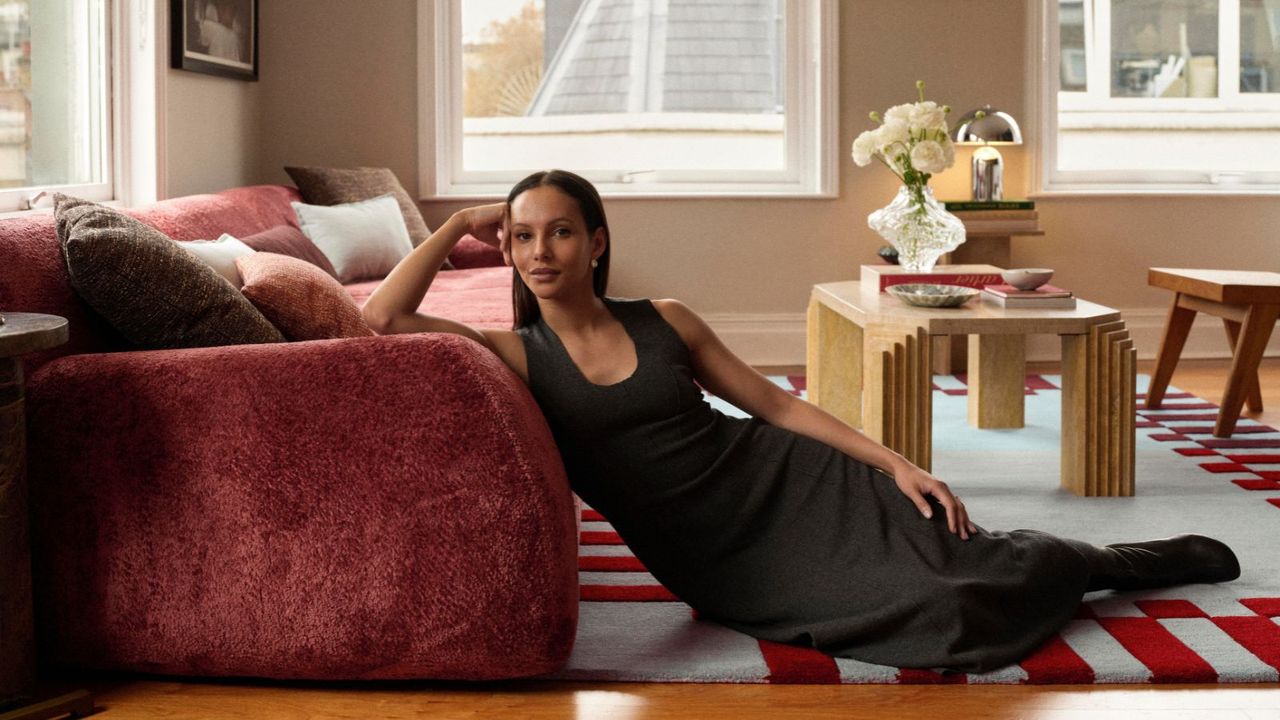
Step Inside Principal Ballerina Francesca Hayward's Serene London Home
For most people, the idea of a professional ballet dancer's home conjures images of discipline, minimalism, and perhaps the faint echo of a rehearsal piano. But step inside the London sanctuary of Francesca Hayward — one of the Royal Ballet's most celebrated principal dancers — and you'll find something altogether warmer, more personal, and deeply considered. Her home is a quiet triumph of layered texture, a palette tuned to serenity, and furnishings chosen not for trend but for enduring beauty.
In a city as relentlessly kinetic as London, Hayward has carved out an interior world that feels like a long exhale. Every room speaks to the same guiding principle: that a home should restore you, hold you, and reflect who you are rather than who the moment demands you to be.
A Palette Built for Peace
The first thing visitors notice upon entering Hayward's home is the color. Or rather, the absence of color in its loudest sense. The walls are dressed in soft, chalky neutrals — warm whites that tip toward the creamy, muted sage tones that feel grown from the earth rather than manufactured. There are whispers of dusty rose in a throw, a hint of terracotta in a ceramic vase, and the occasional deeper tone that anchors a room without overwhelming it.
This approach to color is far from accidental. Interior designers often describe this kind of palette as "restorative neutrals" — hues that the eye processes without effort, allowing the nervous system to genuinely rest. For someone whose professional life is lived under the unrelenting brightness of stage lighting, returning to a home bathed in gentle, natural tones is not merely aesthetic preference — it is necessity.
The light in each room is carefully managed, with sheer linen curtains diffusing the often grey London sky into something soft and luminous. Even on overcast afternoons, the interiors glow with a quality of light that feels Mediterranean rather than northern European.
Texture as the True Hero
If color forms the emotional backdrop of Hayward's home, texture is undoubtedly its soul. This is an interior built on the pleasure of touch — something one might expect from a woman whose entire profession is conducted through her body's relationship with physical sensation and space.
Consider the living room: a generously proportioned linen sofa sits at its centre, its fabric deliberately unstructured, inviting rather than pristine. Layered across it are cushions in varying weights — a chunky bouclé, a smooth velvet, a loosely woven cotton. Beneath it, a large natural fibre rug grounds the space and introduces a subtle organic geometry underfoot.
Walls feature thoughtfully chosen artwork alongside objects collected over time — a hand-thrown ceramic bowl, a worn leather-bound book left open on a side table, a cluster of dried botanicals in a tall earthenware vessel. None of it feels curated in the showroom sense. All of it feels lived with.
- Natural linens and cottons dominate upholstery choices, bringing breathability and warmth in equal measure.
- Handmade ceramics appear throughout, their imperfections a quiet reminder of the human hand behind each object.
- Aged and antique wood surfaces introduce depth and a sense of history that newer pieces cannot manufacture.
- Woven textiles — from rugs to wall hangings — add dimension without competing with the calm of the palette.
Furnishings That Speak in Decades, Not Seasons
There is not a single piece of furniture in Hayward's home that could be described as "of the moment." This is perhaps its most radical quality in an era dominated by fast interiors and algorithmic aesthetics. Her furnishings are timeless in the truest sense — selected because they are beautiful and useful and will remain so twenty years from now.
A mid-century armchair, reupholstered in a muted camel fabric, anchors a reading corner beside a well-stocked bookshelf. A scrubbed pine dining table, generous enough for long dinners with friends, pairs with mismatched wooden chairs that share a common warmth of tone if not identical form. A brass floor lamp beside the sofa casts the kind of amber evening light that makes every conversation feel more intimate.
This commitment to longevity is both environmental and emotional. Choosing furniture built to last — and buying fewer, better pieces — reduces waste while simultaneously creating interiors that develop rather than date. Hayward's home will look equally right in ten years because it was never designed to look right only now.
The Private Sanctuary: A Bedroom Designed for Deep Rest
The bedroom perhaps best encapsulates the philosophy of the entire home. Here, the palette is at its most hushed — soft whites, the palest of greys, a barely-there blue that mimics the sky just before dawn. The bed is layered in high-thread-count cotton, a lightweight wool blanket folded at its foot, a linen duvet that breathes rather than traps heat.
There are no screens visible in the room. Bedside tables hold only a lamp, a glass of water, and a book. The floor is bare wood, warm underfoot, with a single soft rug on Hayward's side of the bed. It is a room designed with one purpose in mind: genuine, restorative rest for a body that gives enormously every time it takes the stage.
What Francesca Hayward's Home Teaches Us About Interior Design
Beyond its obvious beauty, Hayward's London home offers a broader lesson for anyone thinking carefully about their own living space. Good interior design, it suggests, is not about following trends or spending extravagantly. It is about understanding what your home needs to do for you — emotionally, physically, practically — and then making every decision in service of that understanding.
A calming color palette does not require expensive paint. Layered texture can be built slowly, piece by piece, over many years. Timeless furniture can be found in antique markets and vintage shops as readily as in design showrooms. What cannot be shortcut is intentionality — the willingness to choose thoughtfully and resist the pull of the ephemeral.
In a world that moves as fast as Hayward's professional one, her home stands as a beautifully realised argument for slowness, warmth, and the enduring power of getting your own four walls exactly right.