
What Is a "Halfback" and Why Is This Trend Taking Off?
For decades, the American retirement dream followed a familiar script. You spend your working years grinding away in a cold-weather city — think New York, Boston, or Chicago — build your nest egg, and then reward yourself with a move to Florida, where the sun shines year-round, the beaches are never far, and the cost of living promises to stretch your savings a little further. It was practically a rite of passage for an entire generation of retirees.
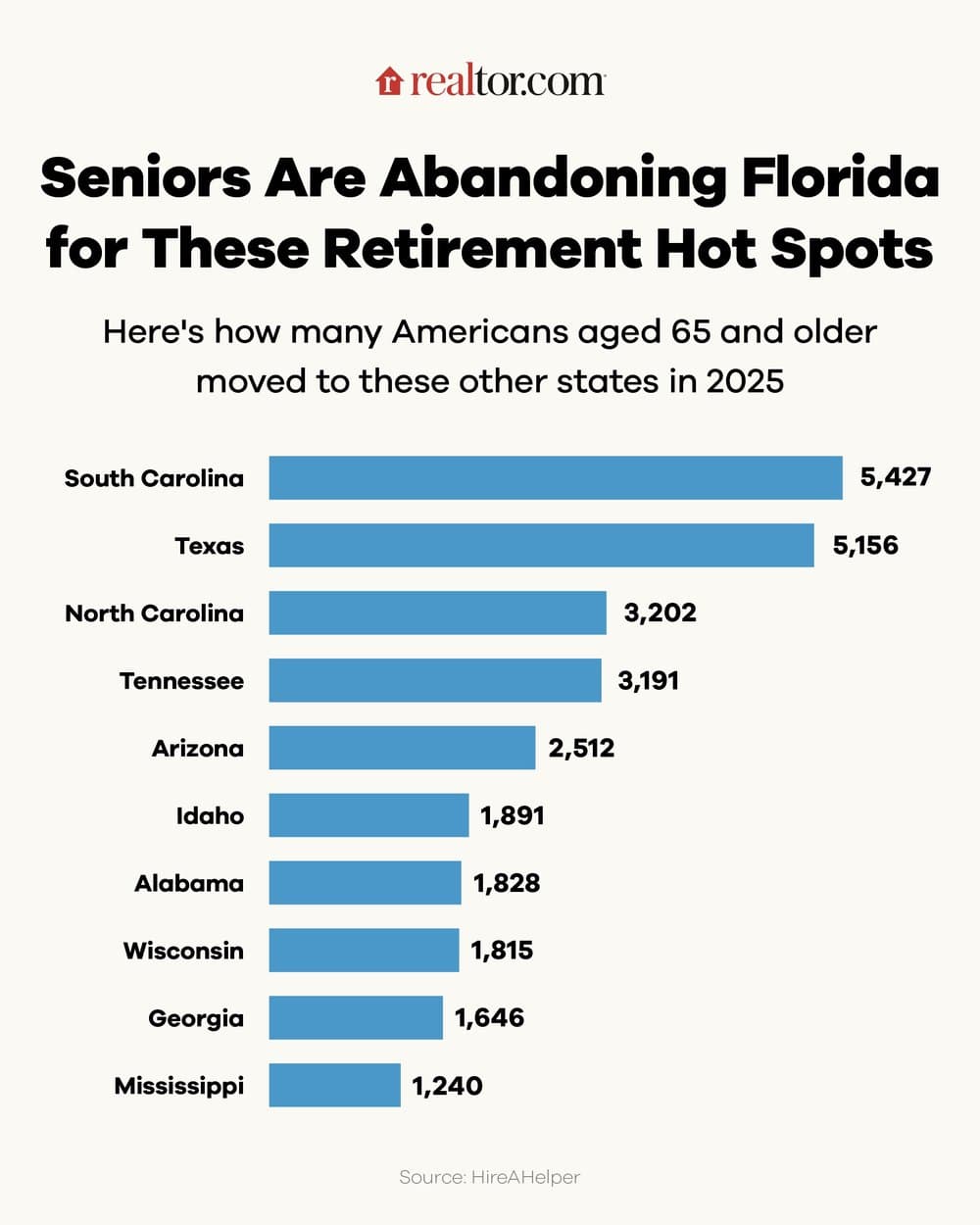
But that script is getting a serious rewrite. A growing number of retirees who made that southward leap are now picking up stakes again — not to return all the way home, but to settle somewhere in between. These movers have earned themselves a catchy nickname: halfbacks. They moved to Florida, grew disillusioned for one reason or another, and then relocated roughly halfway back north — landing in states like South Carolina, North Carolina, Georgia, or Tennessee.
This isn't just an anecdotal curiosity. It's a measurable migration shift that carries real implications for anyone currently planning their retirement or reconsidering where they've already landed.
The Numbers Behind the Halfback Migration
According to data from HireAHelper, more than 2.1 million Americans aged 65 and older relocated in 2025 alone. Florida still attracted the largest share of that group, with over 40,000 retirees moving into the state. On the surface, that sounds like business as usual for the Sunshine State.
Look closer at the numbers, though, and a very different story emerges. Nearly as many people aged 65 and older also packed their bags and left Florida that same year. When you account for both inflows and outflows, Florida's net gain of retirees in 2025 was a mere 815 people. For a state that has built so much of its identity — and its economy — around attracting retirees, that figure is a striking indicator of a changing tide.
So which state actually led the pack in net retiree gains? South Carolina. Not Arizona. Not Texas. Not even the perennial favorite Florida. South Carolina claimed the top spot, followed by Texas, North Carolina, and Tennessee. These aren't random destinations — they represent a geographic corridor that offers a compelling alternative to Florida's increasingly complicated retirement proposition.
Why Are Retirees Souring on Florida?
To understand the halfback trend, it helps to look at what has changed in Florida over the past several years. The state that once seemed like an effortless retirement haven has become far more complicated for many of the people who chose it.
- Skyrocketing insurance costs: Florida's homeowners insurance market has been in crisis mode for years. A combination of hurricane risk, litigation issues, and insurers exiting the market has pushed premiums to punishing levels in many parts of the state. For retirees on fixed incomes, an insurance bill that doubles or triples in just a few years is more than an inconvenience — it can genuinely destabilize a retirement budget.
- Intensifying hurricane seasons: Florida has always carried hurricane risk, but many retirees who moved years ago report that the emotional and financial toll of repeated storm preparations, evacuations, and potential damage has worn them down far more than they anticipated.
- Rising cost of living: One of Florida's original selling points was affordability. That advantage has eroded significantly. Home prices surged dramatically during the pandemic-era migration boom, and everyday costs from groceries to healthcare have risen in step with national inflation trends.
- Heat and humidity: It sounds almost trivial compared to financial pressures, but the brutal Florida summers — increasingly intense in the era of climate change — take a physical toll that many older residents find increasingly difficult to manage as they age.
- Overcrowding and congestion: Florida's popularity has worked against it. Traffic, overcrowded healthcare facilities, and strained infrastructure have made daily life feel less relaxed than many retirees had envisioned.
Why the Southeast Is Winning Over Halfback Retirees
The states drawing these departing Florida retirees share a collection of qualities that hit a practical sweet spot for older Americans. South Carolina, North Carolina, Georgia, and Tennessee offer a milder but still-warm climate — four genuine seasons without the brutal winters of the Northeast, but also without the oppressive heat and hurricane exposure of coastal Florida.
Cost of living in many of these states remains meaningfully lower than both Florida's current price levels and the Northern metros retirees originally left. Property taxes are often favorable, healthcare infrastructure in mid-sized cities like Asheville, Nashville, Greenville, and Chattanooga has expanded considerably, and the general pace of life aligns well with what retirees say they were looking for in the first place.
South Carolina in particular has invested real effort in marketing itself as a retirement destination, with communities designed around active adult living, proximity to both mountains and coastline, and tax structures that treat retirement income generously.
What This Trend Means If You're Planning Retirement Now
The halfback phenomenon is more than just an interesting demographic footnote — it's a practical warning for anyone currently building a retirement relocation plan. The factors that made Florida attractive for previous generations have fundamentally shifted, and the calculus of where to retire deserves careful, up-to-date analysis rather than defaulting to conventional wisdom.
If you're weighing a retirement move, consider the full picture: insurance costs, climate trajectory, healthcare access, and long-term affordability, not just the initial appeal of a destination. The halfbacks who are now thriving in the Carolinas or Tennessee didn't fail at retirement — they adapted to it. And increasingly, that kind of flexibility may be the most valuable retirement asset of all.
The Bottom Line
Florida's reign as America's undisputed retirement capital is facing its most serious challenge in decades. With a net retiree gain of just 815 people in 2025 and thousands of older residents heading for the exits, the halfback migration trend signals that retirees today are more willing than ever to course-correct when a destination doesn't deliver. South Carolina, North Carolina, Tennessee, and their neighbors are quietly emerging as the new retirement frontier — and the numbers suggest that shift is only getting started.