
Home Sales Rebound Where Supply Has Surged: A 2025 Housing Market Update
After years of inventory shortages, rate shocks, and sidelined buyers, the U.S. housing market is beginning to show signs of genuine recovery — but not everywhere at once. The spring 2025 housing market is warming up fastest in places where buyers finally have real options to choose from. According to the latest data from Zillow, home sales growth is directly tied to inventory recovery, and the markets that rebuilt their supply the fastest are now reaping the rewards.
Austin Leads the Nation in Both Sales Growth and Inventory Recovery
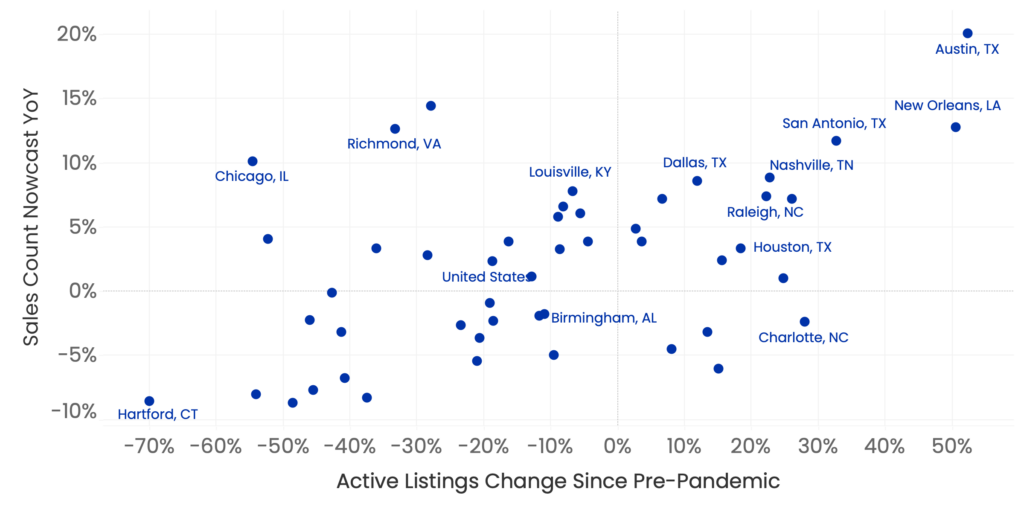
No major metro tells this story more clearly than Austin, Texas. The city leads all major U.S. markets in year-over-year home sales growth, up an impressive 20% compared to April of last year. At the same time, Austin's housing inventory sits 52% above pre-pandemic averages — the highest surplus of any major metropolitan area in the country.
This is not a coincidence. Austin experienced a construction boom during and immediately after the pandemic, as remote work migration drove demand and developers responded aggressively. After a transitional slowdown, that supply is now working in buyers' favor. More homes on the market means more choices, more competitive pricing, and ultimately more transactions closing.
Among the top 10 markets for year-over-year sales growth nationally, six have more inventory available today than they did before the pandemic. The pattern is consistent and compelling: where supply has surged, sales are following.
The Sun Belt and West Are Driving the Recovery
Inventory has now fully recovered in 19 major metro areas across the United States, and the geographic concentration is telling. These markets are largely clustered in the South and the West — areas that experienced the most intense construction activity during the pandemic-era building boom. Cities across Texas, Florida, Arizona, and other Sun Belt states saw developers break ground on thousands of new homes to meet surging demand from relocating workers and remote-work migrants.
That construction wave, which caused some market turbulence as supply temporarily outpaced demand, is now delivering a meaningful benefit. Buyers in these regions have regained negotiating power. They can take time to compare properties, make offers below asking price, and negotiate concessions that were simply unthinkable during the frenzy of 2021 and 2022. The result is a healthier, more functional market where sales activity can actually grow.
Why Sales Still Trail Pre-Pandemic Norms Nationally
Despite encouraging regional trends, total home sales across the country still lag behind pre-pandemic levels. This apparent contradiction — homes selling at similar speeds to before the pandemic, yet total volume remaining lower — can be largely explained by inventory distribution. In many markets, especially in the Northeast and parts of the Midwest, supply has not recovered. Sellers in those regions are either locked in by low mortgage rates they don't want to give up, or simply not listing because they fear they won't find a suitable replacement home.
Nationally, homes are selling after a median of approximately 17 days on the market — roughly in line with pre-pandemic norms. That speed suggests that when homes do come to market, buyers are ready to move. The bottleneck is not buyer demand; it is available supply. Markets that have solved the supply problem are growing. Markets that haven't are still stuck.
Affordability Is Slowly Improving for Buyers
Another positive development heading into summer 2025 is a modest improvement in affordability at the national level. A typical monthly mortgage payment today is approximately 3.4% lower than it was in April 2024, according to Zillow data. While that may not sound dramatic, for buyers stretched thin by elevated home prices and years of rate increases, even a small reduction in monthly obligations can be the difference between qualifying for a loan and sitting on the sidelines.
National home sales reflected this slight improvement, rising 2.3% in April compared to the same month last year. The gains are modest, but the direction is positive. As incomes continue to grow and gradually catch up with home prices in many Sun Belt markets, the affordability equation is slowly shifting in buyers' favor.
What This Means for Buyers in 2025
If you are considering purchasing a home in 2025, the most actionable takeaway from this data is simple: location matters more than ever. Your experience as a buyer will vary enormously depending on where you are shopping.
- In high-inventory markets like Austin, Denver, Phoenix, Tampa, and other Sun Belt cities, you are likely to find more options, face less competition, and have more room to negotiate on price and terms.
- In low-inventory markets — many of which are concentrated in the Northeast and upper Midwest — expect continued competition, fast-moving listings, and prices that remain firm or are still appreciating.
- Nationally, the slight decline in mortgage payment burdens means your purchasing power is marginally better than it was a year ago, even if rates have not dramatically fallen.
- Homes are moving quickly once listed, so financial pre-approval and decisiveness remain essential in virtually every market.
What This Means for Sellers in 2025
For homeowners considering listing their property, the picture is more nuanced. In markets where inventory has surged above pre-pandemic levels, sellers face real competition. Pricing strategically and presenting a well-maintained, move-in-ready home is no longer optional — it is essential. Overpriced listings are sitting longer, and buyers have the luxury of walking away.
However, the fact that homes are selling after roughly 17 days nationally signals that well-priced, well-positioned properties are still moving efficiently. The key for sellers in supply-heavy markets is realistic pricing informed by current comparable sales, not the peak values of 2021 or 2022.
In tighter markets, sellers retain significant leverage. Low inventory continues to support strong prices and quick sales in those areas, and listing conditions remain favorable for motivated sellers who price appropriately.
The Bigger Picture: A Housing Market Finding Its Footing
The spring 2025 housing data tells a story of a market in transition — one that is slowly but meaningfully healing in the places that built the most homes and rebuilt the most inventory. The broader national market is not yet back to pre-pandemic sales volumes, and challenges like elevated mortgage rates, rising costs of living, and geographic supply imbalances continue to weigh on activity. But the trajectory in high-inventory Sun Belt markets points toward what a healthier housing market can look like when supply and demand come back into balance.
For buyers with flexibility on location, the window of opportunity in markets like Austin and others across the Sun Belt remains open. More supply, gradually improving affordability, and motivated sellers create conditions that simply did not exist two or three years ago. Whether you are a first-time buyer, a move-up buyer, or an investor, understanding where the market is improving — and why — is the essential first step toward making a smart housing decision in 2025.