
Chicago Design Week 2026: Where Innovation Meets Sustainability
Chicago Design Week has long served as one of North America's most anticipated celebrations of creative thinking, drawing designers, architects, and tastemakers from around the globe. The 2026 edition proved no exception, showcasing a dazzling range of collections that pushed the boundaries of materials, form, and function. From office furniture crafted out of reclaimed ocean waste to minimalist aluminium benches shaped by one of Japan's most celebrated designers, this year's highlights reflected a broader shift in the design world — one where beauty and responsibility are no longer in conflict.
Whether you are an interior design professional, a sustainability advocate, or simply someone who appreciates exceptional craftsmanship, the collections unveiled at Chicago Design Week 2026 offer something genuinely compelling. Here is a closer look at eleven of the most innovative and talked-about collections from this year's event.
Sustainability Takes Center Stage at Chicago Design Week
Perhaps the most defining theme of Chicago Design Week 2026 was the industry's deepening commitment to sustainable design. Across showrooms, pop-ups, and gallery exhibitions throughout the city, designers made it clear that the materials they choose — and the processes behind them — matter as much as the finished object.
This shift is not merely aesthetic. As climate awareness reshapes consumer expectations and regulatory landscapes, leading design studios are rethinking the entire lifecycle of their products, from raw material sourcing to end-of-life recyclability. The collections presented in Chicago this year served as a powerful testament to how far that conversation has progressed.
Foster + Partners' Office Chair Made from Recycled Fishing Nets
Among the most headline-grabbing debuts of the week was an office chair developed by the globally renowned architecture and design firm Foster + Partners. What makes this piece particularly remarkable is not just its sleek, ergonomic silhouette, but the material at its core: reused fishing nets recovered from the ocean.
Ghost fishing gear — nets, lines, and traps abandoned or lost at sea — represents one of the most destructive forms of marine pollution. By transforming this waste into a high-performance seating product, Foster + Partners has demonstrated that luxury and environmental stewardship can coexist at the highest level of design. The chair's structure balances aesthetic refinement with functional excellence, offering a compelling case for circular material sourcing in the contract furniture market.
The piece also signals a broader ambition from Foster + Partners to extend their sustainability principles beyond buildings and into the objects that inhabit them — a logical and welcome evolution for a studio of their stature.
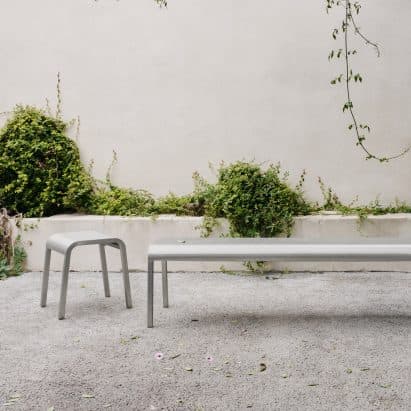
Naoto Fukasawa's Lightweight Aluminium Benches
Japanese industrial designer Naoto Fukasawa, known for his philosophy of design that feels almost unconsciously intuitive to the user, presented a new series of lightweight aluminium benches that have already generated significant interest among architects and interior designers.
Fukasawa's benches embody his signature restraint. The aluminium profiles are slender yet structurally assured, creating pieces that appear to hover effortlessly in space. The surface treatment allows the material's natural grain and tone to remain visible, celebrating rather than concealing the industrial process behind the object.
These benches are ideal for public and commercial interiors — lobbies, cultural institutions, and transit spaces — where durability must meet visual calm. They serve as a reminder that truly great design does not shout for attention; it simply makes everything around it feel more considered.
A Snapshot of the Other Standout Collections
Beyond the headliners, Chicago Design Week 2026 offered a rich landscape of emerging and established talent. Several other collections stood out for their originality, technical ambition, or cultural resonance.
- Bio-based upholstery fabrics woven from agricultural byproducts made their commercial debut, offering a viable alternative to petroleum-derived textiles without compromising on texture or performance.
- Modular shelving systems designed for easy disassembly and reuse challenged the throwaway culture that has long plagued flat-pack furniture, emphasising longevity as a design value in itself.
- Hand-glazed ceramic lighting from a Chicago-based studio brought warmth and craft back into the conversation around ambient illumination, with each piece carrying the visible marks of the maker's hand.
- Reclaimed wood dining tables sourced from demolished urban structures told the story of the city through their grain, knots, and patina, turning material history into a design asset.
- Acoustic panels made from mycelium — the root structure of mushrooms — offered a striking example of biomaterial innovation applied to the practical challenge of sound management in open-plan offices.
- Solar-integrated outdoor furniture designed for hospitality settings blended photovoltaic technology seamlessly into seating and table surfaces, enabling off-grid charging in public spaces.
- Flat-woven rugs created in collaboration with Andean artisan communities brought ethical production practices and traditional textile knowledge to a contemporary design audience.
- A sculptural room divider made from pressed paper pulp demonstrated that humble, low-cost materials can achieve genuinely striking formal results when handled with care and ingenuity.
- Children's furniture designed to grow with the child — adjustable in height, reconfigurable in form — addressed the enormous material waste generated by outgrown pieces and offered a smarter model for family interiors.
Why Chicago Design Week Matters for the Global Design Industry
Chicago has always occupied a distinctive position in the global design conversation. As the birthplace of the modern skyscraper and home to some of the world's most architecturally significant buildings, the city carries a design legacy that few can match. Chicago Design Week channels that heritage into a forward-looking platform where ideas are tested, partnerships are formed, and the next chapter of design history begins to take shape.
For brands and designers seeking visibility in the North American market, the event offers unrivalled access to an audience that combines professional expertise with genuine enthusiasm for design culture. Showroom exhibitions, keynote talks, studio tours, and public installations spread across the city's neighbourhoods — from the Merchandise Mart to the West Loop — create an immersive experience that is difficult to replicate at any other event.
Key Takeaways: What These Collections Tell Us About Design's Future
Looking across the eleven collections highlighted this week, several clear threads emerge. First, sustainability is no longer a niche concern — it is a baseline expectation. Designers who are not actively engaging with material origins, product longevity, and end-of-life scenarios are increasingly out of step with where the market and culture are heading.
Second, the most compelling work on show in Chicago managed to hold complexity lightly. Whether it was the deceptive simplicity of Fukasawa's benches or the quiet ambition of Foster + Partners' ocean-waste chair, the strongest pieces communicated their values through form and material rather than explanation. Great design, as ever, speaks for itself.
Finally, Chicago Design Week 2026 reaffirmed that the design industry's most interesting conversations are happening at the intersection of craft, technology, ecology, and culture. The collections presented this year are not merely beautiful objects — they are arguments about how we should live, work, and build the world around us.
If you were not in Chicago this year, make a note for 2027. Based on the evidence of this edition, the event is only growing in ambition and relevance.