
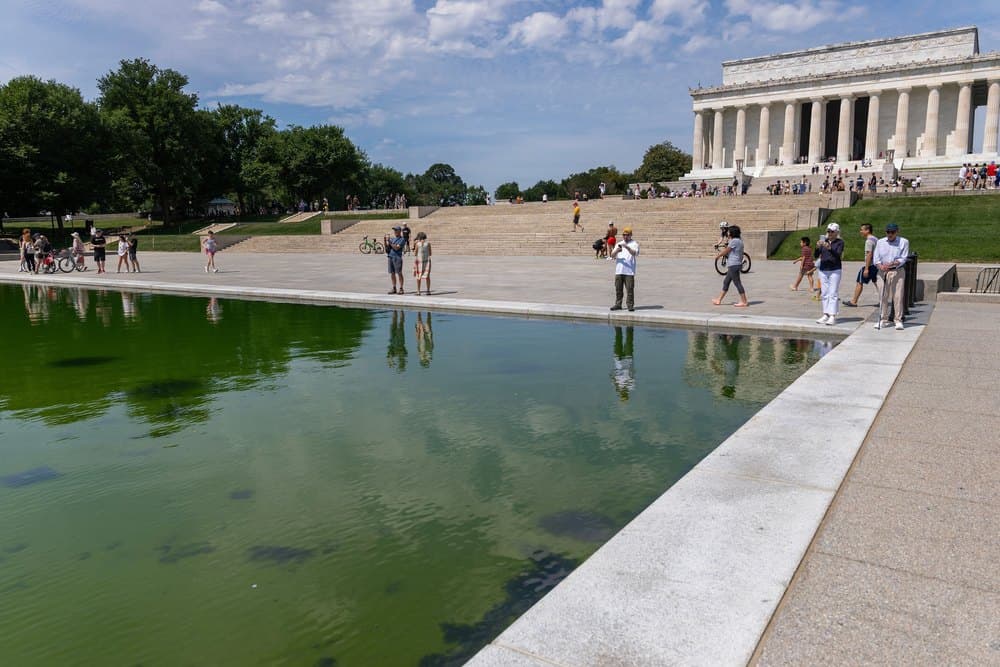
A $14.2 Million Lesson in Pool Maintenance
When the Lincoln Memorial Reflecting Pool reopened after a sweeping $14.2 million renovation — one completed as part of President Donald Trump's preparations for America's 250th anniversary — visitors expected to be greeted by the iconic, mirror-like surface that has defined the National Mall for generations. Instead, they found murky green water blanketed in algae, a far cry from the "flag blue" appearance the president had requested when ordering the pool to be painted blue during the renovation process.
The National Park Service quickly mobilized cleanup efforts as photos of the algae-covered pool spread across social media, though officials have not yet confirmed how long a full restoration of the pool's appearance will take. Leaks had been repaired, the filtration system had been upgraded, and yet — within days of reopening — nature had other plans.
"The recent work done at the Lincoln Memorial is a great reminder that even the most iconic pools require consistent maintenance and occasional renovation to stay beautiful and functional," says Jimmie Meece, brand president at America's Swimming Pool Co. in Macon, GA.
If one of the most famous reflecting pools in the world can fall victim to an algae bloom, your backyard pool is certainly not immune. The good news? With the right routine and a little know-how, keeping your pool sparkling blue is entirely manageable. Here is everything homeowners need to know.
Why Do Pools Turn Green?
The short answer: algae. But understanding why algae takes hold in the first place is the key to preventing it from ever becoming a problem. Algae are microscopic organisms that thrive in warm, sunlit water — especially when the chemical balance of a pool is off or when the filtration system is not running properly.
In the case of the Lincoln Memorial Reflecting Pool, the pool had just undergone a major renovation and was freshly filled with water. During and after a refill, the chemical environment of a pool is often unstable. Without aggressive initial treatment and consistent monitoring in those first critical days, algae can take root at a startling pace — sometimes turning a pool noticeably green within 24 to 48 hours.
For residential pools, the most common culprits behind a green pool include:
- Low or unbalanced chlorine levels: Chlorine is the primary sanitizer that kills algae and bacteria. When levels drop — due to heavy rainfall, high temperatures, or simply skipping a treatment — algae seize the opportunity to multiply.
- Poor water circulation: Stagnant water is a breeding ground for algae. If your pump and filter are not running long enough each day, water does not circulate adequately, creating dead zones where algae flourish.
- Unbalanced pH levels: When the pH of your pool water rises above the recommended range of 7.2 to 7.6, chlorine becomes significantly less effective — even if you technically have enough of it in the water.
- Warm weather and sunlight: Algae grow faster in warm temperatures and direct sunlight. Summer is peak season for green pool problems, which is also when most people want to use their pools the most.
- Inadequate filtration: A clogged, undersized, or aging filtration system simply cannot keep up with the demands of a busy swimming pool.
The Role of Filtration: More Important Than You Think
One of the most telling details of the Lincoln Memorial Reflecting Pool story is that a filtration system upgrade was part of the renovation — and the pool still turned green. This underscores a critical point that many pool owners miss: having a filtration system is not enough. That system must be properly maintained, run for an adequate number of hours each day, and matched to the volume of water it is expected to clean.
For most residential pools, running the filtration system for eight to twelve hours per day is the standard recommendation, though this can vary based on pool size, usage, and the time of year. During peak summer months, erring on the side of longer filtration cycles is always a smart move. Think of your filter as the kidneys of your pool — when it stops working efficiently, everything else suffers.
Homeowners should also clean or backwash their filters regularly and replace filter media — whether sand, cartridge, or diatomaceous earth — according to the manufacturer's schedule. A dirty filter is almost as bad as no filter at all.
A Practical Pool Maintenance Routine for Homeowners
Consistent, routine care is the single most effective defense against a green pool. The following schedule gives homeowners a reliable framework to follow throughout the swimming season.
Daily Tasks
- Run the filtration system for at least eight hours.
- Skim the surface of the pool to remove leaves, insects, and debris before they sink and decompose.
- Check that the pump and filtration system are operating correctly.
Weekly Tasks
- Test the water chemistry using a reliable test kit or test strips, checking chlorine, pH, alkalinity, and calcium hardness levels.
- Adjust chemical levels as needed to keep chlorine between 1 and 3 parts per million and pH between 7.2 and 7.6.
- Brush the walls, steps, and floor of the pool to dislodge any early-stage algae before it becomes visible.
- Vacuum the pool floor to remove settled debris.
- Clean out the pump strainer basket.
Monthly and Seasonal Tasks
- Shock the pool — adding a large dose of chlorine — to eliminate any buildup of contaminants and reset the water chemistry. This is especially important after heavy use, storms, or periods of hot weather.
- Inspect and clean or replace the filter media.
- Check pool equipment, including pumps, heaters, and automatic cleaners, for signs of wear or damage.
- At the start and end of each season, have a professional inspect the pool system to catch any issues before they escalate into costly repairs.
What to Do If Your Pool Has Already Turned Green
If you have already found yourself staring at a swamp-green pool, do not panic. Green pools can be restored, though the process requires time and patience. Start by testing the water to understand exactly which chemical levels are out of range. Brush the entire pool surface aggressively to break up algae colonies, then perform a heavy shock treatment using a pool-grade chlorine product. Run the filtration system continuously until the water clears, cleaning the filter frequently throughout the process.
For severe algae blooms, an algaecide product can be used alongside shock treatment to speed up the clearing process. In extreme cases — particularly where the pool has been neglected for an extended period — draining, scrubbing, and refilling the pool may be the most practical solution.
If the algae keeps returning despite your best efforts, it is worth calling a professional pool service company to assess whether there is an underlying issue with your filtration system, water circulation, or plumbing.
The Bigger Picture: Consistent Care Protects Your Investment
A backyard pool is one of the most enjoyable and valuable features a home can have. It is also one that demands ongoing attention. The Lincoln Memorial Reflecting Pool — maintained with federal resources and professional staff — still fell victim to an algae problem almost immediately after reopening. That is not a failure unique to government agencies or large public installations. It is simply what happens when the delicate chemistry and mechanical systems that keep a pool clean are not actively managed every single day.
As Meece puts it, routine maintenance and proper filtration are well worth the time and money — and that wisdom applies whether you are maintaining a 2,000-gallon backyard pool in the suburbs or a 660,000-square-foot reflecting pool in the heart of Washington, D.C. A little consistency goes a long way toward keeping your water clear, your family safe, and your pool looking exactly the way it should: beautifully, invitingly blue.