
The American Dream of Homeownership Just Got a Lot More Expensive
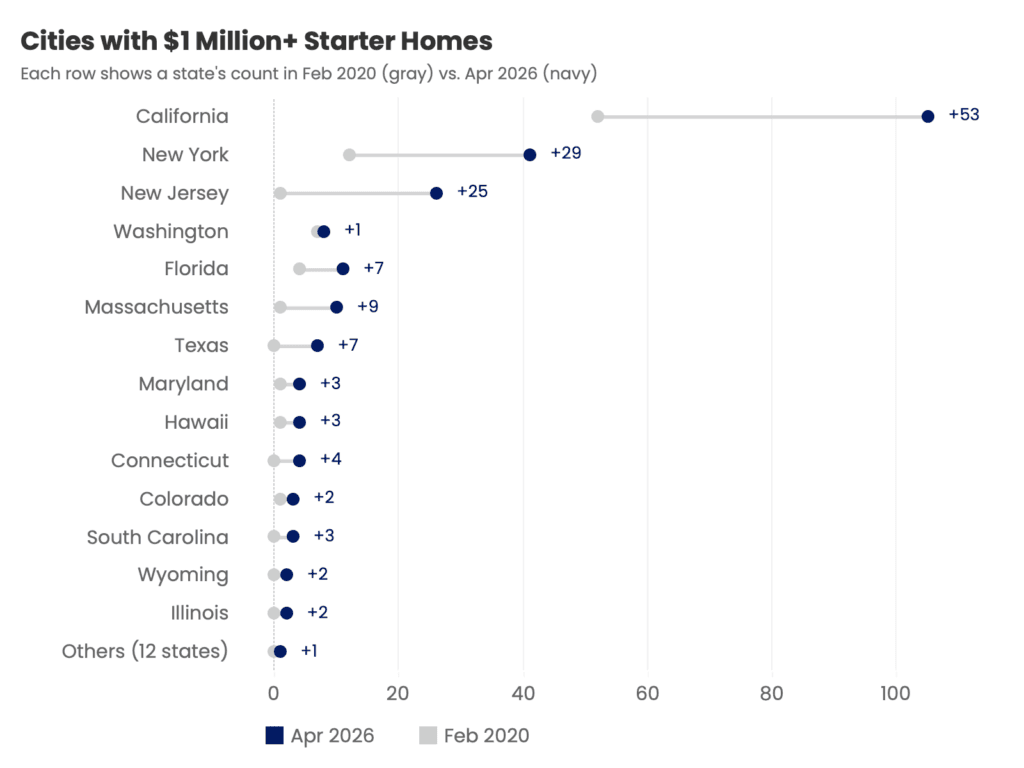
Buying your first home was never easy, but for millions of Americans, the goalposts have moved dramatically in recent years. What was once considered an entry-level property — a modest, affordable home for first-time buyers — now carries a price tag that would have seemed unthinkable just a few years ago. According to the latest data, a record 242 cities across 26 states now have typical starter homes valued at $1 million or more. That figure has nearly tripled since before the pandemic, rising from just 80 cities in February 2020.
This is not a coastal curiosity anymore. Million-dollar starter homes have spread well beyond their traditional strongholds in California and New York, reaching into states and communities that first-time buyers once considered affordable alternatives. Understanding what is driving this trend — and what it means for everyday Americans — is essential for anyone navigating today's housing market.
How We Define a "Starter Home"
Before diving into the numbers, it is worth clarifying what the term "starter home" actually means in this context. For the purposes of this analysis, a starter home is defined as a home in the lowest third of home values in a given region. These are the properties that first-time buyers and younger households typically target when entering the market — not luxury properties, not sprawling suburban estates, but the most accessible homes available in any given city or town.
Nationally, the typical starter home is worth $198,649, up 1.7% from a year ago. That number makes it clear: million-dollar starter homes remain very much the exception, not the norm, across the broader United States. However, the rapid growth in the number of cities where $1 million is simply the entry point for homeownership signals a deeply troubling shift in housing affordability that cannot be ignored.
The Pandemic Housing Boom: A Lasting Impact
To understand how we arrived here, it is essential to look back at the pandemic-era housing boom and the forces it unleashed on the real estate market. When COVID-19 reshaped American life beginning in 2020, a perfect storm of economic conditions collided with one another.
Mortgage rates fell to historic lows, giving buyers unprecedented purchasing power. At the same time, demand for housing surged as remote work freed millions of workers from the need to live near their offices. People sought more space, quieter neighborhoods, and homes that could double as workplaces. This wave of demand ran headlong into a housing supply crisis that had been building for more than a decade, resulting in fierce competition for a limited number of available homes.
The outcome was a record-breaking pace of home value appreciation across the country. Cities that were once considered affordable alternatives to expensive coastal metros saw prices climb rapidly, and even the most modest homes in desirable areas began to command premium prices. While mortgage rates have since risen considerably from their pandemic-era lows, the price gains from that boom have proven remarkably durable.
Where Million-Dollar Starter Homes Are Growing Fastest
California continues to lead the nation in the sheer number of cities with million-dollar starter homes, a distinction it has held for years driven by chronic housing shortages, high demand, and geographic constraints on development. However, the fastest growth is now being recorded in New York and New Jersey, where suburban communities once considered middle-class havens are rapidly crossing the million-dollar threshold for entry-level properties.
This regional spread tells an important story. The affordability crisis is no longer confined to a handful of well-known expensive markets. It is radiating outward, reshaping expectations and financial realities for buyers in communities that never anticipated competing in this price range. The number of cities with million-dollar starter homes grew from 226 cities just one year ago to the current record of 242, demonstrating that the trend is still accelerating rather than stabilizing.
What This Means for First-Time Buyers
For first-time buyers, the implications are profound and multifaceted. Here is what the data suggests for those navigating the market today:
- Down payment requirements have grown substantially. In cities where starter homes now cost $1 million or more, even a standard 20% down payment requires $200,000 in savings — a figure that takes most households many years to accumulate.
- Geographic flexibility is increasingly important. Buyers willing to look beyond the most in-demand cities and suburbs may still find meaningful affordability, particularly in smaller metros and rural areas where the national median of $198,649 is more representative of actual market conditions.
- Renting is becoming a longer-term reality for more Americans. In high-cost cities, many would-be buyers are choosing to remain renters while they build savings, wait for market conditions to shift, or explore other paths to homeownership.
- Creative financing and assistance programs matter more than ever. First-time buyer programs, down payment assistance grants, and FHA loans remain critical tools that buyers in competitive markets should research carefully before entering the market.
The Housing Shortage at the Root of the Problem
Experts consistently point to a structural housing shortage — more than a decade in the making — as the fundamental driver of elevated home prices. The United States has not built enough homes to meet the needs of its population for years, and that gap has widened as demand has grown. Until supply catches up with demand in a meaningful way, upward pressure on prices is likely to persist even as mortgage rates remain elevated.
Policy solutions being discussed at local, state, and federal levels include zoning reform to allow denser construction, incentives for developers to build more entry-level units, and investments in infrastructure to support housing growth in underserved areas. Progress has been slow in many markets, however, and the near-term outlook for meaningful supply expansion remains uncertain.
Looking Ahead: Is Relief on the Horizon?
The spread of million-dollar starter homes to more than half of U.S. states is a stark reminder of how dramatically the housing landscape has shifted since 2020. While the national median starter home price of $198,649 shows that affordable options still exist across much of the country, the trend toward higher entry-level prices in an ever-growing number of cities is undeniable.
For buyers, sellers, and policymakers alike, addressing the root causes of this affordability crisis — inadequate housing supply, restrictive zoning, and insufficient support for first-time buyers — will be the defining housing challenge of the decade. Staying informed about market trends, exploring all available resources, and approaching the homebuying process with realistic expectations are the best tools buyers have available as they navigate one of the most challenging real estate environments in modern American history.