
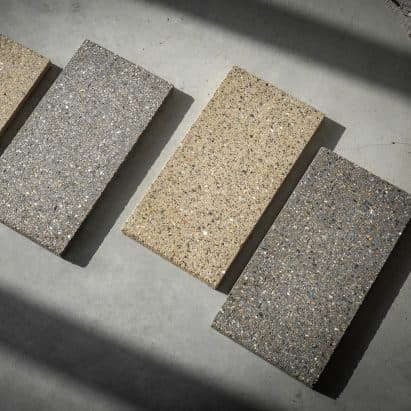
What Is the Mimmik Tile? A New Era in Sustainable Surface Design
The building materials industry has long been one of the largest contributors to global carbon emissions, with traditional ceramic and concrete tile production relying on energy-intensive kiln firing processes that release massive amounts of CO₂. But a remarkable new product is challenging that status quo in a profound way. The Mimmik tile, a collaboration between Swedish design studio Front and North Carolina-based biotechnology company Biomason, represents one of the most exciting advances in sustainable architecture and surface design in recent years. Rather than being fired at high temperatures, these tiles are literally grown — cultivated through a biological process that harnesses the power of microorganisms to bind materials together.
This is not just a design novelty. Mimmik is a product that sits at the intersection of biotechnology, material science, and contemporary design thinking, and it signals a genuine shift in what is possible when architects, designers, and scientists work together toward a common sustainability goal.
The Science Behind Biomason's Biocement Technology
To understand why Mimmik is so significant, it helps to understand what Biomason has been building toward since its founding. The company pioneered a process known as biocement, which uses naturally occurring microorganisms to produce calcium carbonate — the same mineral that forms coral reefs and shells — as a binding agent within a composite material. Instead of heating raw materials to over 1,000 degrees Celsius as conventional tile and cement manufacturing requires, Biomason grows its material at ambient temperatures, dramatically reducing energy consumption and carbon output.
The result is a material that achieves comparable structural strength to traditional tiles while carrying a significantly lower environmental footprint. The biocement process can also be adapted to incorporate a range of aggregate materials, giving designers considerable flexibility in terms of texture, color, and finish. This is precisely what made the collaboration with Front such a natural and productive pairing.
Front Design Studio: Where Biology Meets Aesthetics
Founded in Stockholm, Front is a design studio known for its conceptually driven, often experimental approach to product and interior design. The studio has built its reputation on work that questions conventional material hierarchies and production methods, frequently collaborating with scientists and researchers to push the boundaries of what design objects can be and do. For the Mimmik project, Front brought its characteristic sensitivity to surface, pattern, and material narrative to a product that had, until this point, existed primarily in the realm of biotechnology rather than commercial design.
The studio's involvement transformed Mimmik from a proof-of-concept material into a refined, commercially appealing surface tile that architects and interior designers can genuinely consider for high-end residential and commercial applications. The tile's aesthetic draws on natural references — the irregular patterning, subtle surface variations, and textural depth all echo the organic processes through which the tile is created, giving each piece a distinctive, handcrafted quality that mass-produced ceramic tiles simply cannot replicate.
Key Features and Benefits of the Mimmik Tile
- Carbon-reduced production: By eliminating high-temperature kiln firing, the Mimmik tile dramatically reduces the carbon emissions associated with conventional tile manufacturing, making it one of the most environmentally responsible surface products currently available on the market.
- Grown, not fired: The biological growth process means each tile develops its own unique surface character, offering a level of material authenticity and variation that resonates strongly with contemporary design values around individuality and craft.
- Durable and structurally sound: Biomason's biocement has been rigorously tested for compressive strength and durability, meeting the performance requirements expected of architectural surface materials in both residential and commercial environments.
- Versatile applications: Mimmik tiles are suitable for wall cladding, flooring, decorative surfaces, and feature installations across a range of interior settings, from boutique retail spaces to luxury residential interiors.
- Aesthetic distinctiveness: The natural formation process creates surfaces with subtle tonal variations and textural interest that position Mimmik as a premium material choice for design-led projects.
Why Mimmik Matters for the Architecture and Design Industry
The launch of Mimmik arrives at a critical moment for the architecture and design industry. As clients, planning authorities, and consumers increasingly demand demonstrable commitments to environmental performance, designers and specifiers are under growing pressure to identify materials that deliver both aesthetic excellence and verifiable sustainability credentials. Mimmik answers both demands simultaneously, which is far rarer than it might seem.
Many so-called sustainable materials require significant aesthetic compromise — they look utilitarian, feel rough-edged, or fail to carry the visual authority that premium architectural projects require. Mimmik does not fall into this trap. The tile looks and feels like a high-quality, thoughtfully designed product, which means that specifying it does not require a conversation about compromise. It is simply a beautiful, responsible choice.
Furthermore, the Mimmik tile represents a broader proof of concept for the use of biological processes in construction material production. If biocement can be harnessed to grow tiles at commercial scale, the implications for other building products — bricks, panels, structural blocks — are enormous. Every kilogram of material that can be grown rather than fired or cast in energy-intensive processes represents a meaningful step toward a lower-carbon built environment.
The Collaborative Model That Made Mimmik Possible
One of the most instructive aspects of the Mimmik project is the collaborative model it represents. The partnership between Front and Biomason brought together complementary expertise in a way that neither organization could have achieved alone. Biomason had the biotechnology and the material science; Front had the design intelligence and the industry relationships needed to position a novel product within architectural discourse. Together, they created something that is greater than the sum of its parts.
This kind of cross-disciplinary collaboration between design studios and material science companies is increasingly being recognized as one of the most productive pathways toward genuine innovation in sustainable design. Rather than waiting for the construction industry to gradually adopt cleaner alternatives, partnerships like Front and Biomason are actively engineering the change from the ground up — or in this case, from the microorganism up.
Looking Ahead: Biocement and the Future of Sustainable Building Materials
As the global construction industry continues its slow but steady reckoning with its environmental impact, products like the Mimmik tile offer a compelling vision of what sustainable architecture can look like: not a sacrifice of quality or beauty, but an enhancement of it. The biological processes that Biomason has refined over years of research are scalable, adaptable, and inherently aligned with the circular economy principles that the design world is increasingly embracing.
For architects, interior designers, and specifiers looking to align their material choices with both their aesthetic ambitions and their sustainability commitments, the Mimmik tile by Front and Biomason is a product well worth serious attention. It is, in the truest sense, a material of the future — one that has already arrived.