
Of-A Brings a Dark, Geological Vision to Chelsea Flower Show 2026
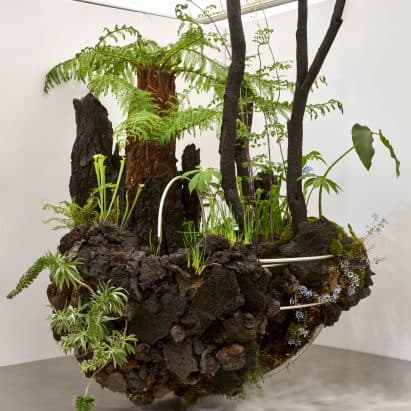
The Chelsea Flower Show has long been a stage for pushing the boundaries of what gardens can be — but rarely does an installation feel as though it has arrived from another planet entirely. At the 2026 edition of the world's most celebrated horticultural event, multidisciplinary creative studio Of-A unveiled Slow Dream, a dark botanical landscape that challenges everything we think we know about indoor gardens. Drawing on the raw textures of volcanic rock, the quiet drama of ancient geology, and an unmistakably futuristic design language, Of-A has created living objects that feel simultaneously primordial and ahead of their time.
What Is Of-A and Why Does Their Work Matter?
Of-A is a multidisciplinary creative studio known for working at the intersection of design, nature, and material culture. Rather than treating plants as decorative accessories, the studio approaches botany as a medium — something to be sculpted, contextualized, and elevated into the realm of art and object design. Their work consistently resists the predictable, instead opting for explorations that feel genuinely experimental. Their presence at Chelsea Flower Show signals a growing appetite within the horticultural world for design-led thinking that goes far beyond traditional planting schemes and manicured borders.
For Slow Dream, Of-A took the concept of the indoor garden and asked a fundamental question: what if a plant arrangement weren't merely decorative, but instead functioned as a geological artifact — something carved by deep time, shaped by heat and pressure, and infused with a sense of the uncanny? The result is a collection of living objects that blur the line between the natural and the designed, the ancient and the futuristic.
Volcanic Rock, Dark Botanicals, and the Aesthetics of Deep Time
Central to Slow Dream is the use of volcanic rock as both a structural and symbolic material. Volcanic rock carries with it an extraordinary narrative weight. It is matter forged in the earth's interior, expelled violently, and then slowly colonized by the first primitive life forms. By incorporating it into indoor garden compositions, Of-A draws a direct line between the prehistoric origins of terrestrial life and the contemporary act of growing plants inside the home.
The botanical selections for the installation reinforce this geological mood. Rather than reaching for the lush greens and bright blooms typically associated with Chelsea, Of-A chose species that echo the visual language of lava fields and ancient stone — textured, dark-toned, and quietly resilient. The overall palette is restrained and moody, which only intensifies the impact of each individual plant form. Mosses, ferns, and sculptural succulents nestle into crevices and formations in ways that feel discovered rather than arranged.
This approach speaks to a wider design trend that has been gaining momentum: the idea that indoor plants should not merely soften a space or add a splash of color, but should instead anchor it — giving a room a sense of geological permanence that contrasts with the transience of modern interiors.
Futurism Meets the Ancient: A New Language for Indoor Plant Design
What makes Slow Dream particularly compelling is the way it balances opposing forces. The materials reference deep geological time, yet the overall aesthetic is unmistakably futuristic. There is something almost science-fictional about the compositions — they recall the kind of alien terrarium you might imagine aboard a spacecraft, or the carefully preserved fragment of a world that no longer exists.
Of-A achieves this tension through deliberate formal choices. The vessels and containers housing the botanical arrangements are not the terracotta pots or ceramic planters familiar from most indoor garden contexts. Instead, they function as sculptural objects in their own right — minimal, architecturally informed, and in dialogue with the volcanic and mineral materials they contain. The result is that each piece reads as a complete object: part sculpture, part living ecosystem, part geological specimen.
This dual identity — simultaneously ancient and futuristic — is central to Of-A's stated concept for the installation. The studio describes the work as imagining what indoor gardens might become if we stopped thinking of them as imitations of the outdoors and started treating them as entirely new kinds of objects: objects with their own logic, their own material histories, and their own slow, patient rhythms.
Why This Installation Resonates in 2026
The timing of Slow Dream feels particularly apt. As urban living becomes denser and our relationship with the natural world more mediated and complex, there is growing interest in interior nature that goes beyond the wellness-driven minimalism of the past decade. People are increasingly drawn to plants and natural materials not just because they are calming or on-trend, but because they connect us to something larger — to geological time, to ecological systems, to the deep history of life on Earth.
- The installation challenges the conventional idea that indoor gardens should be bright, lush, and welcoming, instead embracing darkness and texture as primary design values.
- It positions volcanic and mineral materials as legitimate partners for living plants, expanding the material vocabulary available to interior garden designers.
- It proposes the indoor garden object as a category in its own right — something distinct from both houseplants and garden design.
- It connects personal, domestic space to geological and evolutionary timescales, adding depth and meaning to everyday interiors.
The Broader Impact on Interior Garden Design Trends
Of-A's installation at Chelsea Flower Show is likely to have ripple effects well beyond the event itself. Chelsea has historically been a powerful incubator for design ideas that eventually filter into mainstream interiors — and the aesthetic territory that Slow Dream maps out is rich with possibility. Expect to see increased interest in dark botanical compositions, volcanic and mineral substrates, and the framing of houseplants as sculptural objects rather than accessories in the months and years ahead.
For designers, landscape architects, and plant enthusiasts alike, Of-A's work offers a genuinely new way of seeing. By treating the indoor garden as a geological and futuristic living object, the studio has expanded what this humble category of design can aspire to — and in doing so, has offered a quietly radical vision of how we might choose to live with nature indoors.
Conclusion: A Slow Dream Worth Having
Slow Dream is more than an installation. It is an argument — one made in volcanic stone, ancient plants, and deliberate shadow — for a richer, more intellectually ambitious approach to bringing nature inside. Of-A has demonstrated that the indoor garden, often dismissed as a minor decorative gesture, can carry the weight of deep time and bold design thinking. At Chelsea Flower Show 2026, that argument was made with quiet confidence and considerable beauty. It is the kind of slow dream that stays with you long after you have left the garden behind.