
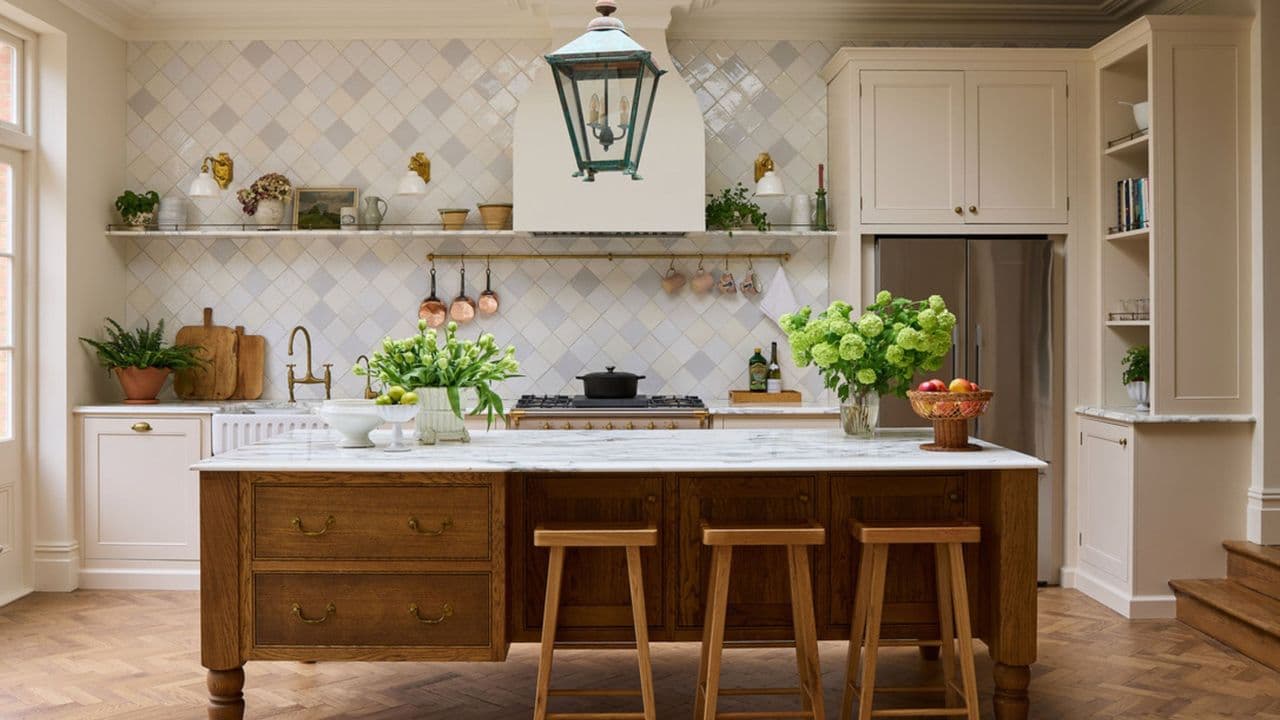
The Kitchen Trends Designers Say Already Feel Overdone in 2026
Every design era has its moment, and then — almost without warning — that moment passes. What felt fresh and aspirational just a few years ago can suddenly read as tired, predictable, or even dated. Kitchens, perhaps more than any other room in the home, are subject to this cycle of rise and retreat. In 2026, professional designers across the industry are speaking up about the looks they're seeing everywhere and growing weary of — and more importantly, they're pointing toward the quieter, more enduring aesthetics rising to replace them.
Whether you're planning a full kitchen renovation or simply looking to refresh your space with thoughtful updates, understanding which trends have peaked can save you from an investment that ages poorly. Here's what the experts are saying.
Trends That Have Run Their Course
All-White Everything
The all-white kitchen had an extraordinary reign. For the better part of a decade, white cabinetry, white countertops, white subway tile, and white walls were the universal shorthand for "clean, modern, and desirable." Real estate listings leaned on it. Renovation shows championed it. But designers are now largely in agreement: the monochromatic white kitchen has become a visual cliché.
The problem isn't white itself — it's the complete absence of contrast, warmth, or personality that all-white schemes so often produce. A kitchen that looks stunning in a listing photo can feel cold and clinical to live in day after day. In 2026, the pendulum has swung decisively toward spaces with character, layered tones, and materials that develop a sense of history over time.
Open Shelving as a Statement
Open shelving had a long and well-documented moment. The idea was appealing: display your beautiful ceramics, your carefully curated olive oils, your artisan cutting boards. In practice, however, most households found that open shelves demand a level of constant curation and cleanliness that real life simply doesn't support. Dusty spice jars and mismatched mugs don't carry quite the same editorial appeal.
Designers report that clients who installed open shelving just a few years ago are increasingly asking to have it enclosed. The look has also become so common that it no longer signals individuality — which was always much of its appeal.
Matching Everything to the Same Finish
The era of matching every hardware piece, faucet, and appliance to a single metallic finish — think all matte black or all brushed gold — is winding down. While cohesion is a worthy design goal, rigid uniformity has started to feel formulaic and even a little sterile. Designers now describe these kitchens as looking "spec'd rather than collected," lacking the layered, lived-in quality that makes a space feel genuinely personal.
Waterfall Countertop Edges
The waterfall countertop — where the stone or surface material cascades continuously down the side of an island — became a go-to luxury detail throughout the early 2020s. It photographs extraordinarily well, which helped fuel its proliferation across social media and design publications. By 2026, however, the detail has become so ubiquitous in mid-range and high-end renovations alike that it has lost much of its premium distinction. Designers describe it as a trend that arrived as an architectural statement and has since become a default checkbox.
The Timeless Looks Taking Their Place
Warm, Natural Materials
The most significant shift in kitchen design right now is a move away from sleek, synthetic surfaces toward materials that are warm, tactile, and grounded in nature. Unlacquered brass, aged woods, honed stone, and textured plasters are appearing in kitchens that feel less like showrooms and more like the heart of a home. These materials don't just look good — they improve with age, developing a patina that makes them feel earned rather than installed.
Designers consistently emphasize that natural materials age gracefully in ways that trendy finishes rarely do. A solid walnut countertop or a honed limestone surface will look as appropriate in fifteen years as it does today.
Unfitted and Furniture-Style Cabinetry
As the all-built-in kitchen has peaked, designers are embracing a more relaxed, unfitted aesthetic. This approach draws on the look of a kitchen that has been assembled over time — freestanding pieces, varying cabinet heights, a hutch or dresser incorporated alongside built-in cabinetry. The result feels collected and individual rather than catalogued and installed.
This style also has genuine longevity. Because it doesn't rely on any single trendy element, it evolves naturally as individual pieces are replaced or rearranged.
Thoughtful Color Over Safe Neutrals
Rather than defaulting to white or greige, designers in 2026 are guiding clients toward considered, personal color choices. Deep forest greens, soft terracottas, dusty blues, and warm ochres are appearing on cabinetry, islands, and even ceilings. The key distinction from past color trends is intentionality — these choices reflect the homeowner's personality rather than a trend board.
Color used thoughtfully, drawn from nature and balanced with warm neutrals, tends to hold up far better over time than the color of a given moment.
Mixed Metals and Layered Hardware
In place of the matching-finish approach, designers are advocating for a more nuanced strategy: layering metals that share an undertone rather than an identical finish. Warm metals like unlacquered brass, antique bronze, and aged copper can coexist beautifully, each contributing a slightly different texture to the overall palette. The result is a kitchen that feels considered and individual — the opposite of a spec finish.
The Underlying Principle: Design for How You Live
What connects all of the timeless approaches designers are recommending is a common philosophy: design for longevity, not for likes. The kitchens that hold up best over decades are the ones built around how a household actually cooks, gathers, and lives — not around what photographs well or what dominated Pinterest in a particular year.
As you plan your next kitchen project, the most valuable question to ask isn't "Is this on trend?" but rather "Will I still love this in ten years?" The designers who are most confident in their work in 2026 are the ones helping clients answer yes.