
The Hidden Cost That's Breaking Homebuyer Budgets
When most people shop for a home, they zero in on the listing price, the mortgage rate, and the property taxes. What they rarely calculate — until it's too late — is the cost of the car they'll need to get anywhere once they move in. And in today's market, that oversight could be costing buyers tens of thousands of dollars over the life of their time in a home.
According to the U.S. Bureau of Labor Statistics, housing and transportation together accounted for a staggering 50% of household spending in 2024. Housing consumed 33% of the average budget, while transportation added another 17%. Put simply, the way you get around is nearly half as expensive as the roof over your head — and for many families, it's actually becoming the harder cost to control.
Why the "Drive Until You Qualify" Strategy Is Losing Its Edge
For decades, one of real estate's most repeated pieces of advice for budget-conscious buyers has been to "drive until you qualify" — meaning, move farther away from expensive urban centers until you find a listing price your lender will approve. On paper, it sounds like practical wisdom. In practice, it's increasingly a financial trap.
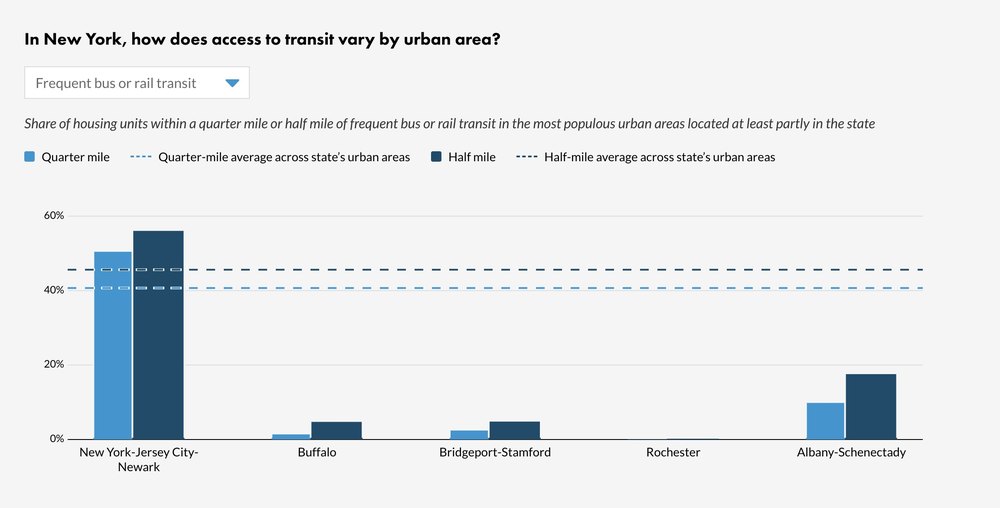
The suburbs and exurbs where list prices are lowest tend to be the same communities with the greatest dependence on personal vehicles and the least access to reliable public transit. Trading a higher mortgage for a longer commute made sense when cars were cheap, gas was under $2 a gallon, and insurance was an afterthought. None of those conditions apply anymore.
Consider what's happened to the cost of car ownership in just the past five years. New vehicles are now 33% more expensive than they were in 2019. Used cars — long the fallback for budget shoppers — have climbed more than 40% in price. Auto insurance has risen 19% nationwide, and in some states the increase tops 50%. And gas prices? In many parts of the country, drivers are now paying over $4 per gallon with no clear relief in sight. When you add it all up, owning and operating a single vehicle can easily cost a household $12,000 to $15,000 per year — and many outer-suburb families need two.
Walkability: The Home Feature Buyers Are Starting to Prioritize
Against this backdrop, a growing number of homebuyers and renters are reconsidering what "affordable" actually means. The feature quietly climbing to the top of many wish lists isn't a renovated kitchen or a finished basement. It's walkability — and by extension, access to public transit, bike infrastructure, and daily errands within reach without a car.
A walkable neighborhood, broadly defined, is one where residents can complete most of their daily tasks — grocery shopping, commuting, dining, accessing healthcare — without getting behind the wheel. Homes in these areas often carry higher list prices, which is precisely why they've been dismissed by cost-focused buyers. But the total cost of living in a walkable neighborhood can be dramatically lower when transportation savings are factored in.
A household that eliminates one car entirely can save anywhere from $10,000 to $15,000 annually. Over a 10-year mortgage period, that's $100,000 to $150,000 in savings — a figure that would dwarf the premium paid for a more walkable property in many markets.
How to Evaluate a Home's True Affordability
Buyers who want to think more holistically about costs should look beyond the listing price and mortgage payment. Here are the key factors worth investigating before signing any contract:
- Walk Score and Transit Score: Free tools like Walk Score assign a numerical rating to any address based on proximity to amenities and public transit access. A score above 70 generally indicates meaningful walkability; above 90 suggests a car-free lifestyle is genuinely feasible.
- Number of vehicles required: Be honest with yourself. Could your household realistically get by with one fewer car in this location? Even downsizing from two vehicles to one represents enormous annual savings.
- Commute method and cost: Calculate not just commute time but commute cost. A train pass or bus card is a fraction of what it costs to park, fuel, and insure a car for a daily downtown commute.
- Proximity to daily necessities: A home near a grocery store, pharmacy, school, and primary care provider removes the need for constant short car trips — which, surprisingly, are among the most expensive on a per-mile basis due to fuel inefficiency and vehicle wear.
- Long-term trajectory of the neighborhood: Is the area investing in bike lanes, transit expansion, or mixed-use development? Walkability improvements can increase property values significantly over time.
The Bigger Picture: Housing Affordability Needs a New Formula
Housing costs have moderated in many parts of the country in recent months, with rents and even list prices falling modestly in some metros. But transportation costs have continued to climb, which means the overall affordability equation has barely shifted for millions of households. The families who will fare best financially are those who find ways to reduce their total cost of living — not just their monthly mortgage or rent payment.
Real estate professionals, financial advisors, and urban planners are increasingly aligned on this point: the sticker price of a home is only part of the story. Location efficiency — a measure of how much a household needs to spend on transportation based on where they live — is becoming just as important a metric as price per square foot.
The Bottom Line for Today's Buyers
The most expensive home feature isn't granite countertops or a three-car garage. It might actually be the driveway — specifically, the cars you'll have to fill it with just to function in your daily life. As households work to stretch their budgets further in a still-challenging market, walkability and transit access deserve a serious look as genuine affordability tools, not just lifestyle luxuries reserved for urban renters.
Before you drive until you qualify, consider whether the drive itself might cost you more than you bargained for. The overlooked home feature that could save you thousands isn't inside the house at all. It's in how close the house is to everything else.