
Why Pearl Lowe Said No to Subway Tiles — and What She Chose Instead
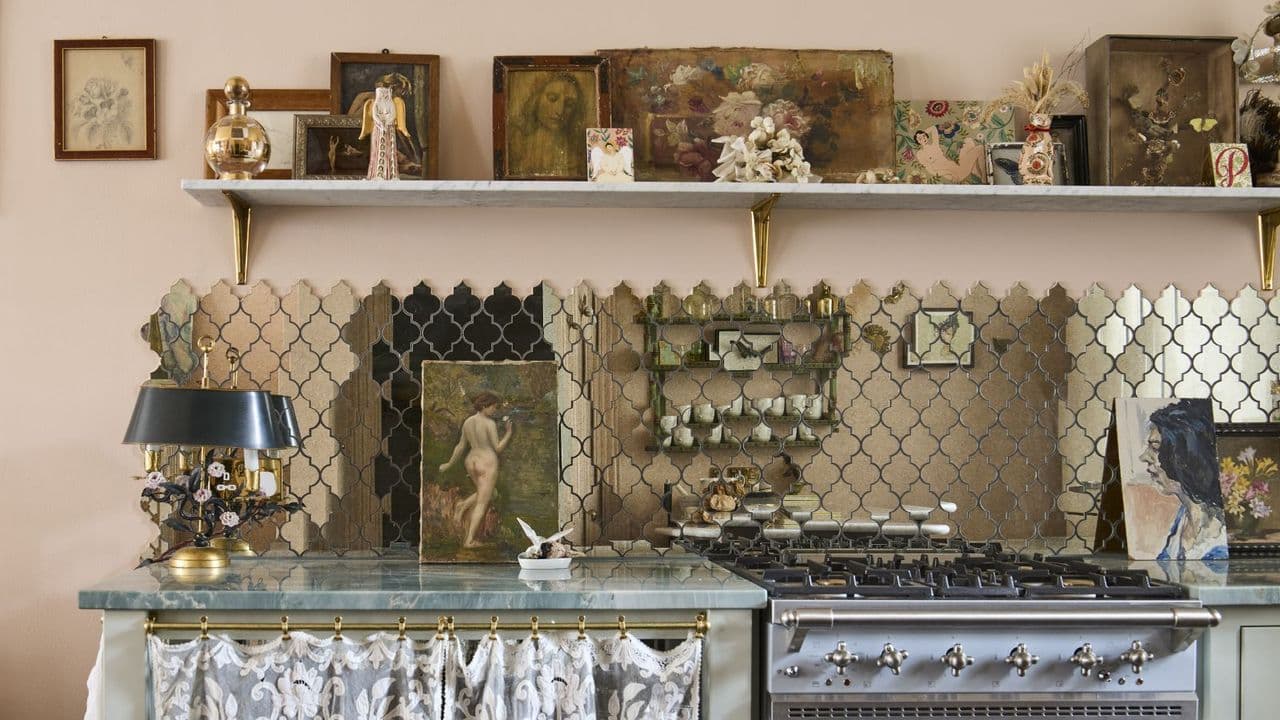
In the world of kitchen design, subway tiles have reigned supreme for decades. Their clean lines, neutral tones, and affordable price point have made them a default choice for homeowners and interior designers alike. But style icon and interior design enthusiast Pearl Lowe had a different vision for her kitchen — one that traded predictability for something far more extraordinary. Rather than reaching for the standard white rectangular tile, she opted for a curved Art Deco backsplash that does something truly special: it dapples light across the room in a way no flat tile ever could. The result is a kitchen that feels less like a cooking space and more like a work of art.
Pearl Lowe, widely known for her distinctive bohemian-meets-vintage aesthetic, has long championed design choices that feel personal and considered. Her latest kitchen update is a masterclass in how a single bold decision can completely transform the character of a room. By choosing curved, scalloped tiles with an Art Deco sensibility, she has created a backsplash that is simultaneously nostalgic and utterly contemporary.
What Makes a Curved Art Deco Backsplash So Unique?
To understand why this design choice is so impactful, it helps to understand what sets curved and sculpted tiles apart from their flat counterparts. Traditional subway tiles lie flush against the wall, reflecting light in a uniform, predictable way. Curved or scalloped tiles, by contrast, have a three-dimensional surface that catches and redirects light from multiple angles. As natural light moves through the kitchen during the day — or as artificial lighting shifts in the evening — the backsplash comes alive, creating gentle shadows and bright highlights that dance across the surface.
The Art Deco movement, which peaked in the 1920s and 1930s, was defined by bold geometric forms, rich materials, and an unabashed love of glamour. Its hallmarks — fan shapes, scalloped edges, symmetrical patterns, and luxurious finishes — translate beautifully into modern tile design. A curved Art Deco backsplash carries all of that heritage while feeling entirely fresh in a contemporary kitchen setting.
The Design Details That Make It Work
Pearl Lowe's backsplash succeeds not just because of the tile shape, but because of the thoughtful way the entire design comes together. A few key elements make this kind of installation truly exceptional.
The Scalloped Tile Profile
The tiles used in Art Deco-inspired backsplashes typically feature a curved, shell-like or fan-shaped profile. Each tile has a gentle convex or concave surface that creates subtle relief across the wall. When dozens of these tiles are laid side by side, the effect is rhythmic and almost hypnotic — like the surface of calm water caught in a beam of sunlight.
The Finish and Colorway
The choice of finish is critical. A glossy or semi-glossy glaze amplifies the light-dappling effect, allowing the curved surfaces to pick up and scatter light more dramatically. Pearl Lowe's palette leans into soft, vintage-inspired tones — think warm whites, aged creams, dusty sage greens, or pale blush — that feel both timeless and personal. These subdued colors allow the tile's form to do the talking without overwhelming the space with color.
The Grout Lines
Even grout plays a role in the final effect. A contrasting grout — slightly darker than the tile — emphasizes the individual shape of each piece, adding to the overall graphic quality of the installation. A matching or tonal grout, on the other hand, allows the surface to read as a single flowing texture, making the light play across it feel even more seamless.
How to Recreate This Look in Your Own Kitchen
If Pearl Lowe's Art Deco backsplash has inspired you to rethink your own kitchen tiles, the good news is that this look is more accessible than ever. Curved and sculpted tiles have grown significantly in popularity over the past few years, and many tile manufacturers now offer beautifully crafted options at a range of price points.
- Start with the tile shape: Look for scalloped, fan, or curved-profile tiles specifically marketed as Art Deco or sculptural. Many ceramic and porcelain ranges now include these profiles alongside traditional flat options.
- Consider scale carefully: Smaller curved tiles create a more intricate, jewel-like effect, while larger scalloped tiles make a bolder, more graphic statement. The size of your kitchen and the height of your backsplash area should inform your choice.
- Think about lighting: The light-dappling quality of curved tiles depends heavily on how your kitchen is lit. Under-cabinet lighting, pendant lights, and natural light from windows will all interact with the tile surface differently — and all beautifully.
- Choose complementary materials: Art Deco design is all about contrast and richness. Pair your curved backsplash with warm wood tones, brushed brass or aged gold hardware, and marble or stone countertops to create a cohesive, layered aesthetic.
- Don't be afraid of color: While Pearl Lowe's palette tends toward the soft and muted, curved tiles work equally well in deeper, richer tones. Forest green, inky navy, or terracotta can all look spectacular in a sculpted tile format.
Why This Trend Is More Than Just a Moment
It would be easy to dismiss the curved backsplash as a passing trend — another Instagram-friendly detail that will date quickly. But there are good reasons to believe this design direction has genuine longevity. The Art Deco movement itself has proven remarkably resilient, inspiring designers across fashion, architecture, and interiors for nearly a century. Its emphasis on craft, beauty, and considered detail resonates with a contemporary appetite for interiors that feel meaningful rather than mass-produced.
Moreover, as homeowners grow more confident and adventurous in their design choices, there is a growing appetite for backsplashes that do more than simply protect the wall behind the stove. The backsplash has evolved into a genuine focal point — a place to express personality, experiment with texture, and introduce a note of genuine artistry into a practical space.
Pearl Lowe's Lesson for Every Home Designer
What Pearl Lowe has demonstrated with her curved Art Deco backsplash is a lesson that applies far beyond tiles: the best design decisions are rarely the safest ones. Subway tiles are reliable, versatile, and easy — but easy rarely produces something truly memorable. By choosing a tile that engages with light, honors design history, and reflects her own distinctive sensibility, Lowe has created a kitchen that is impossible to forget.
Whether you are planning a full kitchen renovation or simply looking to refresh a tired backsplash, her approach offers a compelling invitation to look beyond the obvious choice. The standard tile aisle has its place — but somewhere just around the corner, there is a curved, sculpted, light-catching alternative that might be exactly what your kitchen has been waiting for.