
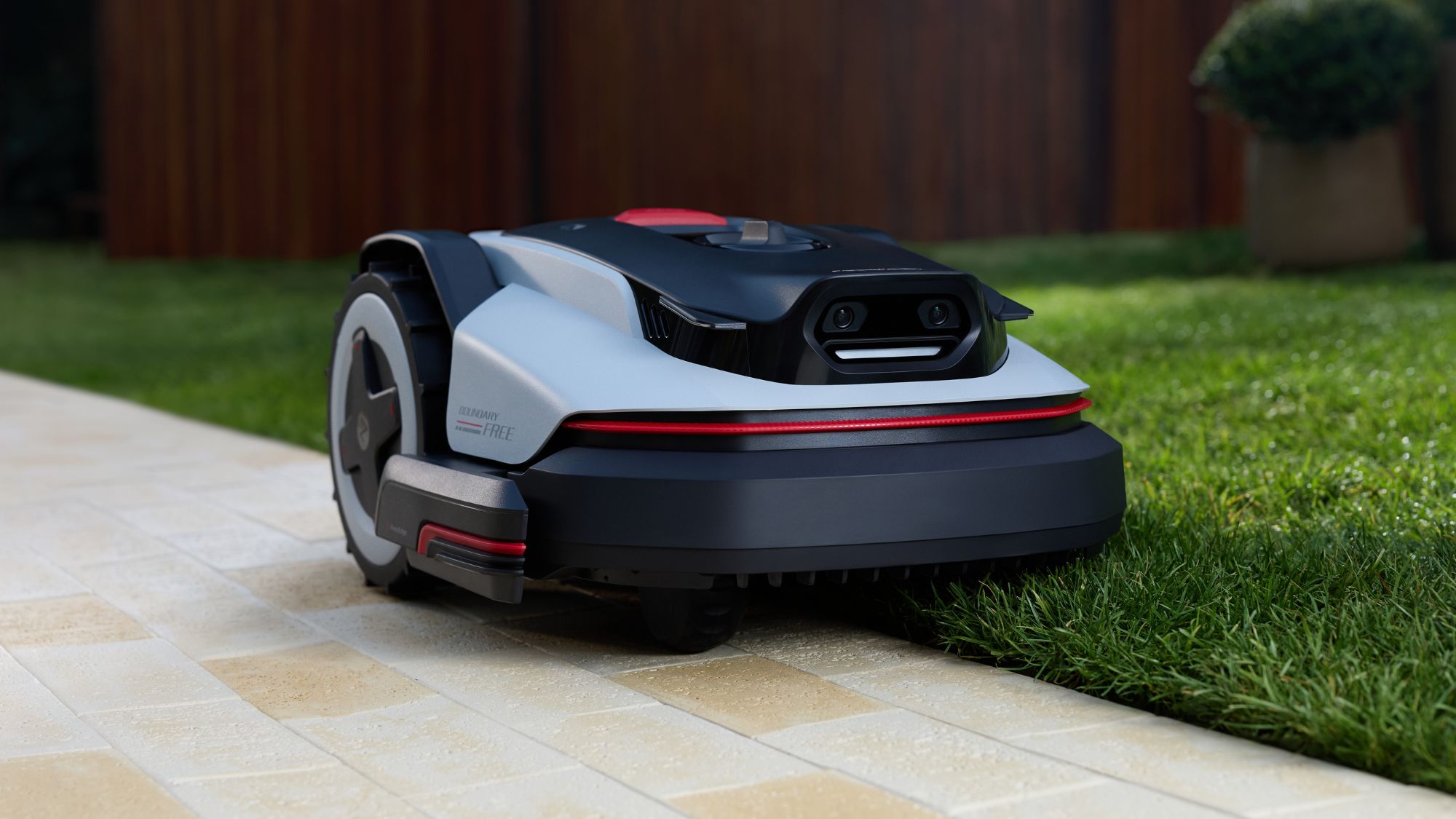
Roborock RockNeo Q110H: The Robotic Lawnmower That's Redefining Hands-Free Lawn Care
Keeping a lawn looking pristine has always demanded time, effort, and a fair amount of weekend sacrifice. But what if your yard could take care of itself while you focus on literally anything else? Roborock, a brand best known for its award-winning robot vacuum cleaners, is making that vision a reality with the launch of the RockNeo Q110H robotic lawnmower in the United States. Combining cutting-edge RTK positioning, visual mapping, and an upcoming AI-powered setup feature, this machine may be the closest thing to truly autonomous lawn care the consumer market has ever seen.
What Is the Roborock RockNeo Q110H?
The RockNeo Q110H is Roborock's latest entry into the outdoor robotics space, representing a significant expansion of the company's product lineup beyond indoor cleaning. Designed for homeowners who want a smarter, less labor-intensive approach to yard maintenance, the mower is built around a sophisticated navigation stack that sets it apart from older, boundary-wire-dependent robotic mowers.
At its core, the RockNeo Q110H uses a combination of RTK (Real-Time Kinematic) GPS positioning and visual mapping to understand its environment with centimeter-level accuracy. This dual-layered approach means the mower doesn't just know where it is — it understands what's around it, allowing it to adapt in real time rather than following a rigid, pre-programmed path.
RTK Navigation and Visual Mapping: Why It Matters
Traditional robotic lawnmowers have long relied on perimeter wires buried in the ground to define mowing boundaries. While functional, this approach is time-consuming to install, inflexible to change, and prone to damage. The RockNeo Q110H eliminates that hassle entirely.
RTK navigation works by using satellite signals corrected in real time by a ground-based reference station, achieving positional accuracy far beyond standard GPS. Paired with visual mapping — which uses camera-based data to recognize landmarks, obstacles, and terrain features — the Q110H builds a reliable mental model of your lawn that it can reference and update over time.
The practical result is impressive. According to Roborock, the mower can continue working reliably under dense tree cover, where satellite signals are often degraded or lost entirely on conventional systems. It can also navigate tight corners and squeeze through narrow passages as small as 2.3 feet wide — a meaningful capability for yards with gates, garden beds, or landscaping features that break up the mowing area.
Stereo Vision for Obstacle Detection
Beyond navigation, the RockNeo Q110H incorporates stereo vision technology for obstacle detection and avoidance. Using two cameras to perceive depth — much like human eyes — the mower can identify objects in its path and navigate around them rather than bumping into them or stopping unnecessarily.
This matters a great deal in real-world lawn environments, which rarely look like empty test fields. Garden hoses, children's toys, pet bowls, fallen branches, and uneven terrain are all common hazards that can trip up less capable mowers. The stereo vision system gives the Q110H a meaningful ability to handle the unpredictability of everyday outdoor spaces.
AI-Powered Mapping: The Future Is Almost Here
One of the most exciting aspects of the RockNeo Q110H is a feature that isn't even fully live yet. Roborock has announced an upcoming AI-powered mapping update that will automate a significant part of the initial setup process. Rather than requiring homeowners to manually define lawn boundaries or program mowing zones by hand, the AI system will allow the mower to learn its environment on its own, identifying lawn edges and optimizing mowing routes with minimal human input.
For many potential buyers, this kind of automated onboarding could be the feature that pushes robotic mowing from "interesting technology" to "genuinely practical solution." Setup complexity has historically been one of the biggest friction points for robotic lawnmower adoption, and Roborock appears to be tackling that problem head-on.
Smart Features and App Integration
The RockNeo Q110H doesn't stop at navigation. It's packed with smart home-friendly features that make day-to-day management effortless. Key highlights include:
- App-based controls that let you start, stop, schedule, and monitor mowing sessions from your smartphone
- Rain detection that automatically pauses mowing and returns the unit to its dock when wet conditions are detected, protecting both your lawn and the mower
- Multi-zone scheduling, allowing different areas of your yard to be mowed on different days or frequencies depending on growth rates and usage
- Optional anti-theft tracking, a welcome addition for an outdoor device that spends time unattended in your yard
The combination of these features creates an ecosystem that genuinely earns the "smart" label rather than just using it as marketing shorthand.
Pricing and Availability
The Roborock RockNeo Q110H is available now in the United States, priced at $1,299. At launch, an introductory price of $1,169 was offered, making it a competitive entry point in the premium robotic lawnmower category.
For context, high-end robotic mowers from established players like Husqvarna can reach $2,000 or more. Roborock's pricing positions the Q110H as a compelling alternative that brings advanced navigation technology to a broader audience.
Is the Roborock RockNeo Q110H Worth It?
If you have a moderately complex yard, a dislike for weekend mowing, and a budget that stretches to the $1,300 range, the RockNeo Q110H makes a strong case for itself. The RTK and visual mapping combination solves real problems that have held back robotic mowers for years, and the pending AI mapping update could make setup genuinely effortless. Add in rain detection, multi-zone scheduling, app controls, and obstacle avoidance, and you have a package that's hard to dismiss.
As Roborock continues rolling out software updates and refining the AI mapping experience, the RockNeo Q110H has the potential to get meaningfully better over time — which, for a $1,299 investment, is exactly the kind of value proposition that makes smart home technology worth the leap.