
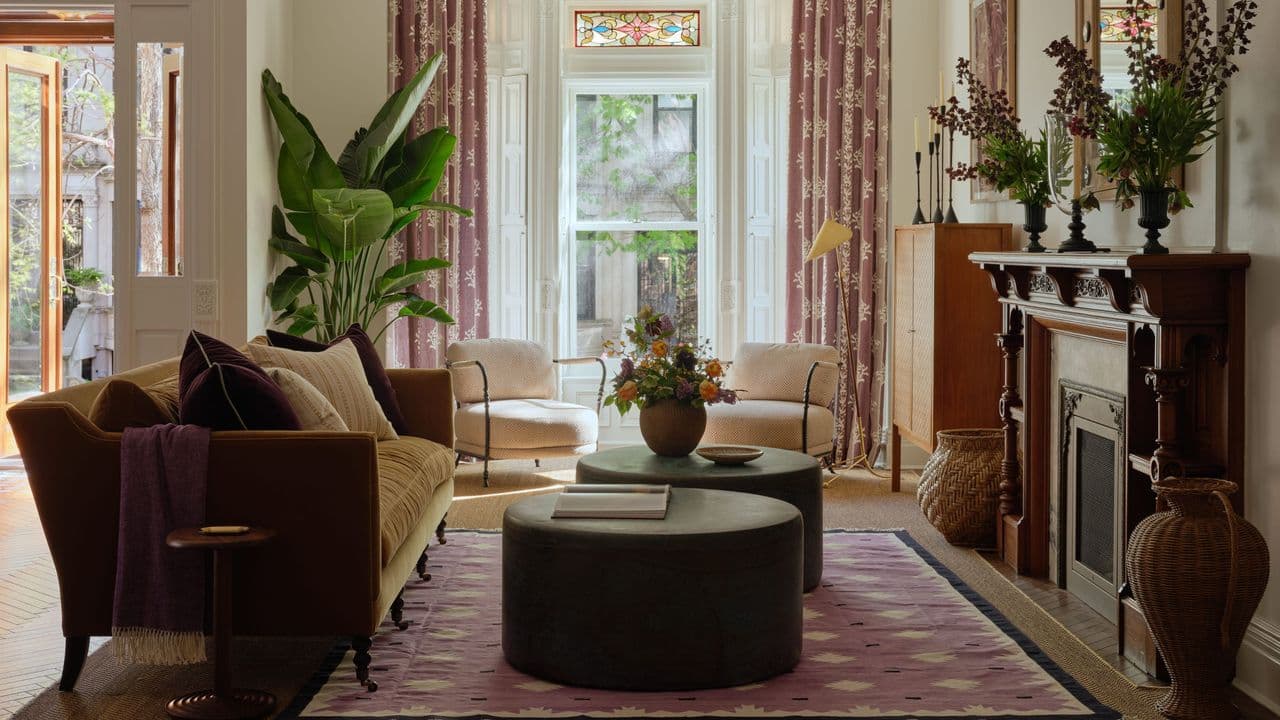
A Century-Old Brooklyn Townhouse Finds Its Voice Through Bold Interior Design
There is something quietly thrilling about a historic home that finally steps into its own. A 1901 Park Slope townhouse in Brooklyn, New York — long on architectural bones but short on personality — has undergone a remarkable transformation at the hands of celebrated interior designer Ariel Okin. The result is a home that doesn't just look beautiful; it knows how to throw a party, host a dinner, and welcome guests with warmth, wit, and a deeply considered sense of style. This is what happens when a designer listens carefully to both the history of a building and the desires of the people living inside it.
Who Is Ariel Okin and Why Does Her Approach Matter?
Ariel Okin is a New York-based interior designer whose work has earned widespread recognition for its fearless use of color, its layered approach to pattern, and its ability to strike a precise balance between livability and visual impact. Her portfolio spans a range of projects — from Manhattan apartments to coastal retreats — but she is perhaps best known for creating spaces that feel curated rather than decorated, personal rather than performative.
Her philosophy centers on the idea that a home should reflect the people who live there. This isn't a designer who imposes a signature look on every project. Instead, Okin listens, researches, and responds — pulling from a deep well of design history, textile knowledge, and an acute understanding of how people actually move through and use their spaces. The Park Slope townhouse is a testament to that process.
The Challenge: A Historic Structure That Didn't Know How to Entertain
Built in 1901, the townhouse arrived with all the hallmarks of its era — gracious proportions, original moldings, tall ceilings, and the kind of solid craftsmanship that simply isn't replicated today. What it lacked, however, was a clear sense of how to translate those attributes into a functional, welcoming home for modern life. The layout, while generous, had never been fully activated. The rooms felt disconnected, the flow was awkward, and the visual language of the interiors didn't yet match the ambition of the architecture.
The homeowners — a family with an active social life and a genuine love of hosting — needed their home to do more. They wanted rooms that could shift from casual family dinners to lively evening gatherings without missing a beat. They wanted spaces that felt special without feeling off-limits. Above all, they wanted a home that felt alive.
Color as a Structural Tool, Not a Decorative Afterthought
One of Okin's most significant decisions in the Park Slope project was her approach to color — not as an accessory, but as architecture. Rather than selecting a neutral backdrop and punctuating it with colorful objects, she used deep, considered hues to define each room's character and give the entire home a sense of progression as you move through it.
The result is a sequence of spaces that feel distinct yet coherent — each room offering its own emotional register while remaining in conversation with the rest of the house. Rich, moody tones anchor the more formal entertaining areas, while softer, more energized palettes bring lightness to the family's everyday living spaces. This kind of chromatic storytelling is not accidental; it requires a sophisticated understanding of how color behaves under different light conditions, at different times of day, and in rooms of varying scale.
Pattern Layering: Where Confidence Meets Restraint
If color is the backbone of Okin's approach here, pattern is its pulse. The townhouse is filled with a carefully calibrated mix of textiles — stripes alongside florals, geometrics paired with organic motifs — that could easily tip into chaos in less experienced hands. Instead, the layering reads as intentional and even joyful, the visual equivalent of a well-composed dinner party guest list.
Okin achieves this through a consistent adherence to tonal harmony. Even when patterns clash in theory, they coexist beautifully because they share a common color family or weight. Upholstery, drapery, wallcoverings, and rugs are treated as a unified system rather than individual selections, allowing the eye to move comfortably through the room without ever snagging on a jarring transition.
Purpose-Driven Design: Making Every Room Do Its Job
Perhaps the most practically impactful element of Okin's work in this townhouse is her commitment to purpose. Every design decision — from the placement of a sofa to the selection of a light fixture — serves the way the family actually lives. Consider the following design priorities she addressed throughout the project:
- Flexible seating arrangements that allow intimate conversations or larger group gatherings without requiring furniture to be moved.
- Considered lighting plans that transition effortlessly from bright daytime functionality to the warm, layered ambiance needed for evening entertaining.
- Dining spaces scaled generously to accommodate the family's love of hosting, without overwhelming the room when it's just the household at the table.
- Storage integrated seamlessly into the design so that the visual clarity of each room is never compromised by the realities of daily life.
- Textiles chosen for durability as much as beauty, ensuring that the home remains genuinely livable rather than becoming a showpiece to be protected.
Respecting History While Embracing the Present
One of the greatest risks in renovating a home of this age and character is erasing the very qualities that made it worth preserving in the first place. Okin navigated this tension with evident care. Original architectural details — crown moldings, plaster medallions, wide-plank floors — were not only preserved but celebrated, treated as the backdrop against which every modern choice would play out.
This respectful dialogue between old and new is what elevates the project beyond a simple renovation. The 1901 bones are still very much present; they're just finally dressed for the occasion.
What This Townhouse Teaches Us About Great Interior Design
The Park Slope townhouse designed by Ariel Okin is a masterclass in what interior design looks like when it operates at its highest level. It is not about following trends or showcasing a designer's aesthetic preferences. It is about understanding a home's history, listening to its inhabitants, and making a series of deeply considered choices that serve both beauty and function simultaneously.
For homeowners living in historic properties — particularly the brownstones and townhouses that define so much of Brooklyn's residential fabric — this project offers an inspiring model. It proves that a century-old building doesn't have to be a museum piece or a renovation headache. In the right hands, it can become exactly what it was always meant to be: a place where people come together, feel at ease, and go home having had a genuinely good time.
Ariel Okin has given this 1901 Park Slope townhouse something it waited over a hundred years to find — the ability to entertain with confidence, grace, and unmistakable style.