
The Spring Housing Market Is Finding Its Footing
After years of volatility, mixed signals, and frustrated buyers watching affordability slip further out of reach, the May 2026 housing data brings something genuinely encouraging: a market that is starting to make sense again. According to the latest figures from Realtor.com®, the spring season has quietly delivered a series of positive developments that suggest both buyers and sellers are finally finding common ground — and that the broader real estate landscape may be entering a more sustainable phase.
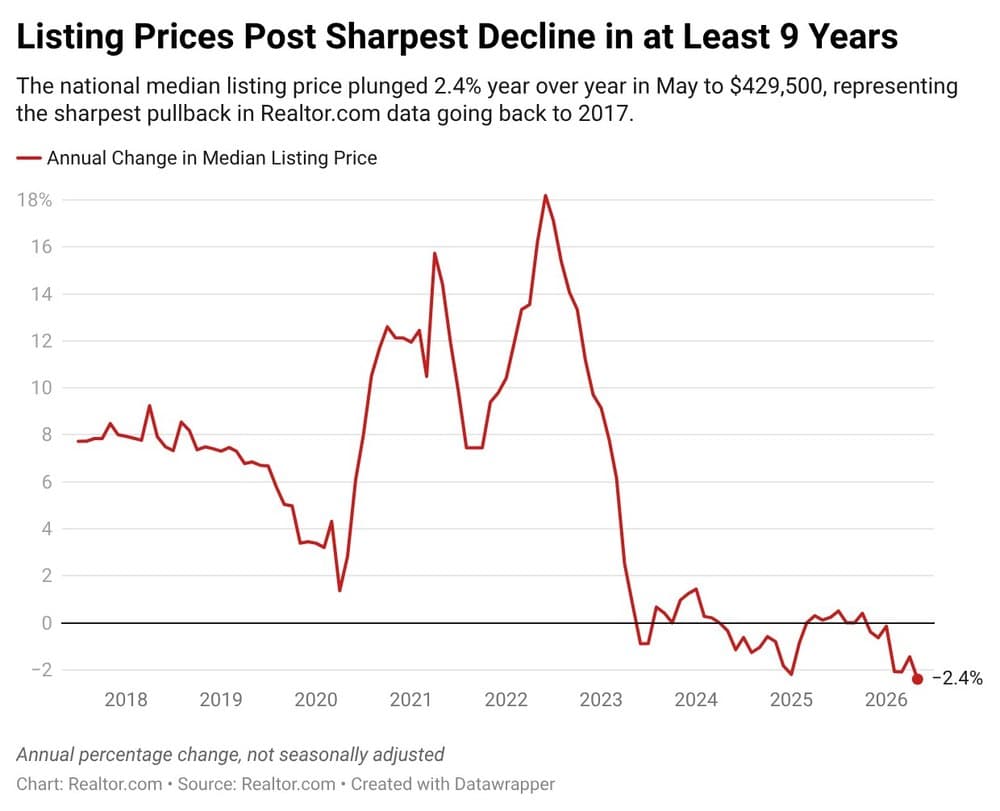
The headline number is hard to ignore. Nationally, listing prices fell year-over-year for a seventh consecutive month, declining by 2.4% in May 2026. That marks the steepest year-over-year drop in Realtor.com® data going back to 2017. At the same time, homes under contract rose for a sixth straight month. These two data points together tell a coherent, encouraging story — one that real estate professionals, economists, and prospective buyers have been waiting to hear for some time.
What Falling Listing Prices Actually Mean
It is worth pausing on what a 2.4% year-over-year decline in listing prices really signals. On the surface, falling prices can sound alarming — a sign of a market in distress. But the context here is critical. This is not a collapse driven by panic or economic crisis. Instead, it reflects a behavioral shift among sellers: they are entering the market with more realistic, data-informed expectations rather than wishful asking prices.
In previous years, a common pattern played out across the country. Sellers would list at an optimistic price, the home would sit, and then they would be forced into successive price reductions — often creating the impression that something was wrong with the property. That dynamic hurt both parties. Sellers experienced prolonged stress and reduced leverage, while buyers grew wary of properties that had lingered on the market.
What May 2026's data suggests is that sellers are correcting this behavior before listing, not after. They are pricing to sell from day one. That is a meaningful distinction. It signals not a weakening market, but a healthier and more rational one.
Rising Contracts: Buyers Are Responding
The flip side of sellers moderating their expectations is that buyers are re-entering the market with real conviction. The sixth consecutive monthly increase in homes under contract is a strong leading indicator of housing market health. Pending sales contracts represent actual decisions — buyers who have made offers, negotiated terms, and committed to moving forward. This is not speculative demand or foot traffic at open houses. These are real transactions in motion.
This sustained increase in contract activity, running in parallel with declining listing prices, confirms that price corrections are working as intended. When homes are priced appropriately for current market conditions, buyers act. The affordability ceiling has not disappeared — mortgage rates remain a persistent challenge for many households — but sellers who price with that reality in mind are successfully closing deals.
Navigating Real Economic Headwinds
None of this is to say the market is without its difficulties. The spring of 2026 has unfolded against a backdrop of genuine economic uncertainty. Mortgage rates have remained elevated relative to the historic lows of the early 2020s, and broader macroeconomic pressures — including inflation concerns and shifting employment conditions in certain sectors — have kept many would-be buyers on the sidelines.
Yet the housing data suggests that the market is absorbing these headwinds rather than being overwhelmed by them. The consistent month-over-month improvements across both price adjustments and contract activity point to underlying demand that, while patient, has not evaporated. Buyers are waiting for the right conditions, and in increasing numbers, they are finding them.
This resilience is important. It indicates that the structural demand for housing — driven by demographics, household formation, and ongoing inventory constraints in many regions — continues to support market activity even when broader economic conditions are less than ideal.
What This Means for Buyers in 2026
If you are a buyer currently navigating the market, May's data offers several practical takeaways:
- Negotiating power has improved. With sellers pricing more competitively from the outset, there is less friction in the early stages of a transaction. Buyers are not fighting as hard against inflated initial prices.
- Fewer price-reduction traps. Because sellers are adjusting expectations before listing, there are fewer properties sitting on the market with repeated cuts — which can create confusion about a home's true value.
- Act on well-priced inventory quickly. The rise in contracts shows that appropriately priced homes are moving. If a listing checks your boxes and is priced fairly, waiting may mean losing it to another buyer who has done the same homework.
What This Means for Sellers in 2026
For sellers, the data carries its own set of lessons. The most successful transactions this spring share a common thread: sellers who came to market with a realistic understanding of what buyers in their area could and would pay. Overpricing remains a costly mistake — not just because it delays a sale, but because prolonged market time can stigmatize a listing and ultimately force a larger reduction than would have been necessary with accurate initial pricing.
- Price it right the first time. The data confirms that correctly priced homes are selling. Work with an agent who understands local comps and current buyer sentiment.
- Understand the buyer's perspective. With mortgage rates still a significant factor in monthly payment calculations, buyers are acutely sensitive to price. Meeting them where they are is the fastest path to a successful close.
- Momentum is on the market's side. Six straight months of rising contracts suggests that buyer appetite is real and growing. A well-priced home listed now enters a market with improving activity, not a stagnant one.
A Healthier Market Is Taking Shape
The narrative emerging from May 2026's housing data is one of recalibration — and that is ultimately good news for everyone involved in a real estate transaction. The frenzied, overheated dynamics of the post-pandemic boom years created winners and losers in unpredictable ways. The current environment, while not without its challenges, is governed more by fundamentals: reasonable pricing, responsive buyers, and transactions that close because both parties found terms they could live with.
Seven consecutive months of year-over-year listing price declines and six straight months of rising pending contracts are not coincidences. They reflect a market in which the relationship between buyers and sellers has been quietly, steadily rebalanced. As summer approaches, the direction of travel looks constructive — and for the many Americans who have been watching and waiting for the right moment to make their move, that moment may be arriving.