
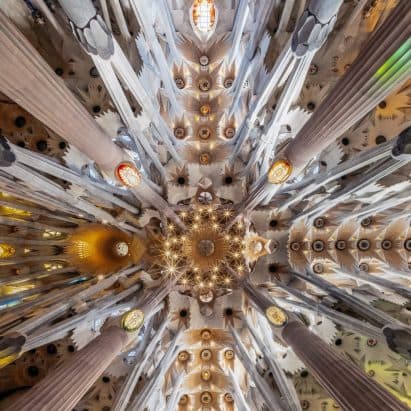
Dezeen Agenda Shines a Light on the Gaudí Centenary Series
The latest edition of Dezeen Agenda, the widely followed weekly newsletter from one of the world's most respected architecture and design publications, has turned its spotlight onto a subject that resonates deeply across the global architecture community: the Gaudí Centenary series. This carefully curated editorial project commemorates the 100th anniversary of the death of Antoni Gaudí, the visionary Catalan architect whose organic forms, devotion to craft, and defiance of architectural convention left an indelible mark on the built environment. By featuring the series in its newsletter, Dezeen underscores just how significant this centenary moment is — not only for Spain and Barcelona, but for architecture lovers and creative professionals around the world.
Who Was Antoni Gaudí? A Brief Portrait of a Revolutionary Mind
Antoni Gaudí i Cornet was born in Reus, Catalonia, in 1852, and went on to become one of the most singular and influential architects in history. Rooted in the Catalan Modernisme movement, Gaudí drew his primary inspiration not from classical architectural doctrine but from the natural world. He observed the structural logic of trees, bones, shells, and geological formations, then translated those organic principles into revolutionary building techniques that were centuries ahead of their time.
His body of work is extraordinary in its range and ambition. From the undulating facades of Casa Batlló and Casa Milà — known as La Pedrera — to the forest-like interior of Park Güell and the labyrinthine splendor of the Palau Güell, Gaudí consistently pushed the boundaries of what architecture could be. Yet none of his works has captured the global imagination quite like the Sagrada Família, the monumental basilica in Barcelona that remains under construction more than a century after he first began work on it.
Gaudí died in June 1926 after being struck by a tram, and he was buried in the crypt of the Sagrada Família — the building to which he had devoted the final decades of his life. His centenary death anniversary in 2026 has prompted widespread reflection on his enduring influence.
The Dezeen Gaudí Centenary Series: What It Covers
Dezeen's Gaudí Centenary series is a dedicated editorial deep-dive designed to mark this momentous anniversary with the depth and thoughtfulness it deserves. Rather than offering a superficial overview, the series takes readers through a careful examination of Gaudí's architectural philosophy, his technical innovations, and the way his work continues to inspire designers and architects working in the 21st century.
The series includes detailed case studies of Gaudí's key works, offering both historical context and fresh analysis. Among these is an in-depth exploration of the Sagrada Família, arguably the most famous unfinished building in the world. The basilica's complex geometry, the use of hyperboloid structures and paraboloid arches, and its symbolic iconography are all examined, making it accessible to readers regardless of their level of architectural knowledge.
By featuring this series in Dezeen Agenda, the publication ensures that the content reaches its broad and engaged subscriber base — architects, interior designers, students, and design enthusiasts who rely on the newsletter to stay informed about the most important developments and discussions in the field.
Why the Sagrada Família Remains Central to Gaudí's Legacy
Of all Gaudí's projects, the Sagrada Família stands as the most potent symbol of his genius and his audacity. Construction began in 1882, and Gaudí took over as chief architect the following year. He devoted himself entirely to the project from 1914 until his death, knowing he would never see it completed. That act of creative faith — working wholeheartedly on something he knew would outlast him by generations — speaks volumes about his commitment to his vision and his craft.
Today, the Sagrada Família is one of the most visited monuments in Europe, welcoming millions of tourists each year. Its towers are now among Barcelona's most recognizable skyline features, and the ongoing construction work continues to draw international attention. The basilica is expected to be completed in the coming years, making the centenary of Gaudí's death a particularly poignant moment: the man who began this epic undertaking is being remembered just as the project nears its conclusion.
Gaudí's Influence on Contemporary Architecture and Design
One of the most compelling themes running through the Dezeen Centenary series is the question of Gaudí's relevance to contemporary practice. Far from being a historical curiosity, his ideas have experienced a remarkable revival in the digital age. Architects and computational designers have found that Gaudí's intuitive use of structural forms — catenary arches derived from hanging chain models, ruled surface geometries — map surprisingly well onto the capabilities of modern parametric design software.
- His use of natural forms as structural logic anticipates the biomimicry principles now widely adopted in sustainable architecture.
- His rejection of the straight line in favor of curves and organic shapes prefigured the fluid forms of late 20th and early 21st century architects such as Zaha Hadid and Santiago Calatrava.
- His integration of color, light, and material craft into architecture as an inseparable whole continues to inspire interior designers and spatial artists globally.
- His use of scale models and physical simulation to test structural ideas is seen as a precursor to today's digital fabrication and computational modeling workflows.
These connections make Gaudí not simply a figure of historical admiration, but a living reference point for architectural innovation.
Why Dezeen Agenda Is the Right Platform for This Conversation
Dezeen Agenda has established itself as a trusted weekly digest for the architecture and design community. With a curated editorial approach and a global readership, it brings important stories directly to professionals and enthusiasts who care deeply about the built environment. By centering the Gaudí Centenary series in its latest edition, Dezeen signals clearly that this anniversary matters — that it warrants serious intellectual engagement, not just commemorative gestures.
For anyone who has not yet explored the full series, now is an ideal time to do so. Whether you are an architecture professional seeking technical insight, a student looking to understand Gaudí's structural innovations, or simply a curious reader drawn to extraordinary creativity, the Dezeen Gaudí Centenary series offers something genuinely rewarding. It is a reminder that great architecture transcends time, and that the work of Antoni Gaudí — organic, spiritual, technically astonishing — continues to speak to us with remarkable clarity, one hundred years after his death.