
What the Lincoln Memorial Reflecting Pool Can Teach Every Pool Owner
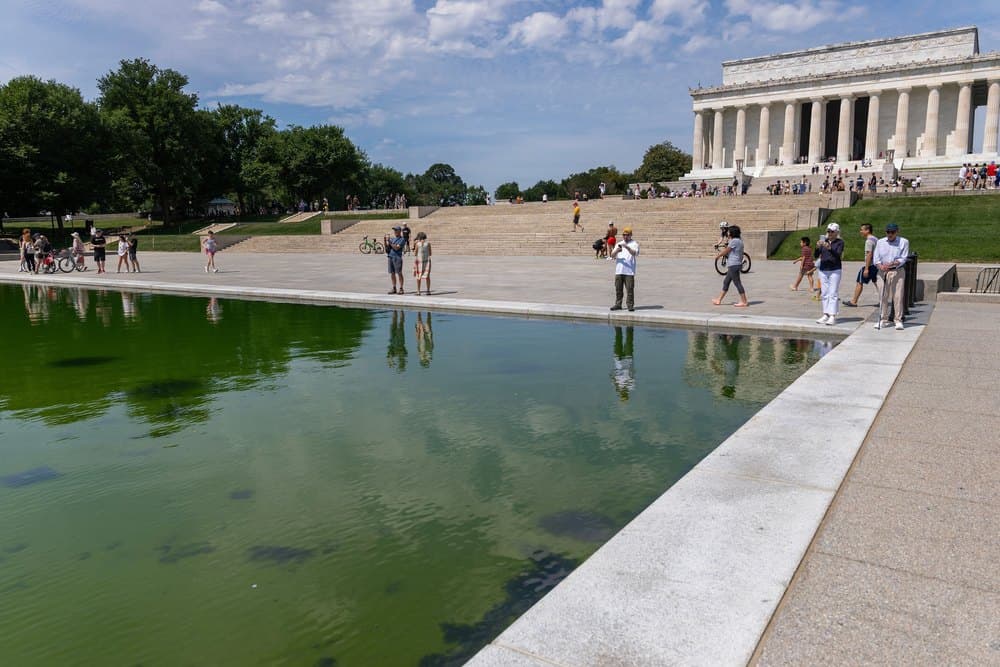
When the Lincoln Memorial Reflecting Pool reopened after a sweeping $14.2 million renovation, visitors expecting a gleaming, "flag blue" surface were instead greeted by murky green water blanketed in algae. The National Park Service quickly mobilized cleanup crews as photos of the unsightly scene spread across social media, drawing national attention to an issue that millions of backyard pool owners know all too well.
The renovation — completed as part of President Donald Trump's preparations for America's 250th anniversary — included leak repairs, a filtration system upgrade, and a fresh coat of blue paint. Despite the investment of time and money, the pool still fell victim to one of the most common and frustrating problems in aquatic maintenance: algae bloom.
As Jimmie Meece, brand president at America's Swimming Pool Co. in Macon, GA, put it: "The recent work done at the Lincoln Memorial is a great reminder that even the most iconic pools require consistent maintenance and occasional renovation to stay beautiful and functional."
If you have a pool at home, consider this a timely wake-up call. Routine maintenance and proper filtration aren't optional luxuries — they're the foundation of a clean, safe, and visually stunning pool.
Why Do Pools Turn Green?
Green water is almost always a sign of algae growth, and algae is an opportunistic organism that thrives when pool chemistry falls out of balance. Even a freshly renovated pool can turn green within days if the conditions are right — or rather, wrong.
Several factors can trigger an algae bloom in any pool, large or small:
- Low or inconsistent chlorine levels: Chlorine is the primary sanitizer that kills algae and bacteria. When levels drop, algae seize the opportunity to multiply rapidly.
- Poor circulation and filtration: Stagnant water allows algae and debris to settle and grow. A filtration system that isn't running long enough each day is one of the most common culprits behind green pools.
- Imbalanced pH levels: If your pool's pH is too high, chlorine becomes far less effective, even when the chemical is present in adequate quantities.
- Warm temperatures and sunlight: Algae love heat and sunlight. During summer months, the risk of algae blooms increases significantly without proactive chemical management.
- Heavy pool use or rain: Swimmers introduce organic matter like oils, sweat, and bacteria. Heavy rainfall dilutes pool chemicals and introduces additional contaminants, disrupting water balance.
The Filtration System: Your Pool's Most Important Defense
One of the key upgrades made during the Lincoln Memorial Reflecting Pool renovation was an improved filtration system — and that's no coincidence. Filtration is the cornerstone of any healthy pool, whether it's a 2,000-acre national landmark or a 20,000-gallon backyard oasis.
Your pool's filter works continuously to remove particles, debris, and contaminants from the water. When a filtration system is undersized, clogged, or not running for enough hours each day, water quality deteriorates quickly. Experts generally recommend running your pool pump and filter for at least 8 to 12 hours per day during warmer months to ensure the entire volume of water circulates fully.
There are three main types of pool filters — sand, cartridge, and diatomaceous earth (DE) — and each requires its own maintenance schedule. Sand filters need periodic backwashing, cartridge filters need regular rinsing and replacement, and DE filters require both backwashing and recharging with fresh DE powder. Neglecting filter maintenance is one of the fastest ways to find yourself staring at a green pool.
Essential Pool Maintenance Tips to Prevent Algae
The good news is that algae blooms are almost entirely preventable with a consistent maintenance routine. Here's what pool professionals recommend to keep your water sparkling clear all season long:
- Test your water chemistry at least twice a week: Use a reliable test kit or strips to monitor chlorine, pH, alkalinity, and calcium hardness. Aim for a free chlorine level between 1–3 ppm and a pH between 7.4–7.6.
- Shock your pool weekly or after heavy use: Pool shocking — adding a large dose of chlorine or non-chlorine shock — eliminates combined chlorine (chloramines) and kills early-stage algae before it becomes visible.
- Brush pool walls and floors regularly: Algae often take root on surfaces before they discolor the water. Brushing walls, steps, and the floor disrupts growth and sends particles into the water where your filter can capture them.
- Use an algaecide as a preventative measure: Adding a weekly algaecide treatment — especially during hot weather — adds an extra layer of protection against blooms.
- Keep your skimmer and pump baskets clean: Blocked baskets restrict water flow and reduce filtration efficiency. Check and empty them at least twice a week.
- Maintain proper water circulation: Point your return jets slightly downward and at an angle to create a circular current that eliminates dead zones where algae can grow undisturbed.
When to Call a Professional Pool Service
Even the most diligent pool owners sometimes face water quality challenges that go beyond routine maintenance. A severely green pool, persistent cloudiness, or recurring algae problems are signs that something deeper may be wrong — whether it's an undersized filter, a failing pump, a chemical imbalance that's hard to diagnose without professional equipment, or even structural leaks like the ones repaired at the Lincoln Memorial.
Scheduling a professional pool inspection at the start and end of each season is a smart investment. A certified pool technician can assess your filtration system's capacity, check for leaks, balance your water chemistry comprehensively, and identify any issues before they become expensive problems. The $14.2 million lesson from the Lincoln Memorial Reflecting Pool is a dramatic reminder that even world-class renovations don't substitute for ongoing, professional-grade care.
Don't Let Your Pool Become a Headline
The Lincoln Memorial Reflecting Pool's brief but highly publicized algae bloom is the kind of story that resonates with pool owners everywhere because it's so relatable. Green water can happen to anyone — and it can happen fast. But unlike a nationally visible landmark scrutinized by millions, your backyard pool only needs to impress your family and friends.
The key takeaway is simple: consistent, proactive maintenance is always less expensive and less stressful than reactive cleanup. Test your water regularly, keep your filtration system in top shape, stay on top of chemical balance, and don't wait for a problem to become visible before you act. With the right habits in place, your pool can stay crystal clear all season long — no $14.2 million renovation required.