
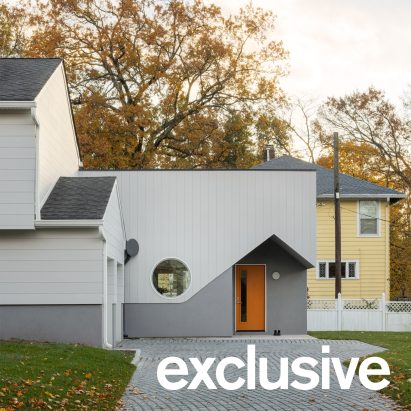
Brooklyn Studio Out of Line Brings Architectural Wit to New Jersey with the Swoop ADU
When most people think of adding an accessory dwelling unit to their home, they imagine a straightforward extension — practical, code-compliant, and largely forgettable. Brooklyn-based architecture and design studio Out of Line had a very different idea in mind. Their recently completed project in New Jersey, affectionately dubbed the Swoop ADU, introduces a sculptural, playful roofline to a modest residential property, proving that small additions can carry enormous architectural ambition. The key design move? A deliberate and witty omission they call the "absent gable."
What Is an ADU and Why Are They Having a Moment?
Accessory Dwelling Units, commonly known as ADUs, are secondary housing structures built on the same lot as a primary residence. They can be attached or detached, and their uses are wide-ranging — from in-law suites and rental units to home offices, studios, and guest quarters. Across the United States, municipalities have been loosening zoning restrictions to encourage ADU construction as one practical response to the housing affordability crisis. States like California pioneered this movement, and the Northeast, including New Jersey, has steadily followed suit.
As ADUs become more mainstream, architects and designers are seizing the opportunity to rethink what a small residential addition can look like. No longer just a converted garage or a boxy annexe bolted onto the back of a house, the modern ADU is increasingly a canvas for thoughtful, inventive design. Out of Line's Swoop ADU is a compelling example of this shift.
The Concept: An Absent Gable
The defining characteristic of the Swoop ADU is its roof. Traditional residential architecture in New Jersey — and across much of the American Northeast — relies heavily on the gabled roof: two sloping planes meeting at a central ridge, creating a triangular form at either end. It is familiar, almost archetypal. Out of Line chose to acknowledge this vernacular convention while simultaneously subverting it.
Rather than completing the expected gable form, the studio removed one side, letting the roof sweep down in a single continuous curve that reaches toward the ground. This gesture gives the structure its name — the "swoop" — and the studio describes the missing triangular face as the "absent gable." The result is a roofline that feels simultaneously recognizable and surprising, as though a familiar shape has been caught mid-transformation.
This kind of architectural wit — honoring a local building tradition while gently dismantling it — is a hallmark of thoughtful contextual design. The Swoop ADU doesn't clash with its suburban setting; it converses with it.
Attachment and Integration with the Primary Residence
The ADU is attached to the existing New Jersey house, which presented specific design and structural challenges. Attaching a new volume to an older home requires careful consideration of how materials, proportions, and massing relate to the original structure. Out of Line navigated this by creating a clear visual distinction between old and new while maintaining a compositional harmony.
The curving roofline of the addition stands in dialogue with the more conventional forms of the primary house, acting as a counterpoint rather than a carbon copy. This approach respects the integrity of the original building while giving the ADU its own distinct architectural identity — an important consideration when the goal is a structure that adds value both functionally and aesthetically.
Interior Space and Functional Design
Beyond its striking exterior, the Swoop ADU is designed to function as genuinely livable space. The interior benefits from the sculptural roofline, which creates a dynamic ceiling profile that shifts the spatial experience as you move through the room. Rather than the flat or conventionally angled ceilings found in most small additions, the curved overhead plane lends the compact interior a sense of openness and generosity that belies its modest footprint.
Natural light is carefully managed throughout the space. The geometry of the absent gable allows for window placements that draw in light from multiple angles, keeping the interior bright without sacrificing privacy from neighboring properties — an essential concern in the dense residential context of New Jersey suburbs.
Out of Line: Designing with Personality
Founded and based in Brooklyn, Out of Line has built a reputation for projects that resist the generic. Their work tends to engage seriously with context, material, and program while maintaining an irreverence that keeps their buildings from feeling overly earnest. The Swoop ADU exemplifies this balance: it is architecturally rigorous but also clearly enjoys itself.
The studio's approach to the "absent gable" concept reflects a broader design philosophy in which omission can be as expressive as addition. By taking something away — the expected closing plane of the gable — Out of Line created something more memorable than if they had simply completed the form. It's a reminder that in architecture, restraint and playfulness are not opposites.
Broader Implications for ADU Architecture
The Swoop ADU points toward an exciting trajectory for residential additions across the country. As ADU construction accelerates in response to housing demand, there is a real risk that the typology becomes homogenized — row after row of nearly identical backyard structures with little architectural ambition. Projects like this one demonstrate that the ADU format, precisely because of its small scale and relative freedom from the constraints of larger developments, is an ideal site for experimentation.
- The absent gable concept shows how referencing local vernacular architecture can ground an unconventional design without making it look out of place.
- The curved roofline proves that structural creativity and practical liveability are not mutually exclusive in compact residential additions.
- Out of Line's approach challenges homeowners and developers alike to demand more from their ADU architects — not just square footage, but spatial quality and architectural character.
A Small Building with a Big Idea
The Swoop ADU may be modest in scale, but it carries considerable architectural weight. Out of Line has delivered a project that enriches its New Jersey neighborhood, serves genuine practical needs, and contributes meaningfully to the ongoing conversation about what domestic architecture can look like in the 21st century. The absent gable is a small gesture with a large resonance — proof that the most interesting ideas in architecture often begin with a single, well-considered subtraction.
As housing pressures continue to drive ADU construction across the country, it is projects like the Swoop ADU that will set the standard for what these additions can and should aspire to be: not merely functional, but genuinely delightful.