
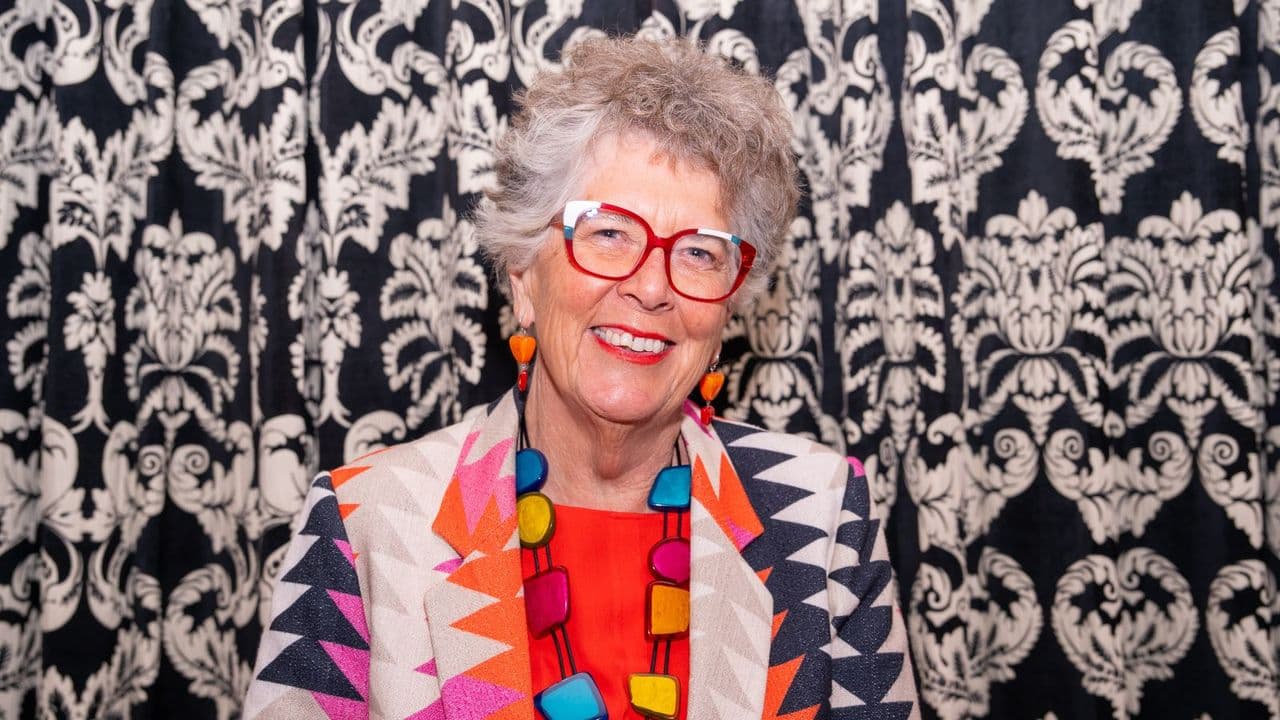
Prue Leith Was Ahead of Her Time — And Her Walls Prove It
Long before "shelfie" culture took over Instagram and before interior designers began championing functional décor, Prue Leith — the flamboyant, bold-accessory-loving judge of The Great British Baking Show — was quietly revolutionizing the way we think about storage at home. Since 1999, her English country home has featured vertical storage used not merely as a practical solution, but as a genuine form of artistic expression. Now, decades later, the rest of the world is finally catching up.
What Leith understood intuitively — long before the minimalism movement, the Marie Kondo era, or the rise of cottagecore — is that the things we own, displayed thoughtfully and vertically, can tell a story just as powerfully as any painting or sculpture. Her home has long been a testament to this philosophy, and today, as homeowners and interior designers alike scramble to make small spaces feel bigger and more intentional, vertical storage as art is having its mainstream moment.
What Is Vertical Storage as Art?
At its core, vertical storage as art is the practice of organizing and displaying functional items — cookbooks, ceramics, utensils, jars, linens, tools — along vertical wall space in a way that is visually curated and aesthetically deliberate. Rather than hiding objects away in cabinets or drawers, the approach celebrates everyday items as worthy of display, treating the wall like a canvas and the shelves, hooks, and racks like a gallery layout.
This is distinct from ordinary open shelving, which often results in cluttered, chaotic arrangements. Vertical storage as art requires intentionality: selecting pieces for their color, texture, shape, and meaning; arranging them with rhythm and balance; and layering function with beauty in a way that feels both personal and polished.
Leith, known for her exuberant personality and unapologetic love of color, has always embraced this principle. Her English country home reflects a life richly lived — filled with culinary tools, pottery, books, and objects collected over decades — all arranged with the eye of someone who understands that how you display what you love says as much about you as what you choose to own.
The English Country Home Aesthetic and Why It Works
The English country home has long been a source of global interior design inspiration. Characterized by warmth, eclecticism, a mix of old and new, and an affectionate relationship with practical objects, it is a style that has always lent itself naturally to the idea of storage as display. Think of the classic Welsh dresser stacked with mismatched china, or the Aga-adjacent wall of hanging pots and cast iron pans — these are forms of vertical storage as art that have existed in British homes for centuries.
Leith's iteration of this tradition brings a more modern, maximalist sensibility. Her use of vertical space honors the historical roots of English country style while pushing the aesthetic into bolder, more deliberately composed territory. The result is a home that feels lived-in and authentic, not staged — which is precisely why it resonates so deeply with design enthusiasts today.
Why Vertical Storage as Art Is Going Mainstream Now
Several converging trends explain why what Leith has been doing since 1999 is suddenly everywhere.
- Smaller living spaces: As urban housing continues to shrink, homeowners are looking for ways to maximize every square foot. Vertical wall space, often underutilized, offers significant storage potential without eating into floor area — making vertical solutions both practical and necessary.
- The anti-minimalism backlash: After years of all-white interiors and ruthless decluttering, many people are pushing back in favor of warmth, character, and the visible presence of a life fully inhabited. Displaying objects rather than hiding them aligns perfectly with this cultural shift.
- Social media and the "shelfie": Platforms like Instagram and Pinterest have made beautifully arranged shelves a form of personal branding. The aesthetic of artfully composed vertical storage has exploded in popularity as homeowners photograph and share their arrangements online.
- Sustainability and intentional consumption: Rather than buying new decorative objects, many people are looking more closely at the things they already own. Vertical storage as art encourages this reframing — the beautiful mug, the vintage cookbook, the handmade bowl all become décor when placed with intention.
How to Bring Vertical Storage as Art Into Your Own Home
You don't need a sprawling English country house to embrace this approach. The principles translate to apartments, cottages, and modern homes of any size.
Start by identifying one wall — ideally in a kitchen, living room, or home office — that you can dedicate to a vertical display. Install shelving at varying heights to create visual interest, and begin curating what goes on those shelves with the same care you'd give a gallery wall. Mix textures: rough pottery alongside smooth glass, worn paperbacks beside a polished metal bowl. Consider color groupings or gradients to create cohesion without uniformity.
Hooks and pegboards offer another layer of vertical opportunity. A Shaker-style pegboard in a kitchen or mudroom, hung with utensils, baskets, and small plants, achieves the kind of layered, functional beauty that defines the aesthetic Leith has long championed.
Prue Leith as a Design Visionary
It is fitting that Prue Leith — a woman who has spent her career celebrating the intersection of beauty and nourishment, from her restaurant empire to her decades on television — was practicing at home what designers are only now articulating as a trend. Her 1999 approach to vertical storage as art was never about following a movement; it was about living with intention and surrounding herself with objects that held meaning, arranged in ways that brought joy every time she walked past them.
As this design philosophy goes mainstream, Leith stands as a quiet pioneer — proof that the most enduring home trends are rarely born in design studios. They are born in the homes of people who simply know, long before anyone else does, how they want to live.