
Glasgow School of Art 2026: Where Student Innovation Meets Human-Centred Design
Every year, the Glasgow School of Art (GSA) graduate showcase offers a compelling window into the future of design, art, and technology. The 2026 edition is no different — and in many ways, it may be the most ambitious yet. Among the most talked-about projects this season is a self-assembly prosthetic aid that challenges conventional thinking about accessibility, manufacturing, and the relationship between users and their assistive devices. Alongside it, a rich collection of graduate works spans disciplines from product design to textiles, each project reflecting the school's long-standing commitment to purposeful, innovative, and socially engaged creativity.
What Is the Self-Assembly Prosthetic Aid?
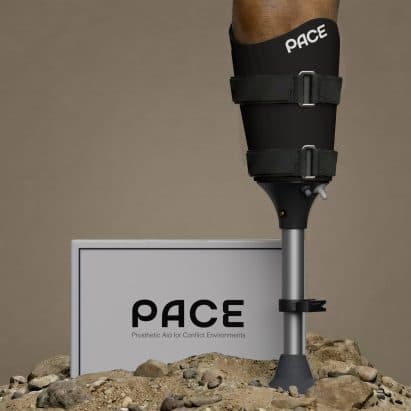
The self-assembly prosthetic aid, developed by GSA product design graduate Millie Spence and titled Pace, is a concept-driven project that reimagines how prosthetic devices are accessed and personalised. Rather than relying entirely on clinical manufacturing pipelines — which can be costly, slow, and geographically inaccessible for many amputees worldwide — Spence's design explores the possibility of a prosthetic limb system that users can partially or fully assemble themselves.
The concept draws on principles of modular design, flat-pack assembly logic, and accessible materials to produce a lower-limb prosthetic that doesn't require specialist tools or training to put together. By lowering the barrier to assembly, the project aims to extend access to mobility aids in under-resourced communities, post-conflict zones, and regions where specialist prosthetists are in short supply.
What makes Pace particularly noteworthy from a design standpoint is its attention to both form and function. The components are not merely practical — they are considered aesthetically, reflecting a broader shift in the assistive technology space toward designs that users can feel proud to wear rather than devices they must simply tolerate.
The Broader Significance of Inclusive Design in 2026
Spence's project arrives at a moment when inclusive and accessible design has moved firmly into the mainstream of design discourse. The conversation is no longer simply about compliance with accessibility standards — it is about genuine co-design, user agency, and the democratisation of technology. Graduate projects like Pace reflect a generation of designers who have grown up with those values embedded in their education.
Prosthetic technology has traditionally been siloed within the medical device industry, governed by regulatory complexity and high production costs. Student projects that approach the problem from a design-led perspective can open new conversations and challenge existing assumptions, even if they are not immediately ready for commercial deployment. The value lies as much in the questions they raise as in the solutions they propose.
Other Notable Projects from the GSA 2026 Graduate Show
While the self-assembly prosthetic drew significant attention, the Glasgow School of Art's 2026 graduate showcase featured a wide range of compelling work across multiple disciplines. Here are some of the themes and projects that stood out:
- Sustainable materials exploration: Several product and textile design graduates focused on bio-based and low-impact materials, responding directly to the climate crisis. Projects ranged from mycelium-based packaging alternatives to naturally dyed fabric systems that eliminate synthetic chemicals from the production chain.
- Digital craft and fabrication: A number of graduates explored the intersection of traditional craft techniques and digital manufacturing tools, using CNC routing, laser cutting, and 3D printing not as ends in themselves but as enablers of more refined handwork and bespoke production.
- Mental health and well-being through design: In keeping with a trend visible across many art and design schools globally, several GSA students turned their attention to the role objects and environments play in supporting mental well-being — from sensory spaces to therapeutic tools designed for use outside clinical settings.
- Community-centred urban interventions: Interior and architectural design graduates presented projects exploring how underused urban spaces could be reclaimed and redesigned with and for local communities, with particular emphasis on areas affected by post-industrial decline in Scotland.
Why Glasgow School of Art Continues to Lead in Design Education
Founded in 1845, the Glasgow School of Art is one of the UK's oldest and most respected art and design institutions. Its reputation for producing graduates who combine technical rigour with conceptual depth has remained consistent across generations. The school's location in Glasgow — a city with a rich industrial heritage and a vibrant contemporary arts scene — gives students a uniquely textured urban environment in which to develop their thinking.
The 2026 cohort also reflects the school's growing emphasis on interdisciplinary collaboration. Projects like Pace are not the product of design thinking alone — they draw on insights from healthcare, materials science, social research, and ethics. This cross-pollination of disciplines is increasingly central to the GSA's pedagogical identity, and it shows in the quality and ambition of the graduating work.
The Future of Student-Led Design Innovation
Graduate showcases at institutions like the Glasgow School of Art serve a function that extends well beyond ceremony. They are live research outputs, speculative proposals, and talent signals rolled into one. For the design industry, recruiters, and commissioners, they offer a genuine forecast of where creative thinking is heading.
The prominence of projects like the self-assembly prosthetic aid in this year's show suggests that the next generation of designers is deeply motivated by equity, access, and real-world impact. They are not designing for galleries alone — they are designing for the world as it actually exists, with all its inequalities and urgent needs intact.
As the 2026 Glasgow School of Art graduate show continues to draw visitors and attention from across the design world, it is clear that the institution remains one of the most vital incubators of design talent in Europe. Whether it is a self-assembling prosthetic limb or a community-led spatial intervention, the work on show this year is evidence that design, at its best, is never just about objects. It is about people.