
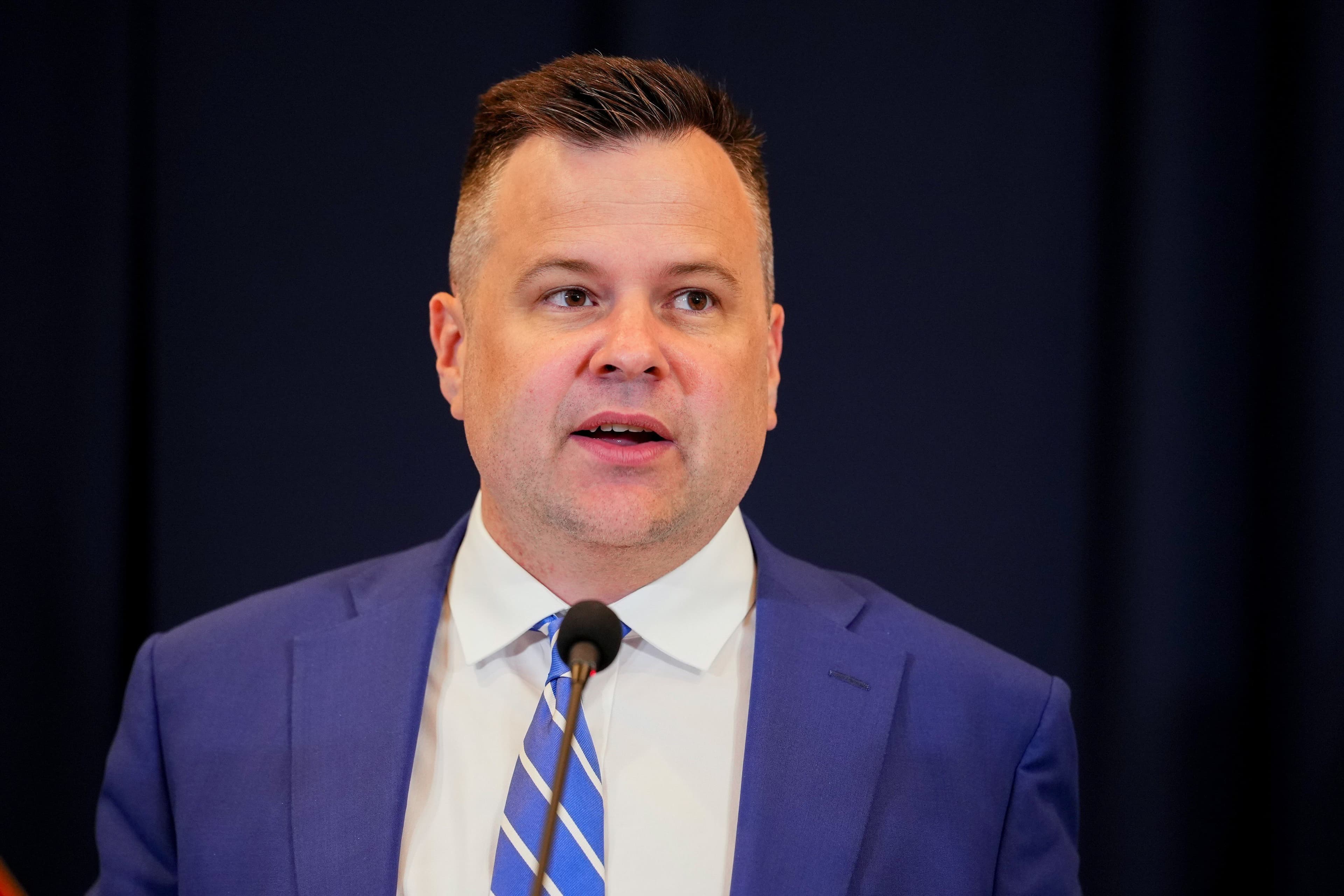
Trump Confirms Bill Pulte's Role as Intelligence Director Is Temporary
President Donald Trump confirmed Thursday that Bill Pulte, the current director of the Federal Housing Finance Agency (FHFA), will not serve as a permanent Director of National Intelligence (DNI). Speaking from the White House, Trump acknowledged that the appointment was always intended to be a short-term arrangement, even as bipartisan criticism of the unusual dual-role assignment continued to mount on Capitol Hill. The admission came after a week of intensifying scrutiny from both Republican and Democratic lawmakers, raising serious questions about the administration's approach to one of the most sensitive leadership positions in the U.S. national security apparatus.
What Trump Said About Pulte's Intelligence Role
During his remarks, Trump was characteristically candid about the nature of Pulte's assignment, distancing himself from any suggestion that the housing finance regulator would become the nation's top spy chief on a lasting basis. "It's an acting position; he's not going to be permanent, because, you know, I don't think he'd want to be permanent," Trump said. He added that the administration is currently interviewing candidates for a permanent appointment. "Again, it's not a permanent position, we're looking at — we're interviewing people right now. But it's somebody just to take it over for a little while."
Trump also offered an eyebrow-raising explanation for why he tapped Pulte in the first place, suggesting the housing official might uncover wrongdoing related to what Trump described as "rigged elections." Critics were quick to note that such a motivation — directing intelligence resources toward politically charged conspiracy theories — is far outside the traditional mandate of the Office of the Director of National Intelligence, which exists to coordinate the nation's 18 intelligence agencies and protect Americans from foreign threats.
Who Is Bill Pulte?
Bill Pulte is the grandson of real estate billionaire William Pulte, founder of PulteGroup, one of the largest homebuilders in the United States. President Trump appointed Bill Pulte as director of the Federal Housing Finance Agency earlier in his second term, putting him in charge of overseeing Fannie Mae and Freddie Mac — the two government-sponsored enterprises that underpin much of the American mortgage market. Pulte quickly made headlines at the FHFA for a series of aggressive personnel moves and a vocal social media presence.
His sudden elevation to acting DNI shocked Washington observers and national security professionals alike. Unlike previous intelligence directors, Pulte has no known background in intelligence, foreign policy, or military affairs — fields traditionally considered prerequisites for leading an agency that oversees the CIA, NSA, and more than a dozen other intelligence bodies.
A Rare Bipartisan Rebuke on Capitol Hill
The backlash from Congress was swift and, notably, crossed party lines. Shortly after Trump's Thursday remarks, three Republican senators broke ranks and voted alongside Democrats in support of a measure designed to bar Pulte from serving even in an acting capacity as DNI. While the measure ultimately did not pass, the symbolic weight of GOP senators publicly defying a Trump appointment was significant — a rare occurrence in today's tightly disciplined Republican caucus.
Democratic senators had led the charge against the dual appointment from the start, arguing that it was both legally dubious and a threat to national security. The argument gained traction even among some Republicans who privately expressed discomfort with the idea of a mortgage regulator simultaneously holding sway over the nation's most sensitive intelligence operations.
Legal and Constitutional Questions Surrounding the Appointment
Beyond the political controversy, legal scholars and former intelligence officials raised substantive questions about whether Pulte could legally serve in both roles at the same time. The DNI position requires Senate confirmation for a permanent appointment, and the rules governing acting appointments are complex, particularly when the individual being named is not already serving in a Senate-confirmed position within the intelligence community.
Some experts also pointed to the Federal Vacancies Reform Act and related statutes as potential obstacles. While a president has broad authority to make temporary designations in certain circumstances, critics argued the Pulte arrangement tested — and possibly exceeded — those boundaries. The administration has not publicly addressed these legal objections in detail.
Implications for U.S. National Security
The episode has renewed broader concerns about the politicization of the U.S. intelligence community under the Trump administration. Intelligence veterans from both parties warn that placing unqualified or politically motivated figures in senior intelligence roles can damage relationships with foreign allies, demoralize career intelligence officers, and compromise the integrity of assessments that inform critical national security decisions.
- The DNI oversees all 18 U.S. intelligence agencies, including the CIA, NSA, and DIA.
- The office was created after the September 11 attacks to improve coordination and information-sharing across the intelligence community.
- Previous DNI directors have typically come from military, law enforcement, or diplomatic backgrounds.
- Stability in intelligence leadership is considered essential for maintaining trust with allied intelligence services.
Former intelligence officials speaking anonymously to reporters described the situation as "deeply unusual" and expressed concern that even a brief period of unqualified leadership at the DNI could send troubling signals to adversaries and allies alike.
What Happens Next: The Search for a Permanent DNI
With Trump confirming that the search for a permanent DNI is already underway, attention now turns to who might be nominated for the role on a lasting basis. Any permanent nominee would require Senate confirmation, a process that will likely involve intensive scrutiny given the current political environment and the high-profile controversy surrounding Pulte's temporary appointment.
For now, Pulte remains in a dual role — continuing his work at the FHFA while serving in an acting intelligence capacity — though for how long remains unclear. The White House has not provided a timeline for when a permanent nominee might be named or confirmed.
The Bigger Picture: Trump's Approach to Intelligence Leadership
The Pulte episode fits into a broader pattern during Trump's second term of placing loyalists in key positions regardless of traditional qualifications, and of treating institutional norms in national security as flexible rather than fixed. Whether this approach ultimately strengthens or weakens American intelligence capabilities remains a deeply contested question — one that will likely be debated long after Pulte's brief tenure as acting DNI comes to an end.
What is clear is that the rare public rebuke from members of Trump's own party signals a limit, even within the Republican Senate, to how far institutional boundaries can be stretched — at least when it comes to the nation's most critical security infrastructure.