
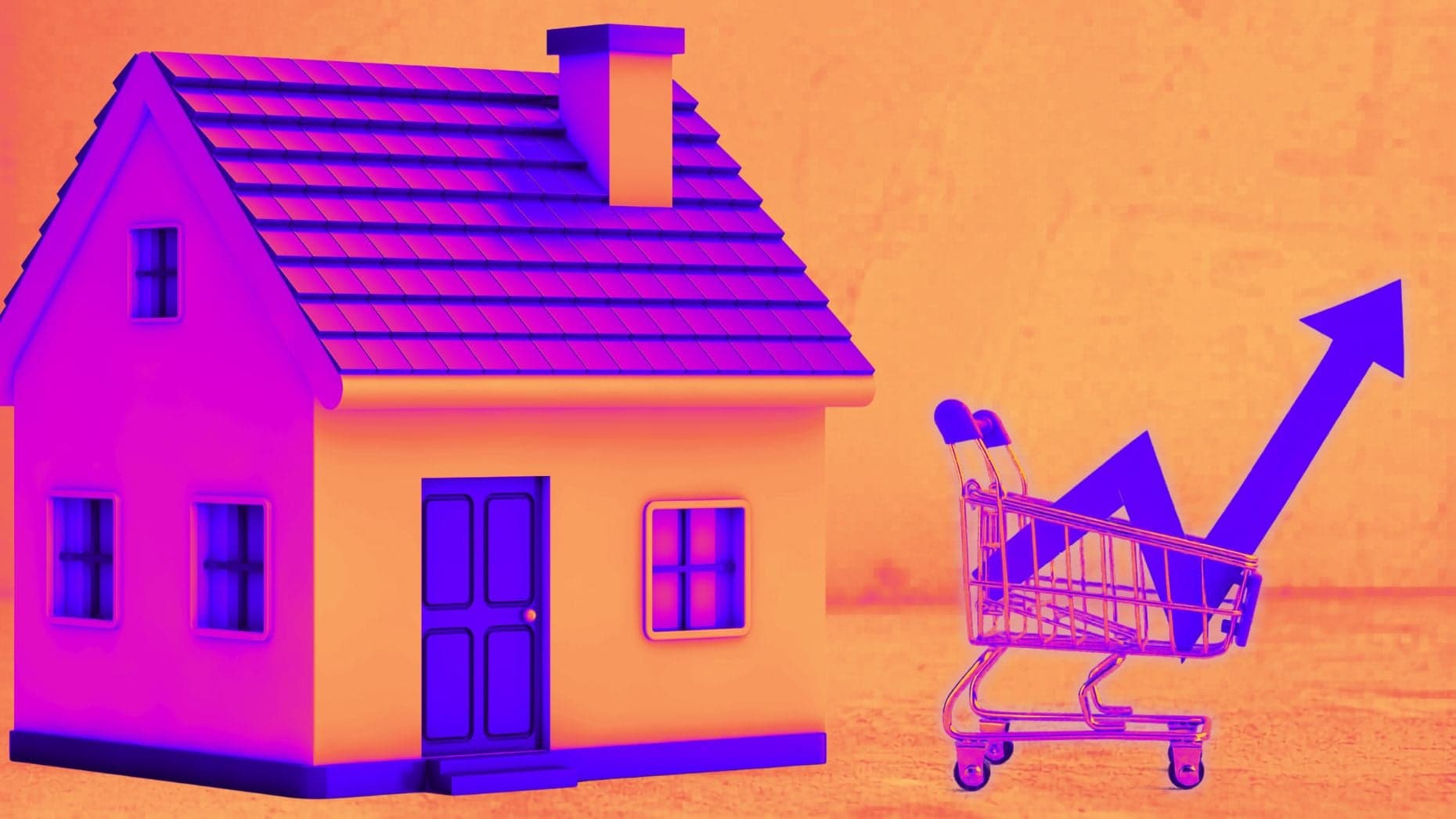
US Median Home Price Surpasses $400,000 for the First Time in History
In a landmark moment for the American real estate market, the median price of an existing home in the United States has crossed the $400,000 threshold for the very first time. This historic milestone comes at a paradoxical moment: even as prices climb to record highs, buyer demand is weakening, with pending home sales falling for the fourth consecutive week. Economic uncertainty, stubbornly high mortgage rates, and affordability concerns are keeping many would-be buyers firmly on the sidelines.
For millions of Americans who dream of homeownership, this latest data point is both a headline and a hurdle. Understanding what is driving prices upward — even as demand softens — is essential for anyone navigating today's complex housing landscape.
What Does a $400K Median Home Price Actually Mean?
The median home price is the midpoint of all home sales in a given period — half of all homes sell for more, and half sell for less. When that figure crosses $400,000 on a national scale, it signals a profound shift in what it costs to participate in the American housing market. Just a decade ago, the national median hovered closer to $200,000. The doubling of that figure in roughly ten years reflects a confluence of factors that have fundamentally reshaped real estate in the United States.
This is not merely a number on a spreadsheet. For first-time buyers, it means larger down payments, higher monthly mortgage obligations, and — at today's interest rates — a dramatically steeper barrier to entry. A 20% down payment on a $400,000 home requires $80,000 in cash before a single mortgage payment is made.
Why Are Home Prices Still Rising Despite Falling Demand?
One of the most counterintuitive aspects of the current housing market is that prices continue to rise even as buyer activity slows. Traditional economics would suggest that falling demand should put downward pressure on prices. So why isn't that happening?
The Inventory Shortage Problem
The answer lies largely in supply. The United States has been grappling with a chronic shortage of available homes for sale. Many existing homeowners who locked in ultra-low mortgage rates during 2020 and 2021 are reluctant to sell and take on a new loan at today's significantly higher rates — a phenomenon often referred to as the "lock-in effect." This suppression of supply means that even reduced buyer demand is competing over a very limited pool of listings, keeping prices elevated.
New Construction Has Not Kept Pace
Homebuilders have struggled to fill the gap. Labor shortages, elevated material costs, zoning restrictions, and financing challenges have all constrained new construction activity. While builder confidence has shown some resilience, the pace of new home completions remains well below the level needed to meaningfully correct the national inventory deficit. Until supply catches up with even modest demand, price relief is unlikely to arrive quickly.
Pending Home Sales Drop for the Fourth Straight Week
Pending home sales — contracts signed but not yet closed — serve as a leading indicator of future closed sales activity. The fact that they have now declined for four consecutive weeks is a meaningful signal that buyers are pulling back. Rising mortgage rates, stretched affordability, and broader macroeconomic anxiety are all contributing to buyer hesitancy.
Economic uncertainty plays a significant psychological role in major purchasing decisions. When consumers are unsure about job security, inflation trajectories, or the direction of interest rates, they tend to delay large financial commitments. A home purchase, typically the largest transaction in a person's lifetime, is particularly sensitive to this kind of uncertainty. Until confidence returns — or until rates fall meaningfully — transaction volume is likely to remain subdued.
What This Means for Buyers, Sellers, and Investors
For Buyers
Buyers entering this market face a dual challenge: high prices and high borrowing costs. Those who can afford to buy should proceed with careful due diligence, ensuring they are not overextending financially. Working with a knowledgeable mortgage broker to explore rate options, loan types, and down payment assistance programs can make a meaningful difference. Patience may also be rewarded — some analysts anticipate modest price corrections or rate relief later in the year as economic conditions evolve.
For Sellers
Sellers remain in a relatively strong position given the continued scarcity of inventory, but they should temper expectations. With demand falling and buyer pools shrinking, overpricing a listing can lead to extended time on the market and eventual price reductions. Accurate, data-driven pricing from the outset remains the most effective strategy for achieving a timely and favorable sale.
For Real Estate Investors
Investors must recalibrate return expectations in a high-price, high-rate environment. Cap rates and cash-on-cash returns have compressed significantly in many markets. Those focused on long-term appreciation may still find opportunity in supply-constrained markets, but short-term flippers and overleveraged buyers face heightened risk.
Looking Ahead: Will Home Prices Come Down?
Most housing economists do not anticipate a dramatic crash in home prices. The underlying supply deficit is too significant, and the majority of existing homeowners carry substantial equity and fixed-rate mortgages that make distressed selling unlikely. However, a period of price stabilization or modest correction in specific overheated markets is plausible, particularly if mortgage rates remain elevated or economic conditions deteriorate further.
The $400,000 milestone is more than a headline — it is a reflection of deep structural imbalances in the American housing market that will take years, not months, to resolve. For policymakers, builders, buyers, and sellers alike, understanding these dynamics is the first step toward navigating what remains one of the most challenging housing environments in modern American history.