
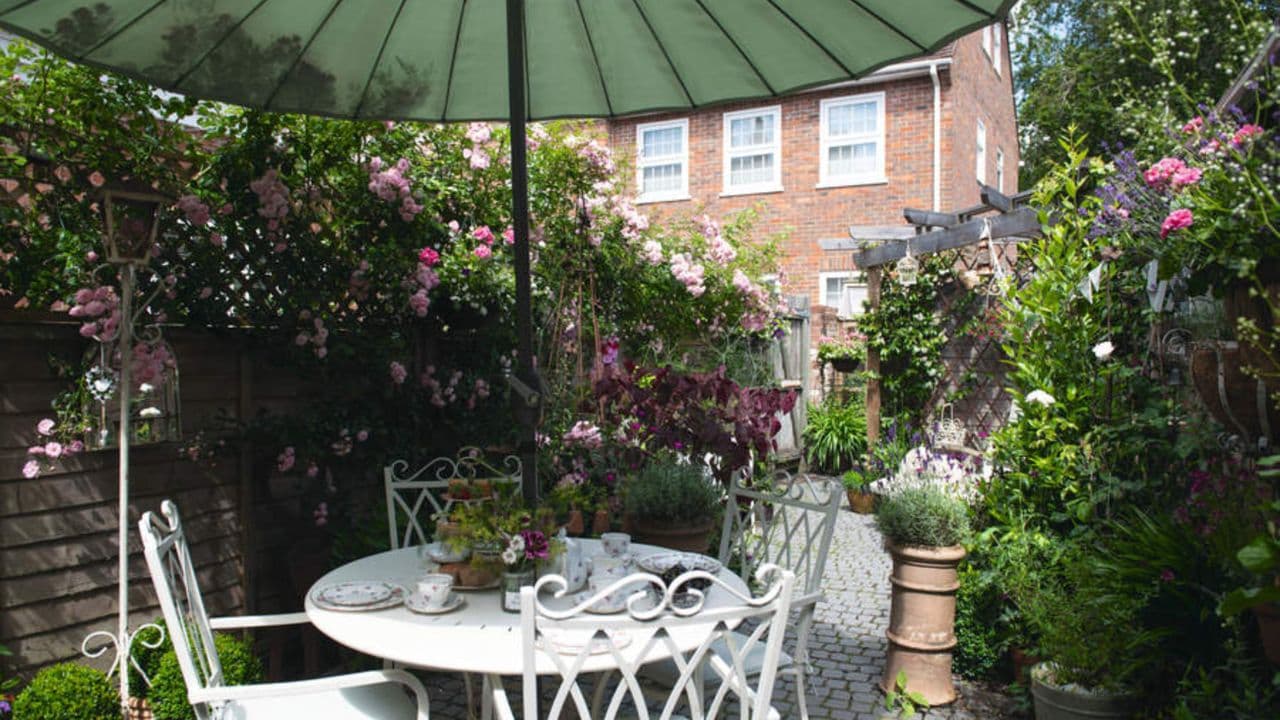
Why Your Traditional Patio Umbrella Is Making Your Small Patio Feel Even Smaller
If you have a compact patio, balcony, or petite outdoor nook, you already know the struggle. You want shade, comfort, and that breezy outdoor-living aesthetic — but every time you try to make it work with a standard center-pole umbrella, the whole space feels cluttered, cramped, and frankly unusable. The umbrella base alone can devour a third of your usable floor space. The pole runs right through the middle of your table, limiting seating arrangements. And the overall look? Clunky.
Here's the truth that interior designers and landscape architects have known for years: the traditional patio umbrella was never designed with small spaces in mind. It was built for sprawling resort pool decks and oversized suburban patios. Forcing it onto a tiny terrace is like squeezing a sectional sofa into a studio apartment — technically possible, entirely impractical.
So what do the pros actually recommend? The answer might surprise you.
The Space-Saving Option Designers Swear By: The Cantilever Umbrella
When interior designers and outdoor living specialists are asked about shade solutions for small patios, one option comes up again and again: the cantilever umbrella, also known as an offset umbrella. Unlike traditional models, the cantilever umbrella's pole is positioned to the side rather than through the center of the seating area. The canopy hangs overhead, suspended by an arm extending from an off-to-the-side base.
This single design difference changes everything for a small patio.
Because the pole lives at the edge or corner of your space rather than the center of it, your table and chairs are completely free. You can seat more people. You can use the furniture arrangement you actually want. And visually, the canopy floats above the space rather than interrupting it — creating a clean, architectural look that actually makes a small patio feel more intentional and polished rather than overcrowded.
Key Benefits of a Cantilever Umbrella for Small Spaces
- No center pole obstruction: The canopy suspends from the side, leaving your table entirely open. This means more elbow room, easier dining, and no awkward pole to navigate around during meals or conversations.
- Flexible positioning: Most cantilever models rotate 360 degrees and tilt in multiple directions, allowing you to chase shade throughout the day without ever moving your furniture. On a small patio, this flexibility is invaluable.
- Cleaner aesthetic: Designers love the cantilever look because it mirrors the kind of architectural shade structures — pergolas, sail shades — found in high-end outdoor spaces. It signals intentional design rather than an afterthought.
- Compact base options: Many modern cantilever umbrellas feature weighted bases that can be tucked into corners or partially hidden behind planters, keeping your floor plan as open as possible.
- Versatility beyond the table: Since the canopy doesn't require a table with a center hole, you can position shade over a loveseat, a pair of lounge chairs, or even a hammock — giving you true flexibility in how you use your small outdoor area.
What to Look for When Choosing a Cantilever Umbrella for a Tiny Patio
Canopy Size
For small patios, resist the instinct to go too large. A canopy between 9 and 11 feet in diameter is typically ideal — large enough to provide real shade coverage without visually overwhelming the space. Going above 13 feet on a tiny terrace can actually make the area feel more confined, not less.
Base Weight and Footprint
This is where small-patio shoppers need to pay close attention. A cantilever umbrella requires a heavier base than a center-pole model because the weight distribution is off-center. Look for bases designed specifically for compact footprints, or consider models that allow you to fill a weighted base with sand or water so you can position it discreetly in a corner.
Material and Durability
On a small patio, your umbrella is going to see a lot of use and likely not a lot of protective storage space. Opt for a canopy fabric rated for UV resistance and moisture repellency — solution-dyed acrylic fabrics like Sunbrella are the gold standard. For the frame, powder-coated aluminum offers the best combination of lightweight durability and rust resistance.
Crank vs. Pulley Opening Mechanism
Small spaces often mean tighter maneuvering. A smooth crank mechanism makes opening and closing the umbrella effortless, which matters more than you might think when you're doing it daily in a tight spot.
Styling Tips: How Designers Use Cantilever Umbrellas on Tiny Patios
Choosing the right umbrella is only half the equation. How you style it determines whether your small patio looks like a thoughtfully designed outdoor room or a furniture showroom floor sample.
Designers consistently recommend anchoring the umbrella base in a corner and using it as a visual anchor for the entire space, much like a floor lamp functions in a living room. From there, arrange your furniture underneath and around the canopy rather than placing the umbrella as an afterthought over existing furniture.
Color matters, too. Neutral canopy tones — warm whites, soft taupes, deep charcoals — tend to recede visually and make a space feel larger. Bold or patterned canopies can work beautifully but require careful coordination with the rest of your outdoor palette.
Finally, consider layering in string lights along the canopy edge or weaving them through nearby planters. On a small patio, the umbrella becomes the ceiling of your outdoor room, and lighting it transforms the space after dark into something genuinely magical.
The Bottom Line
If you have a small patio and you've been struggling to make traditional shade solutions work, the problem isn't your space — it's the tool you've been trying to use. A well-chosen cantilever umbrella gives you real shade, a polished aesthetic, and maximum usable square footage. It's the reason designers consistently reach for this style first, and once you experience the difference, you'll wonder why you ever wrestled with a center pole at all.