
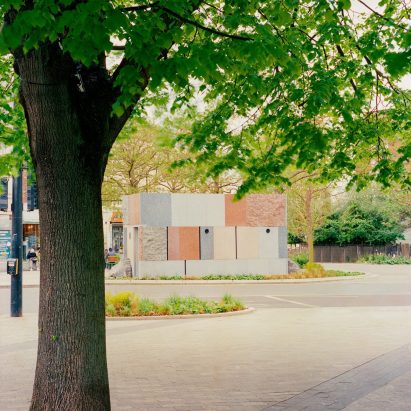
Studio Weave's Maida Hill Toilet Block: Redefining What Public Infrastructure Can Be
When most people think of public toilets, the words "beautiful," "thoughtful," or "architecturally significant" rarely come to mind. Yet Studio Weave's latest project in Maida Hill, West London, is challenging every preconception about what a public convenience can and should be. Featured prominently in Dezeen's weekly Dezeen Debate newsletter, the Maida Hill toilet block has been described as "sorely needed" — not just as a practical facility, but as a genuine piece of urban design that enriches its surrounding community.
Why London's Public Toilets Have Become an Urban Crisis
The shortage of publicly accessible toilets across London has been a growing concern for residents, urban planners, and accessibility advocates for years. Decades of council funding cuts and shifting priorities have left many boroughs with dangerously few public facilities, forcing people — particularly elderly residents, young children, those with medical conditions, and tourists — to rely on the goodwill of cafés and shops, or worse, to curtail their time spent outdoors entirely.
In this context, the arrival of a thoughtfully designed, purpose-built public toilet block in Maida Hill is more than a minor infrastructure upgrade. It represents a meaningful acknowledgment that public space must serve all people, regardless of whether they are spending money nearby. The project signals what is possible when local authorities commission architecture practices with genuine ambition, rather than defaulting to the cheapest prefabricated option available.
Studio Weave: Architects Committed to Community-Centred Design
Studio Weave is a London-based architecture practice with a long track record of delivering projects that prioritise community engagement, material honesty, and a deep sensitivity to context. The studio has consistently demonstrated that even the most modest of briefs — a footbridge, a children's play area, a bus shelter — can be elevated into something that genuinely improves the lives of those who encounter it.
The Maida Hill toilet block is entirely consistent with this philosophy. Rather than treating the commission as a utilitarian box-ticking exercise, Studio Weave approached it as an opportunity to create a small but significant civic landmark — one that respects its streetscape, reflects the character of its neighbourhood, and ages gracefully over time.
Reclaimed Materials and Sustainable Construction
One of the most striking aspects of the Maida Hill toilet block is Studio Weave's commitment to reclaimed and natural materials. The structure makes extensive use of reclaimed stone, giving the building a warm, textured presence that feels rooted in its environment rather than imposed upon it. In an era when sustainability is often reduced to solar panels and energy ratings, Studio Weave's choice to foreground material reuse is a quietly radical act.
Reclaimed stone carries history within it. Its irregular surfaces, subtle colour variations, and evident age tell a story of previous lives and previous buildings. By incorporating these materials into a new public structure, the architects create a visual and tactile continuity with the surrounding urban fabric, ensuring that the building feels like it belongs rather than like a recent insertion.
Beyond aesthetics, the use of reclaimed materials carries clear environmental benefits. Avoiding the energy-intensive production of new building materials, reducing construction waste, and extending the useful life of existing resources are all meaningful contributions to a more sustainable built environment — achievements that align with London's broader climate commitments.
Urban Design as a Form of Community Care
The placement and design of public toilets is, at its core, a question of who is welcome in public space. When facilities are absent, poorly maintained, or inaccessible to people with disabilities, the implicit message is that certain members of the community are not expected — or not welcome — to linger. Conversely, when a local authority invests in high-quality, accessible, well-designed public infrastructure, it sends a very different signal: that public space belongs to everyone.
The Maida Hill toilet block embodies this inclusive ethos. Its design prioritises accessibility and dignity, ensuring that the facility is welcoming to users of all ages and abilities. This is not a grudging concession to regulatory requirements, but a genuine architectural commitment to equitable public provision.
The Broader Lessons for Urban Planners and Local Councils
The attention that Studio Weave's Maida Hill toilet block has received — including its prominent feature in Dezeen Debate — reflects a wider hunger for better public infrastructure across UK cities. The project offers several lessons worth absorbing:
- Small budgets need not produce mediocre outcomes. Good design thinking, material intelligence, and community engagement can produce exceptional results even within tight financial constraints.
- Context matters enormously. A building that respects its streetscape and responds to its immediate neighbourhood will always feel more appropriate than a generic prefabricated solution, regardless of the brief.
- Sustainability should be embedded from the outset. The choice to use reclaimed stone was not a last-minute green credential but a foundational design decision that shaped the entire character of the building.
- Public facilities are civic architecture. Treating even the humblest public convenience as a legitimate piece of urban design — worthy of careful thought, skilled craftsmanship, and proper investment — leads to better outcomes for everyone.
A Model for the Future of London's Public Spaces
As London continues to grapple with the dual pressures of population growth and public sector austerity, the Maida Hill toilet block offers a quietly optimistic vision of what civic infrastructure can look like when it is taken seriously. Studio Weave has demonstrated that functional necessity and architectural ambition are not mutually exclusive — that even a toilet block can be beautiful, contextually sensitive, environmentally responsible, and genuinely useful to the community it serves.
For urban designers, local councils, and anyone who cares about the quality of public life in British cities, this project deserves to be studied and celebrated. It is a reminder that the smallest interventions, executed with care and conviction, can have an outsized impact on the experience of everyday urban life.
Described as "sorely needed" by the readers and editors of Dezeen Debate, the Maida Hill toilet block is proof that London's public realm can be better — and that with the right architects and the right ambition, it will be.