
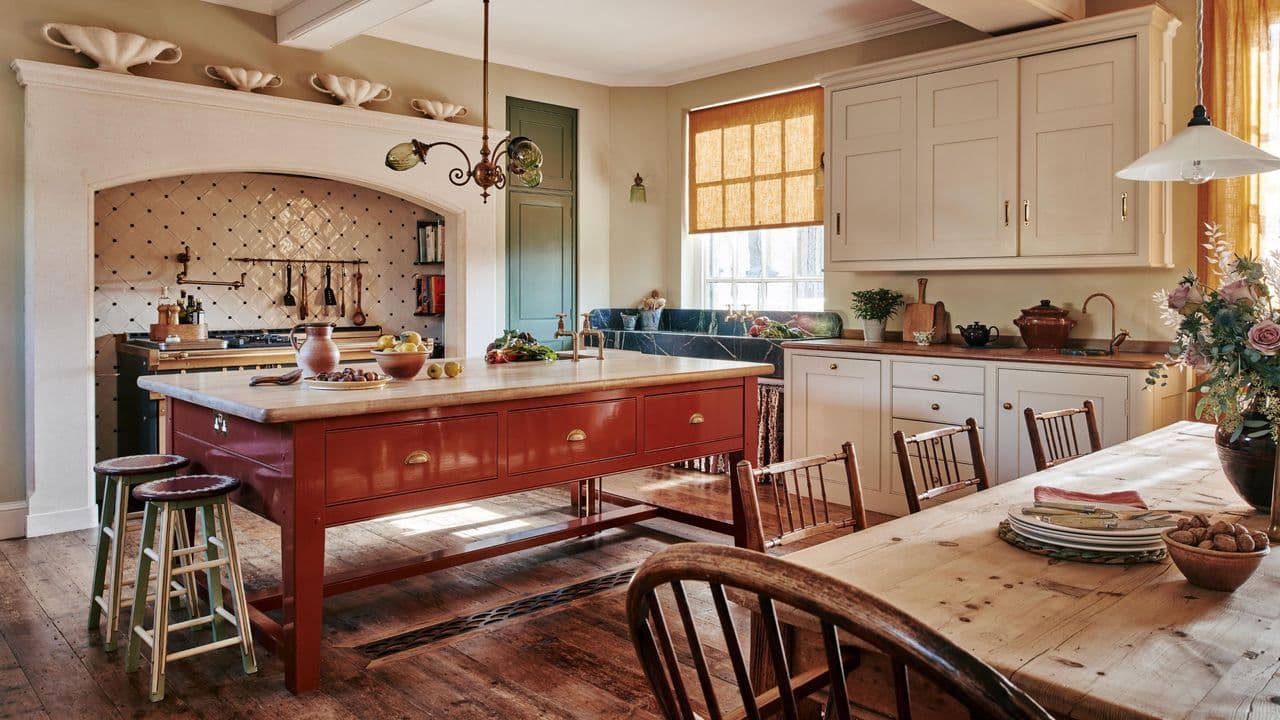
A Victorian Kitchen Reborn: How One Home's Heart Was Transformed Without Losing Its Soul
There is a particular kind of magic in a Victorian home — the high ceilings, the ornate moldings, the sense that every room has a story worth telling. But magic doesn't always translate to practicality. For many homeowners living in these storied structures, the kitchen presents a special challenge: how do you bring a space into the twenty-first century without erasing the very qualities that made you fall in love with the house in the first place?
That was exactly the dilemma facing the owners of one remarkable Victorian home when they decided it was finally time to address a kitchen that had, over decades of piecemeal updates and shifting layouts, become a confusing tangle of muddled rooms. What emerged from the renovation is nothing short of breathtaking — a stunning gathering space that feels as though it could have always been there, that it was simply waiting to be uncovered.
The Problem With Piecemeal: Why Victorian Kitchens Often Feel Disjointed
Victorian homes were not originally designed with open, social kitchens in mind. In the nineteenth century, the kitchen was strictly a workspace — often tucked away, divided into sculleries and pantries and service corridors, separated from the genteel living areas of the house. As these homes passed through generations and ownership changes, rooms were absorbed, walls were added, and practical updates were layered on top of one another without any coherent design vision.
The result, in countless Victorian homes across the country, is a kitchen that feels both cramped and chaotic — where a butler's pantry awkwardly abuts a 1970s breakfast nook, where original plaster walls rub elbows with laminate cabinetry, and where the flow from room to room makes no intuitive sense. Light is often the first casualty of these accumulated changes, leaving what should be the heart of the home feeling dim and disconnected.
Fixing these problems requires more than a cosmetic refresh. It demands a thoughtful architectural approach, one that respects the language of the original structure while reimagining how the space can serve modern life.
The Design Vision: Honoring History While Embracing Function
The key to this particular kitchen transformation was a willingness to make bold structural decisions early. Rather than trying to work around the existing patchwork of rooms, the design team chose to strip things back — removing walls, reconfiguring doorways, and allowing the natural proportions of the Victorian architecture to guide the new layout.
By opening up the space, natural light became abundant, flooding in from windows that had previously been blocked or underutilized. The result was immediate and dramatic: a kitchen that suddenly felt generous, airy, and connected to the rest of the home in a way it never had before.
Critically, the renovation team took great care to preserve and restore original details wherever possible. Period-appropriate millwork was repaired rather than replaced. Original hardwood floors were refinished to reveal their warmth. Ceiling heights were celebrated rather than dropped. Every decision was filtered through a single guiding question: does this feel like it belongs here?
Materials and Finishes That Bridge Two Centuries
One of the most impressive aspects of this kitchen remodel is the way it uses materials to create a seamless bridge between Victorian tradition and contemporary living. The cabinetry, while entirely new, was designed with the proportions and detailing of the era — inset doors, furniture-style feet, and hardware with an antique brass finish that warms the eye rather than jarring it.
Countertops in honed marble nod to the stone surfaces that would have been common in nineteenth-century kitchens, while providing the durability and ease of care that modern homeowners need. A farmhouse sink, deep and white and beautifully proportioned, anchors the perimeter cabinetry and serves as both a functional workhorse and a visual focal point.
- Custom inset cabinetry with period-inspired detailing maintains the Victorian aesthetic.
- Honed marble countertops provide elegance without sacrificing practicality.
- Antique brass hardware ties together new and original elements throughout the space.
- Restored hardwood floors connect the kitchen to the rest of the historic home.
- A large farmhouse sink serves as both a functional and decorative centerpiece.
Creating a Gathering Space That Feels Genuinely Lived In
Perhaps the most impressive achievement of this renovation is not any single design decision but rather the cumulative effect of all of them: a kitchen that genuinely invites people to gather. A large central island now anchors the room, offering generous counter space for cooking while providing seating for family and guests. The layout creates a natural flow between preparation, cooking, and conversation — the kind of effortless hospitality that feels earned rather than engineered.
Thoughtful lighting plays an enormous role in this sense of warmth. A combination of statement pendants over the island, under-cabinet task lighting, and carefully placed sconces creates layers of light that shift with the time of day and the mood of the moment. In the evening, the kitchen glows in a way that makes it nearly impossible to leave.
Lessons for Your Own Victorian Kitchen Renovation
If you are living with a Victorian kitchen that no longer serves you well, this transformation offers a powerful set of lessons worth carrying into your own planning process.
First, do not be afraid of structural change. The layout that frustrates you today may not be original at all — it may be the product of decades of improvised alterations. A structural assessment can reveal whether walls that feel fixed are actually candidates for removal, opening up possibilities that are impossible to see on the surface.
Second, invest in materials that speak the language of the house. Victorian architecture has a vocabulary — a way of using proportion, ornament, and craftsmanship — and your kitchen will feel far more cohesive if your design choices participate in that conversation rather than competing with it.
Third, prioritize light. Victorian homes can be dark by nature, and nothing transforms a kitchen more profoundly than an abundance of natural light. Whether that means enlarging existing windows, adding skylights, or simply removing the walls that are blocking existing ones, the pursuit of light is almost always worth the effort.
Finally, remember that the goal is not a perfect period reproduction. It is a home that works beautifully for the people living in it today while honoring the craftsmanship and character of the past. When those two things come together — as they so clearly have in this stunning Victorian kitchen remodel — the result is a space that feels not just renovated, but truly alive.